






This article was first published on The Bit Journal.
Holiday seasons mean more clicks, more ads, and more emotion, all of which make a target-rich environment for fraud.
As of 2025, the threat for cryptocurrency users had fundamentally changed: attackers have transitioned from boring old phishing pages to sophisticated campaigns leveraging OCR malware in mobile apps, AI-based voice impersonations and massive text-message phishing rings.
Those changes mean fraudsters can pilfer wallet recovery phrases, clone voices to impersonate family members and create thousands of counterfeit storefronts in a matter of days.
The result is that festive promotions and “too-good-to-be-true” token sales around Black Friday, Christmas time or New Year now carry higher stakes than ever.
The good news is that much of what defenders need, such as verification discipline, official app sources, and multilayered account security, still works.
What’s Different in 2025: The Rise of ‘Smart’ Holiday Crypto Scams
Scammers have gone beyond the days of the bland email with poor spelling. For one, there’s the malware that reads photos on users’ phones using optical character recognition (OCR); some of which have made it into the official app stores.
A notable example is the SparkCat campaign which introduced malicious SDKs to otherwise legitimate apps in order to be able to scan photos and screenshots for wallet seed phrases and other such information.
Secondly, readily available AI digital tooling has become a force multiplier for social engineers, with persuasive synthetic voices and hyper-personalized emails that allow attackers to heighten pressure, rendering impersonation scams much more plausible.
The combination of OCR malware and AI means that scammers can both silently gather secrets, then play those secrets in hyper-personalized, near-real-time fraud plays during holiday windows.
The Most Common Holiday Crypto Scams Today and the Emerging Tech Behind Them.
Phishing and fake-wallet apps are still out there, but they are joined by more sophisticated vectors. Phishing emails claiming to be fake payment and “holiday bonus” notices continue diverting victims to credential-harvesting pages, however, shady apps on Google Play and the App Store can also steal mnemonic phrases featuring embedded SDKs.
Pump-and-dump token releases are still seeming each season, but there are now projects that recycle branding from old scams and focus supply into a small number of wallets, a pattern that has been evident in numerous 2025 token exits.
Romance scams, the classic “pig butchering” model of sending sweet nothings over online platforms and slowly coaxing them into giving their money now frequently employ voice cloning or AI-crafted personalities to accelerate the process of establishing trust with victims and coerce them into transferring funds more quickly.
Finally, large-scale SMS phishing operations have gone industrial. A recent Google lawsuit detailed a ring that spun up nearly 200,000 fraudulent sites in weeks, illustrating how quickly attackers could flood holiday travel with spoofed domains and fake tracking notices.
These are the leading tactics at work this season; each features a technological tweak that enhances its efficacy.
New Case Signals From 2025 that Users Need to Know
Kaspersky had reported earlier in the year that SparkCat-associated apps were downloaded hundreds of thousands of times, and used OCR methods to scrape wallet data, moving from app-install-to-full-wallet-compromise in a jiffy.
Security analysts also reported holiday-related tokens with near-total supply control from early holders, a classic pump-and-dump type signature.
Police reporting in the U.K. and other jurisdictions also showed reverse scams worth hundreds of thousands of pounds where impersonation and “recovery” rackets trailed initial thefts, revealing the two-wave nature of modern campaigns: initial theft, then exploitative recovery offers.
These incidents illustrate how attackers blend technical malware, economic manipulation and social engineering into sustained holiday campaigns.
How to Keep Your Crypto Safe this Holiday Season
Safeguarding one’s crypto over the holidays requires good digital habits and following some rules.
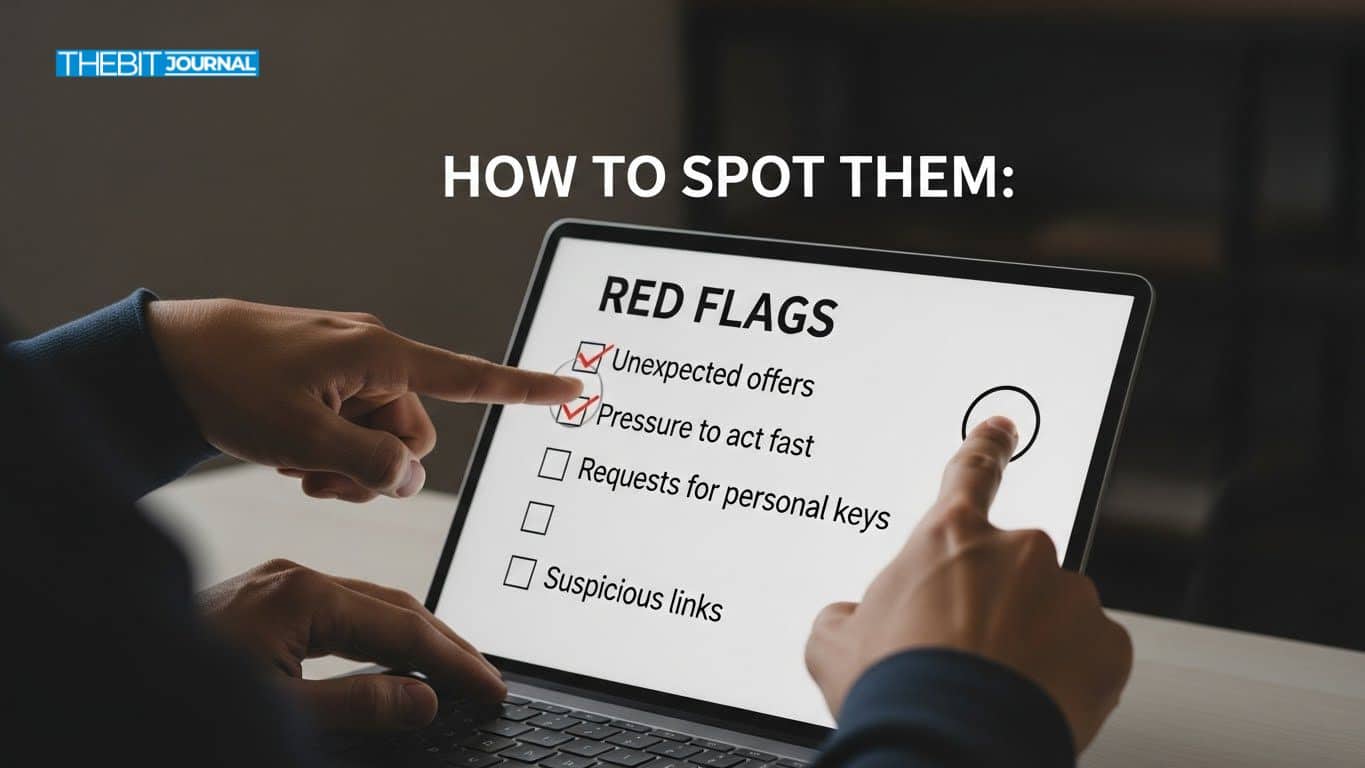
The first is never to store seed phrases or private keys as images or screenshots; OCR malware is scanning for those very artifacts.
Users should only install mobile apps from developer pages linked from the official project website, and pay attention to app permissions. Users note-taking app probably shouldn’t need access to their photos or clipboard.
Users should assume all urgent requests for money or “tax/fee” extraction are suspicious and confirm via a second channel (call up the exchange phone line or use its verified support portal).
It is advised to use strong device-level protections such as hardware wallets for large amounts, 2FA for exchange accounts (opt for app-based authenticators over SMS), and updated OS and app patches.
When in doubt, it is advised to take a moment. Much of holiday fraud is premised on a narrow window for making a decision.
Lastly, users should alert platforms and law enforcement about suspicious sites and messages as coordinated takedowns limit exposure for everyone.

What Platforms and Law Enforcement are Doing and What Falls through the Cracks
Tech platforms and governments are pushing back. Google has also taken alleged operators of a sprawling SMS phishing network to court and is seeking faster take-downs on scam sites, as app stores tightened up reviewing of SDK behavior, and SparkCat discovery.
Security firms said overall detection numbers were up in 2025, including increases in credential stealers and spyware.
Still, there are cracks. Malicious apps continue to make it through review processes; voice-cloning scams are difficult to police; and cross-border money flows allow criminals to cash out quickly.
This means that preventing these holiday scams still mostly falls on users and service providers who should be building stronger protections, not to mention faster incident response.
Enforcement is getting better, but victims still have a long recovery process if they lose keys or move crypto to scam wallets.
Conclusion
Opportunistic fraud will always come knocking over holiday seasons, but 2025 shows the game has been raised. OCR-malware-wielding adversaries have since incorporated AI-based impersonation utilizing industrial-grade phishing infrastructure and recycled token scams in order to milk those short windows of high-activity online transactions.
The best offense is, as ever, the simplest and most practical: protect seed phrases and keys, install only apps known to have been validated, control custody of significant holdings via hardware, don’t be shy to demand secondary confirmation for anything out of the ordinary, and report any suspect activity promptly.
By adopting those habits, users can make it through the holidays without giving scammers a seasonal advantage
Glossary
Dog butchering / pig butchering: A long con in which attackers establish emotional trust and then reel users in for fake crypto investments.
OCR malware: Software that employs optical character recognition to scan images from the device for sensitive text, like seed phrases.
Seed phrase (mnemonic): A set of words that a human can read and interpret to control access to funds in a crypto wallet; whoever has the phrase can move funds with ease.
Phishing domain: A malicious website URL that clones a legitimate service to siphon off credentials.
Pump-and-dump: The coordinated manipulation of a token’s price by insiders who build up the value of tokens and then sell into interest from retail investors.
2FA (Two-factor authentication): An additional login process that users use to log in using something they know (your password).
Hardware wallet: A physical device that keeps private keys offline and protects them from being transmitted to internet-connected devices.
AI impersonation: Synthetic voice or AI-written content created to fake as someone you trust or know.
Frequently Asked Questions About Holiday Crypto Scams
Can a scammer use voice AI to rob a user’s crypto?
Yes. Attackers can clone a family member’s voice from a snippet of audio and then use it to coerce victims into sending money or sharing account credentials; this AI-generated impersonation trend hit the mainstream in 2025.
Are app stores still safe?
App stores are safer than third-party markets, but they are not immune. SparkCat proved out that malware SDKs can come through legitimate apps. As always, be sure to check the developer’s official site and permissions before installing.
Who do users call if they get scammed?
Please report the incident to the exchange or wallet service, and also file reports with local law enforcement, as well as national reporting portals (where applicable) for cybercrime. Users can notify the hosting platform in which they identified scammers (Google, Apple, domain registrars). Rapid reporting can also help contain further abuse.
Is the hardware wallet the only secure choice?
Hardware wallets offer the highest available level of security for private keys, since seed phrases are stored offline. They’re very much recommended for large holdings, and should be paired with secure software practices and conservative custody decisions for smaller sums.
References
Kaspersky
Googleblog
Cointelegraph
Times Union
Reuters