



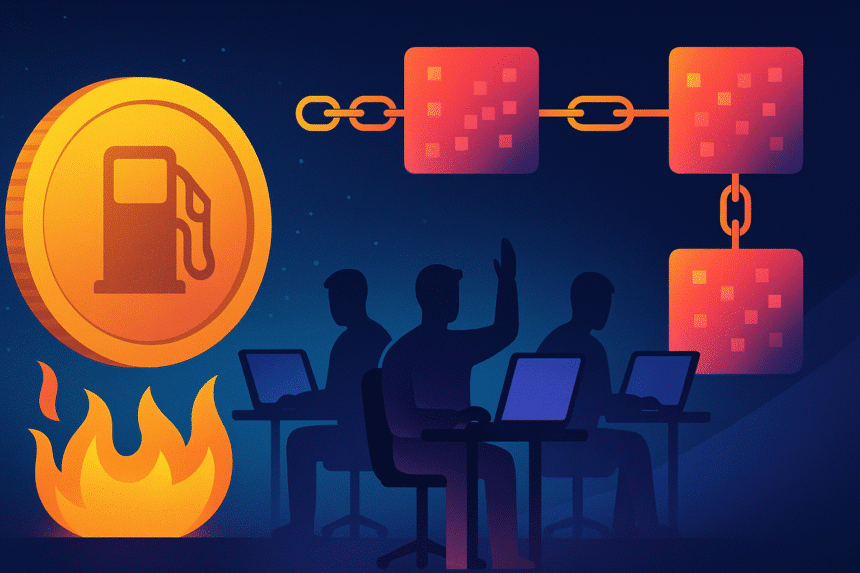

Gas fees are small payments made to process transactions on a blockchain. Every time you conduct any transaction, whether it is the sending of coins or executing a smart contract, you are exhausting computational power. The computers, or nodes, that constitute the network need time and energy to complete the task. Gas fees are a way for the network to compensate them for their efforts. To put it plainly, gas fees are the equivalent of paying for gas. A car requires gas to travel; similarly, a blockchain transaction needs gas to operate. Without it, nothing happens on the network. In general, the higher the gas fee, the more likely your transaction will be executed faster.
Each blockchain network has its own way of accounting for gas. For instance, Ethereum considers Gwei, while Bitcoin has its own fee structure. Overall, they’re the same premise: fees incentivize miners and validators to finalize a transaction quickly. When the network usage is peaking, gas fee prices increase, while gas prices decrease when the network is idle or quiet. This constant change makes gas fees one of the most talked about topics in crypto.
Why Are Gas Fees Important
Gas fees are not simply a nominal fee; rather, they play a crucial role in helping keep blockchains fair, secure, and functional. Without gas fees, the network could easily be swamped with spam transactions that diminish blocksize throughput. Gas fees exist so that each and every time a user accesses the network they pay something; otherwise, individuals might send infinite or incorrectly irrelevant requests.
Having a fee structure also keeps the blockchain clear as a non-ambiguous measure of value. Gas fees also compensate validators, or miners in previous generations, and incentivize them to continually expend computing effort to confirm and validate transactions.
Gas fees also help reflect demand. When a blockchain gains popularity, fees increase because of the demand for transactions. It is easy to reflect this with an example of commuters on a busy freeway, in rush hour, the more cars on the highway, the lower the average speed and the higher the fee to travel.
| Role | Explanation |
| Network Security | Fees discourage spam and keep the chain stable |
| Validator Reward | Gas fees act as payment for validation work |
| Demand Indicator | Higher fees mean more network usage |
In response to high gas fees, some networks attempt to solve this issue by working on their technology. Solana, Polygon, Arbitrum, and other projects use technologies that lower gas fees because they can perform more transactions per second. The goal is to allow people to use a blockchain without fearing higher fees, while also keeping indexing speeds and safety.
When gas prices are extremely high, small users will get priced out. Thus, it is beneficial for users to understand gas prices to select the most appropriate network or time to transact. Gas is incorporated in keeping a blockchain functioning and operational, not simply a cost.
How Blockchain Transactions Work Behind the Scenes
Every blockchain transaction goes through several steps before it’s confirmed. At first, the transaction is created and broadcast to the network. Then, it goes into something called the mempool, which is a waiting area. Validators look at the mempool and choose which transactions to include in the next block. Usually, validators pick the ones with higher gas fees first. That’s why people who pay more get faster confirmations. The process may look instant from the outside, but behind the screen, a lot happens in seconds.
| Stage | Description | Average Time |
| Pending | Transaction sent to the network | 1–5 seconds |
| Mempool | Waiting to be picked by validators | 5–30 seconds |
| Confirmed | Added to the blockchain block | 10–60 seconds |
Each block has a limitation in size which means that only a certain number of transactions can go into each block. This results in a lot of competition during busy times. And if the network is congested and full, it means a transaction may remain pending for a few minutes or even an hour if its fee is lower than other transactions in the mempool. It is also possible that a transaction may fail if a gas fee is too low, or it is simply below the gas limit to complete the action at all. When that happens, the user still becomes very much out of gas because the validator already took time and energy to try and process that transaction.
This is why it is important to understand how gas fees work and how the mechanism for prioritizing transactions works when processing and using gas fees. If you don’t consider or understand these things, then you will inevitably find yourself in situations where a transaction may fail or worse, simply be sitting in a queue for long periods of time wasting your resources.
As the blockchain ecosystem continues to expand, the ecosystem and system that prioritizes transaction fees is becoming more sophisticated. In fact, some modern blockchain ecosystems are now adapting to congestion by creating dynamic gas models that change automatically. Regardless of the innovation, and/or changes a blockchain makes, the concept of gas remains unchanged: it is simply paying for the fuel that is used.
What Determines Gas Fees (Gas Price, Gas Limit, and Network Demand)
Gas fees are made up of a few simple parts that work together. The first part is called gas price, which is how much someone is willing to pay for each unit of work done by the network. The second part is gas limit, which means the maximum amount of work the transaction can use. Finally, there’s network demand, which changes based on how many people are sending transactions at the same time.
When a lot of people are using the blockchain, gas prices go up because validators have limited space in each block. Think of it like a line at a ticket counter. The more people in line, the higher the price to skip ahead.
| Factor | Description | How It Affects Fees |
| Gas Price | Cost per unit of computation | Higher gas price = faster confirmation |
| Gas Limit | Maximum units the transaction can use | Higher gas limit = more total cost |
| Network Demand | Number of people using the blockchain | Higher demand = higher prices |
Every blockchain has its own way to measure gas. For Ethereum, gas is measured in Gwei, a small part of ETH. If gas prices rise, it can become expensive to perform actions like swapping tokens or minting NFTs.
Sometimes, users can set their gas limit too low, and the transaction fails. This happens when the transaction needs more gas than allowed. Validators will start it but stop midway when it runs out of gas. The gas used is still gone because the computation already happened.
During calm periods, when fewer people are using the network, gas fees fall. That’s why smart traders and DeFi users often wait for late-night hours or weekends when demand drops to make their moves cheaper.
Ethereum Gas Fees Explained Simply
Ethereum is the most well-known blockchain for smart contracts, and it has a unique gas system. Every time someone sends ETH or interacts with a DeFi app, gas is used. The amount of gas depends on how complex the action is. A simple transfer uses a small amount of gas, while minting an NFT or using a decentralized exchange needs much more. Ethereum gas fees are calculated using a formula that includes base fee, priority fee (tip), and gas used. The base fee is a minimum fee set by the network itself. The priority fee is what users can add to encourage faster confirmation. Validators prefer transactions with higher tips.
| Fee Type | Explanation | Who Sets It |
| Base Fee | Minimum required fee for every block | Network protocol |
| Priority Fee | Extra payment to get faster confirmation | User sets manually |
| Gas Used | The actual units consumed by the transaction | Depends on task complexity |
Illustrative calculation for an Ethereum gas cost: If the base cost is 20 Gwei, the tip is 5 Gwei, and the gas used is 21,000, then total cost = (20 + 5) x 21,000 = 525,000 Gwei. When converted to ETH, that equals 0.000525 ETH, which could be around $1 depending on the price.
A few years back, Ethereum underwent an upgrade via EIP-1559, which changed how gas fees are managed. EIP-1559 burns part of the base fee instead of just giving to the validator. It is also a way to control supply of ETH and reduce some of the discrepancies in how gas fees are calculated based on this. Of course, gas rates are still dependent on “demand,” there are many times when gas rates on Ethereum are very expensive, especially during large launches of NFTs or token airdrops, and it is not uncommon for people to adjust their tips so that they receive confirmations quicker, thus also adjusting the gas cost up.
When gas rates are low, many people facilitate batch actions such as swapping or transferring several tokens, as the additional costs are lower than performing that action multiple times. Although the Ethereum gas system is one of the most studied models of gas fees, and many of the other blockchains have copied it in certain aspects, it still fundamentally is central to supply & demand and the willingness to pay for faster transactions.
How Users Compete for Transaction Space
Every blockchain has limited room in each block. That’s the space for all parties competing when they are sending transactions. Not all transactions can be processed all at once, so they will be competing against each other with a variety of gas fee amounts. Typically the higher the gas fee you pay, the more likely you will get picked up from that space than if you are paying lower fees. You can think about it like catching a train when there are only a couple of seats left, the people that bid the most get on the train, and those with lower bids might have to wait for the next train.
When the network gets crowded, the competition gets even more insane. During events like launching an NFT collection or a popular new token sale, everyone is in a race to confirm a transaction as fast as they can. Validators are checking the mempool and looking at what all the gas fees are, and confirming the transactions that pay the highest fee.
Why Gas Fees Change Every Minute
Gas fees never stay the same because blockchain activity keeps changing. When lots of people use the network, the mempool fills up fast, and validators start picking the highest-paying transactions first. This pushes prices up. When there are fewer people active, fees come down due to there being less work waiting in line for validators. One of the biggest drivers of changes in gas fees is by conference of market events. A large announcement, token launch, price movement, or an NFT drop can flood the network as people rush to make trades or claim rewards en masse.
Even the day of the week can have an effect on pricing. Weekends typically generate less trading and therefore cheaper gas. Weekdays, however, will generally see higher activity, especially during global exchange market hours. External factors can raise gas prices as well, like network upgrades, airdrops, or a large investor transferring tokens in scale. Even one large address transferring tokens can temporarily fill blocks faster for validators and slow down fill for every else.
Tips for Paying Less Gas Fees
Even though gas fees are part of how blockchains work, there are ways to make them cheaper. Timing, network choice, and smart tools can all help reduce costs. One easy trick is to send transactions when fewer people are online. Usually, early mornings or weekends are the quietest times, and gas fees drop because demand is low.
Another way is using Layer 2 networks like Arbitrum, Optimism, or Polygon. These are built on top of bigger blockchains like Ethereum but handle transactions faster and cheaper. After the transaction is complete, it’s sent back to the main chain for final confirmation, saving money without losing security.
Some wallets also let users choose their own gas fee. For example, wallets like MetaMask or Trust Wallet show different speed options: slow, average, and fast. Choosing “slow” may take longer but costs less. It’s good for non-urgent transfers.
The Future of Gas Fees: Are We Moving Toward Cheaper Transactions
Gas fees will not disappear, but they are becoming smaller and smarter. Many new projects are building systems that reduce costs while keeping the network secure. Ethereum’s future upgrades, like Danksharding and proto-danksharding, aim to make gas cheaper by improving how data is stored and shared.
Account abstraction is another trend as it allows users to pay their fees in tokens other than ETH. This generally improves the blockchain approach for entry users and minimizes the need to hold and transfer multiple coins. Overall cheaper gas should lead to more real-world blockchain use cases, such as gaming, micropayments, and social dApps. As a general technology, blockchain should start to feel less like this complex system and feel more like the normal internet, fast, cheap, and seamless.
Conclusion
While gas fees may seem inconsequential, they are one of the largest factors that dictate how blockchains actually function. Gas fees help maintain fairness across a network, protect against spam, and reward validators for doing the trusted work of keeping the chain clean. If gas existed within blockchains, it would lead to uncontrollable chaos, as everyday users create excessive (and spam) requests, and have created no incentive for anyone to process them.
Being educated on gas fees, and how transaction prioritization works along with gas is essential to make the most informed decisions on using blockchains. It describes when to send a transaction, when to recover with fees, and which copies of the block chain had the better value. Educating others on these lines should build trust that transparency showed by the blockchain does cost real work on behalf of the user.
As blockchains continue to advance, more and more systems are figuring out ways to ease gas fees, and speed of the transaction. Layer 2 networks, link rollups, and smart scaling tools have already made transaction fees fairer, cheaper, and potentially real-time for everyday use. In no-time, Many of the same blockchains will have hidden gas completely out of use, or replacing it entirely with adaptable systems that will make gas simple for an understanding of fees for any user in the system.
Understanding gas fees is not just for developers or traders anymore. It’s something everyone who uses crypto should know. It explains why some transactions are quick, others slow, and why fees rise or fall without warning. Once this idea becomes clear, blockchain starts to make more sense, it stops feeling like magic and starts feeling like real technology built on logic and fairness.
Frequently Asked Questions About Gas Fee
What is a gas fee in blockchain?
A gas fee is a small amount paid to validators or miners to process and confirm transactions on a blockchain network. It’s the cost of using network resources.
Why do gas fees change all the time?
Gas fees rise and fall depending on how busy the network is. When more people send transactions, the price goes up. When fewer people use it, fees drop.
Who receives gas fees?
The gas fees are paid to validators (or miners in older networks). They earn this as a reward for verifying and adding transactions to the blockchain.
Can a transaction fail because of low gas?
Yes. If the gas limit is too low, the transaction can run out of gas before it finishes. When that happens, the transaction fails, and the gas used is lost.
Glossary
Blockchain:
A digital system where data is stored in blocks and linked together securely. It records every transaction that happens in a network.
Gas Fee:
The amount paid to miners or validators to confirm and record a transaction on a blockchain.
Validator:
A participant in the blockchain who checks and confirms transactions, keeping the network safe and working.
Mempool:
A waiting area where transactions go before being confirmed and added to the blockchain.
Gas Price:
The amount a user is willing to pay for each unit of gas. Higher gas prices mean faster confirmations.
Summary
Gas fees are what keep blockchains running fairly and smoothly. They act like small payments users make to validators for confirming transactions. Every transaction, from sending tokens to using a smart contract, needs gas because it uses computing power. The higher the gas fee, the faster the transaction gets processed.
Gas fees depend on three main things, gas price, gas limit, and network demand. When more people use the blockchain, fees rise. When the network is quiet, they fall. Ethereum, one of the most popular blockchains, uses a gas system that includes a base fee and a tip for faster confirmation. This model rewards validators and keeps the network secure.