







Last Updated on: 16th July, 2026.
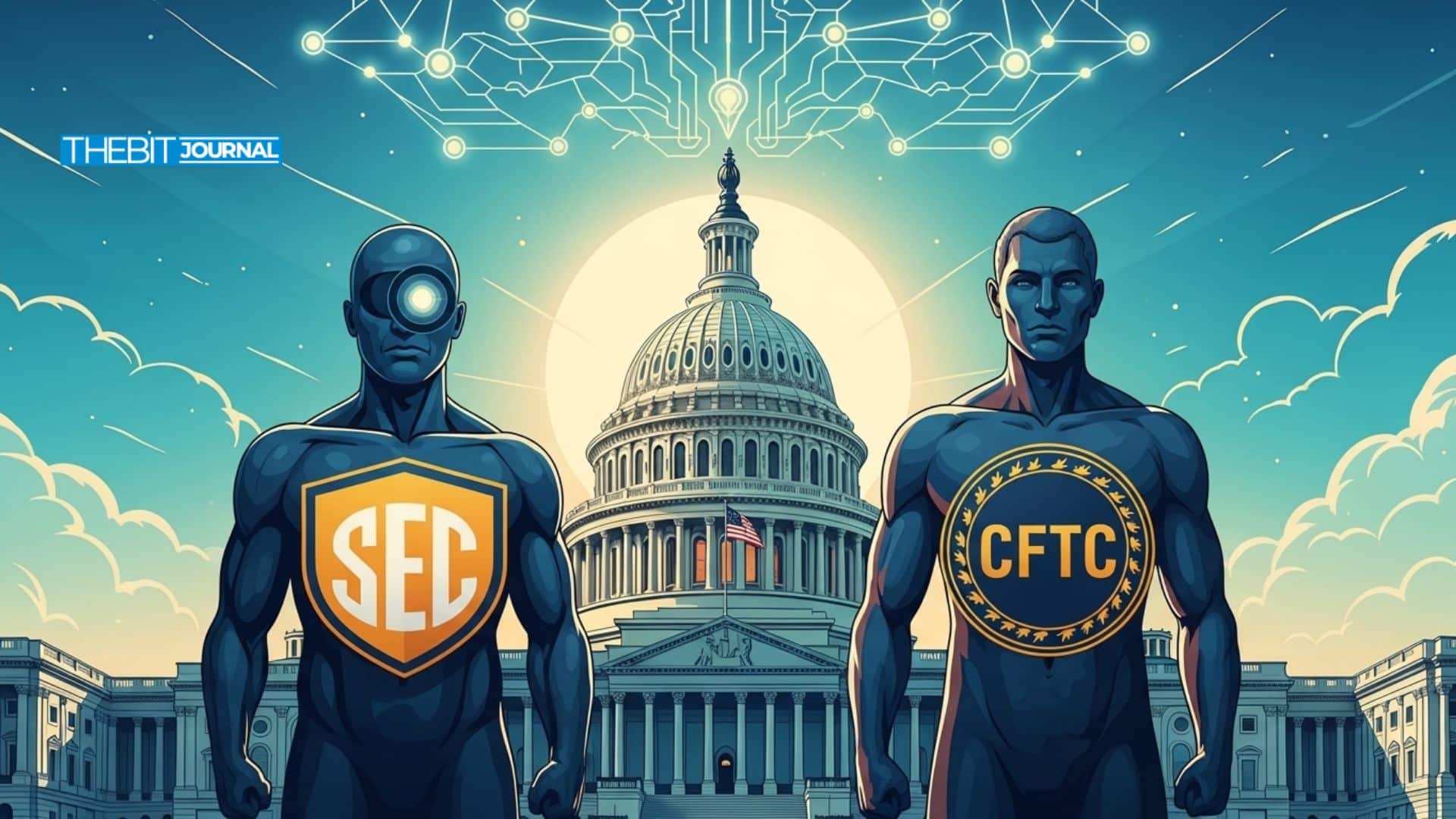
For years, companies dealing in digital assets operating from within the United States have had to deal with competing oversight by two of the most potent regulators around: The Securities and Exchange Commission and the Commodity Futures Trading Commission.
The SEC has treated many token offerings as securities under the Howey Test, while the CFTC has generally viewed major cryptocurrencies such as Bitcoin and Ethereum as commodities, particularly in derivatives markets.
This division has often left companies confused about what rules govern their products. In some cases, firms offering both spot and derivatives products had to prepare for engagement with both agencies at the same time.
Now; a new coordination agreement between the two agencies however, could change how US crypto regulation will evolve. Recently; the SEC and CFTC issued a formal Memorandum of Understanding to facilitate enhanced cooperation; share regulatory data; and synchronize oversight among digital asset marketplaces.
Years of Overlapping Authority in Crypto Oversight
The SEC regulates securities markets and has often used the Howey Test to assess whether various tokens are considered offerings of security. Under this framework, projects that issue tokens to raise money could find themselves covered by the agency’s securities law and have to register with the agency.
On the other hand, the CFTC has claimed authority over digital commodities, specifically derivatives markets. The agency has long said that Bitcoin and Ethereum are within the ambit of its commodity oversight when sold via futures or derivatives products.
This dual interpretation has led to a complex regulatory regime. In some cases, both agencies may assert jurisdiction over the same digital asset or trading platform.
The result has been a system in which crypto companies occasionally face probes from both regulators for similar activities. That overlap has been one of the clauses of US crypto regulation in recent years.
Pressure to Enforce Has Grown in Recent Years
The Commodity Futures Trading Commission said nearly half of its enforcement cases in 2023 was dedicated to digital assets, with 47 cases that were connected to the sector.
The figure grew even more in 2024, when the agency reported it took 58 digital-asset enforcement actions and obtained a record $17.1 billion in financial relief.
For companies, the challenge was not just the number of enforcement actions but the potential for having multiple regulators investigate it at once.
Under the old regime of US crypto regulation, the same token or exchange activity could have led to separate investigations from both agencies.
The lack of clear jurisdiction also discourages innovation in the United States, according to industry participants who have criticized such regulatory overlap.
New SEC-CFTC Pact Aims to Align Oversight
The newly announced Memorandum of Understanding is one of the more concrete attempts yet to simplify US crypto regulation.
The agreement does not settle the long-running debate over whether individual tokens are securities or commodities, but it could reduce duplicate oversight while legislation continues to move through Congress.
The agreement creates a formal framework for collaboration between the two agencies in various regulatory matters. The partnership itself will include joint rule-making discussions; coordinated enforcement activities and shared analysis of financial risks related to emerging technologies; officials said.
| Before the Agreement | Under the New Arrangement |
| Separate investigations possible | Greater coordination between agencies |
| Limited information sharing | Formal data sharing process |
| Independent rule discussions | Joint discussions on emerging risks |
| Regulatory uncertainty for firms | Potentially clearer expectations |
Paul Atkins, the S.E.C. chairman, called it an initiative to address years of regulatory friction that held up innovation.
“For decades, regulatory turf wars; duplicative agency registrations, and different sets of regulation between the SEC and CFTC have stifled innovation and pushed market participants to other jurusdictions,” Atkins said in announcing the agreement.
The new framework would also aim to modernize the way financial regulators handle digital assets, including providing clearer definitions for what constitutes products and improving coordination on monitoring activity in the market.
“Like our markets, the CFTC’s and SEC’s regulatory frameworks must also evolve and modernize to accommodate the needs of our market participants,” Selig said.
That way, regulators hope they can avoid duplication while continuing to protect investors.
Global Competition Is Forcing the U.S. to Decide
Certain jurisdictions abroad have already made strides toward establishing clearer digital asset frameworks that companies are looking for, to be able to do better business.
The European Union’s Markets in Crypto-Assets regulation; popularly called MiCA; entered into force as a single licensing framework for all EU member states.
Singapore has developed its own digital asset oversight structure through the Monetary Authority of Singapore; and the United Kingdom oversees crypto firms via the Financial Conduct Authority.
These frames offer sharper licensing paths and defined regulatory expectations for companies.
This is why a few crypto exchanges, infrastructure providers and blockchain development teams already have relocated operations to places like Dubai or Singapore in pursuit of predictable rules.
This has kept pressure on policymakers to overhaul US crypto regulation so that innovation and investment stays within the country’s financial system. Industry groups have argued for years that regulatory certainty matters almost as much as tax policy or market size when deciding where to build new products.
The Stakes Are Higher as Institutional Market Grows
In 2025 alone; regulated crypto derivatives amassed close to $3 trillion in notional trading volume.
Initial data from 2026 shows that derivatives volumes have already risen about 46 percent year-over-year; suggesting steady demand among professional investors.
As participation of institutions increases, so does the need for regulatory clarity that is essential to market infrastructure providers, custodians and stablecoin issuers.
The issue is particularly pronounced for platforms that offer spot trading and derivatives products, as they have to comply with rules from multiple regulators in the existing framework.
That helps explain why many exchanges, custodians and infrastructure providers welcomed the announcement.
Conclusion
This latest move in US crypto regulation is a new coordination memorandum between SEC and CFTC
Overlapping authority between the two agencies had created uncertainty for companies building products around digital assets for years. Even when firms operated in the same location; they dealt with different regulatory frameworks and the threat of parallel enforcement actions.
The just announced Memorandum of Understanding aims to address those challenges; by enhancing collaboration between the regulators. Although the measure does not directly settle the larger legislative battle over crypto rules; it is an indication that regulators are starting to coordinate their approach.
Glossary
SEC (Securities and Exchange Commission): The US financial regulator that oversees securities markets and protects investors.
CFTC (Commodity Futures Trading Commission): The US regulator that oversees commodity derivatives markets; including crypto futures.
Howey Test: A legal test in the United States; for deciding whether a given transaction is an offering of securities.
Memorandum of Understanding (MOU): A mutual agreement between parties; that clarifies roles and responsibilities in collaboration.
Crypto Derivatives: Financial contracts whose value derives from the price of cryptocurrencies like Bitcoin.
Frequently Asked Questions About US Crypto Regulation
What’s changing with US crypto regulation?
The SEC along with the CFTC has entered into a coordination agreement; to bring their oversight of digital asset markets into alignment and minimize any regulatory overlap.
Why was there confusion between regulators in the first place?
The SEC commonly considers tokens to be securities; while the CFTC regards large cryptocurrencies like Bitcoin to be commodities, resulting in overlapping jurisdiction.
How will the agreement impact crypto companies?
Less overlapping enforcement actions and easier to understand compliance requirements can stem from better coordination between regulators.
Does the deal create new crypto laws?
No. The memorandum primarily enhances collaboration between regulators as more sweeping legislative efforts to clarify the rules of crypto are moving through Congress.
What does regulatory clarity mean for the crypto industry?
By establishing clear rules; companies can operate legally in the United States; attract institutional investment and compete with global markets where regulatory frameworks around crypto already exist.
References