




Real estate is one of the oldest and most trusted ways to build wealth. However, it is too costly to purchase a property to a great number of people. That is changing now. The real estate tokenization is a new concept that is enabling regular investors to purchase small units of extensive properties. This is a system that operates on blockchain, which is the same technology as the cryptocurrencies such as Bitcoin and Ethereum.
More companies and investors today employ a fractional ownership model in 2025 that simplifies ownership of property, makes it clear and global. One can now be a part owner of a house in Miami or an apartment in Dubai without necessarily visiting these areas.
This is one of the biggest shifts in how real estate works today.
What Is Real Estate Tokenization? (Simple Definition for Beginners)
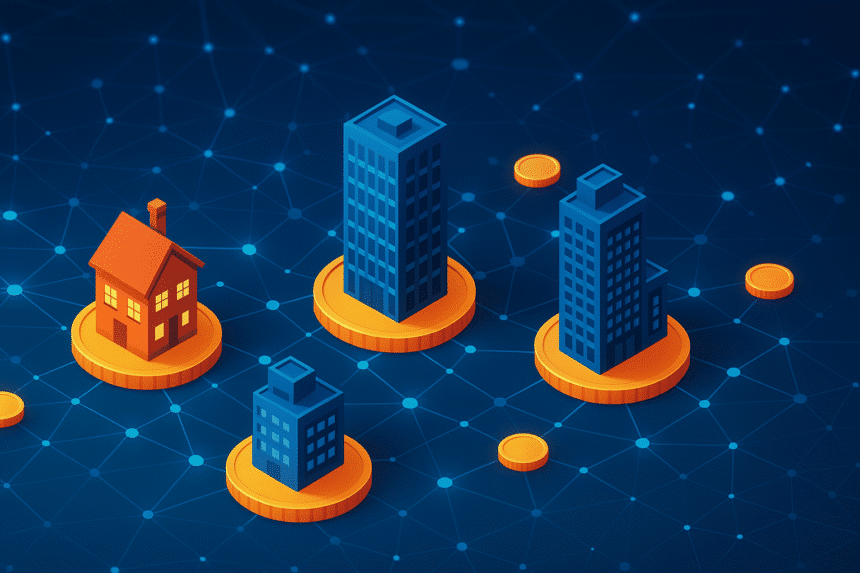
Real estate tokenization means changing a real property like a house, building, or land into digital tokens that live on the blockchain. Each token represents a small piece of the property. It is like dividing a house into thousands of digital shares, and each share can be bought, sold, or traded online.
A token is not just a digital coin. It shows ownership rights, and sometimes even gives income if the property earns rent. Tokenization allows people to invest in real estate with very little money, maybe just a few dollars instead of thousands.
However, it is too costly to purchase a property to a great number of people. That is changing now. The real estate tokenization is a new concept that is enabling regular investors to purchase small units of extensive properties. This is a system that operates on blockchain, which is the same technology as the cryptocurrencies such as Bitcoin and Ethereum.
Why Blockchain Is Used for Tokenization
More companies and investors today employ a fractional ownership model in 2025 that simplifies ownership of property, makes it clear and global.
One can now be a part owner of a house in Miami or an apartment in Dubai without necessarily visiting these areas.
Difference Between Tokenized Property and Traditional Property
Traditional real estate needs big money, long contracts, and a lot of time. Tokenized real estate is faster, cheaper, and easier to sell.
| Feature | Traditional Real Estate | Tokenized Real Estate |
| Ownership | One person or company | Many people own digital tokens |
| Buying process | Paperwork, middlemen | Done online using blockchain |
| Cost | High | Low (fractional) |
| Transfer time | Weeks or months | Minutes |
| Transparency | Limited | Very high |
In short, tokenization removes many old barriers and makes real estate more like digital investing.
The Basics of Fractional Ownership Models
Fractional ownership means more than one investor owns part of a single property. Instead of buying a whole apartment, a person can own 5% or 10% of it. Each investor gets profits, like rent or resale value, based on how much they own.
This system is not totally new. In fact, it existed before in the form of REITs (Real Estate Investment Trusts). But fractional ownership with blockchain is much more direct and transparent. In REITs, investors don’t directly own the property, they own company shares that own properties. In tokenization, the investor owns actual fractions of the property recorded digitally.
How Fractional Ownership Works
Fractional ownership starts with a property that is divided into digital tokens. Suppose that the value of one building is 1 million dollars. It is split into 10,000 tokens of which each token is valued at 100. The number of tokens that the investors can purchase is unlimited. In case a person purchases 100 tokens, he/she owns 1 percent of the property.
When the property starts receiving rent or selling, the profits are shared based on the number of tokens that one has. All this is controlled by smart contracts and therefore automatic and honest payments.
Fractional Ownership vs REITs
They both assist investors to acquire real estate without having to purchase a complete property, but they are not equal. REITs have a tendency of investing in a limited number of countries and may include management fees. Fractional ownership is more direct and borderless and tokenized.
| Investment Type | Ownership | Control | Transparency | Liquidity |
| REITs | Indirect (via company) | Low | Medium | High |
| Fractional Ownership | Direct (via blockchain) | High | Very High | Very High |
Fractional models make property investment more democratic. Investors can start small, earn passive income, and even sell their tokens whenever they want.
How Blockchain Enables Real Estate Tokenization
Blockchain is the foundation that makes tokenization possible. It is similar to an account book that any transaction is registered in a safe place. Whenever a person buys or sells a token, it is stored permanently in blockchain.
Transparency, immutability, and security are the key characteristics that qualify blockchain to be used in the real estate. Anyone may view the record of ownership, however no one can alter it clandestinely.
This renders fraud virtually impossible. The most important tool within blockchain systems is smart contracts. They automate the work and minimize the human error.
Smart Contracts and Security Layers
Smart contracts are computer programs that are executed using the blockchain. They act automatically when certain conditions are fulfilled. To take an example, when an investor purchases tokens, the ownership is transferred with a smart contract, and the records are updated immediately.
This saves on the lawyers or brokers. It is also done to prevent duplication of payment or false claims of ownership. But yet, security matter still matters. When a smart contract contains a bug, it may make the loss of tokens. This is why every tokenization platform of real estate is audited by specialists prior to its introduction.
The security of the system is in the quality of its coding and its occupational visibility.
Popular Blockchains Used for Real Estate Tokens
Some of the most used blockchains for property tokenization include:
- Ethereum – the most common choice for smart contracts.
- Polygon – faster and cheaper version of Ethereum.
- Solana – used for large-scale transactions.
- Avalanche – popular for institutional investors.
These networks help create, trade, and store tokens securely and quickly.
How Tokenization Works Step by Step
Tokenizing a property is not as hard as it sounds, but it needs legal approval and technology setup.
Here’s a simple explanation of how it happens:
- Property Selection and Legal Check
A company or developer picks a property that can be legally tokenized. Documents are verified, and ownership is confirmed.
- Token Creation and Valuation
The total value of the property is divided into tokens. For example, a $2 million property can be divided into 20,000 tokens priced at $100 each.
- Listing on Blockchain Platform
Tokens are listed on a digital marketplace that supports real estate assets.
- Sale to Investors
Investors from around the world can buy tokens. Each token gives a share of ownership.
- Trading and Secondary Market
After purchase, tokens can be traded freely, just like stocks or crypto coins.
Advantages of Real Estate Tokenization
Real estate tokenization gives investors and property owners a lot of benefits. It removes many barriers and adds flexibility to a market that was once slow and complicated.
Easy Entry for Small Investors
Before tokenization, real estate was only for people with big money. Now, anyone can join in. Even a few hundred dollars can buy a small share of a major property. This helps small investors grow their portfolio and earn rent income without taking heavy loans.
Global Access and High Liquidity
One of the biggest problems with real estate was liquidity. It was hard to sell a house or an apartment fast. Tokenization changes that. Now, property shares can be traded online at any time, even across borders.
People from different countries can invest in the same property. This creates a global real estate market, open 24/7, just like crypto trading.
Transparency and Reduced Fraud
Because everything is stored on blockchain, there is no hidden information. Ownership, transactions, and token values are all visible publicly. This builds trust and helps avoid fraud or ownership disputes.
Low Transaction Fees and No Middlemen
Smart contracts remove the need for agents and brokers in most cases. This cuts down fees and speeds up transactions. The property token can move from one person to another directly.
| Feature | Traditional Real Estate | Tokenized Property |
| Cost to Buy | Very high | Very low |
| Access | Local | Global |
| Transaction Speed | Weeks | Minutes |
| Intermediaries | Many | Very few |
| Transparency | Partial | Full |
| Liquidity | Low | High |
Tokenization saves time and money, while giving investors full control of what they own.
Risks and Challenges in Real Estate Tokenization
Even though tokenization is exciting, it is not perfect yet. There are still problems that need to be solved before it becomes a normal part of investing.
Legal and Regulatory Barriers
Every country has different property and investment laws. Some countries do not yet allow digital tokens to represent real property ownership. That makes it hard to scale the system worldwide.
Security Risks and Smart Contract Bugs
If a token platform uses poor security or weak code, hackers might find a way to steal tokens. This is why audits are very important. Many companies now hire third-party blockchain security firms before launching projects.
Market Volatility and Lack of Awareness
Since tokenized real estate is connected to the crypto market, its price can move up or down quickly. Also, many normal investors still don’t understand blockchain or how these tokens work. Education and awareness are needed to build trust.
Regulatory Outlook and Global Adoption in 2025
Regulation is one of the most important parts of real estate tokenization. Without legal clarity, investors cannot feel safe. Every country has its own approach, and some are faster than others. In 2025, a few regions are taking the lead with real rules and guidelines that support this new type of ownership.
In the United States, the Securities and Exchange Commission (SEC) treats many tokenized properties as security tokens. That means they have to follow the same laws as stock market investments. Some companies like RealT have already adapted to these rules and offer legally compliant property tokens.
Switzerland is another leader. The country has clear regulations under the FINMA (Swiss Financial Market Supervisory Authority), allowing companies like BrickMark to tokenize commercial buildings. The system there is considered one of the most stable.
The United Arab Emirates (UAE) also plays a big role in this space. The Dubai Financial Services Authority has allowed blockchain-based real estate projects under strict supervision. This made Dubai one of the fastest-growing markets for digital property investment.
Singapore and Germany are also building frameworks that support tokenized ownership with high investor protection.
Real Estate Tokenization vs Fractional Ownership Platforms
Some people confuse tokenization with normal fractional ownership. They sound similar but have some key differences.
Fractional ownership existed before blockchain. It means dividing property among several owners, but the ownership is recorded in traditional ways, using paper or centralized databases. Tokenization, on the other hand, does the same thing but in a digital way using blockchain.
In fractional ownership platforms, investors may rely on the platform’s company to record ownership. In tokenization, ownership is decentralized and stored publicly, making it more secure and transparent.
Key Differences Between Tokenization and Traditional Fractional Models
| Feature | Traditional Fractional Ownership | Tokenized Real Estate |
| Record System | Paper or centralized database | Blockchain-based ledger |
| Transparency | Moderate | Very High |
| Trading | Limited | Global secondary markets |
| Security | Dependent on company | Verified on blockchain |
| Entry Cost | High | Low |
Another difference is liquidity. Tokenized properties can be traded on secondary markets any time, while old-style fractional platforms often require waiting months before reselling shares.
Tokenization also reduces middlemen. Ownership can transfer automatically through smart contracts, without lawyers or agents doing manual work.
Overall, tokenization takes the idea of fractional ownership and makes it digital, global, and borderless.
Case Studies: Popular Tokenized Real Estate Projects
Many projects have already launched tokenized properties around the world. Some are small, while others manage millions in property value. Here are a few of the most known names.
RealT (United States)
RealT is one of the first tokenized real estate platforms in the US. It allows investors to buy small pieces of rental homes located in different states. Each token gives a share of rent income that is paid out in stablecoins like USDC every week.
RealT focuses on compliance with US securities laws and is a strong example of how regulated tokenization can work.
BrickMark (Switzerland)
BrickMark tokenized a high-value commercial property in Zurich, worth over $130 million. It sold tokens to investors worldwide and allowed them to benefit from the property’s growth. Switzerland’s strong regulation made this project successful and safe for investors.
SmartCrowd (UAE)
SmartCrowd runs under a UAE government license and offers fractional ownership of Dubai apartments. It combines traditional investment structure with blockchain recordkeeping. The platform is easy to use and allows investors to join with small amounts.
How Tokenized Property Generates Income
Many investors want to know how they actually earn from tokenized properties. The answer is simple. It works almost like owning a real property, but everything is automated.
When a property earns rent, the income is divided between all token holders. Smart contracts handle the process automatically. For example, if a person owns 2% of the tokens of a house, they receive 2% of the rent.
When the property value goes up and it’s sold, token holders get their share of the profit. Some platforms also let token owners sell their tokens anytime on secondary markets, often making profits through appreciation.
Income Streams in Tokenized Real Estate:
- Rental Income: Distributed through smart contracts.
- Property Appreciation: Token value increases when property price rises.
- Trading Gains: Selling tokens at a higher price.
- Staking or Rewards: Some platforms reward long-term holders.
| Token Holder | Tokens Owned | % Ownership | Monthly Rent Income (USD) |
| Investor A | 1000 | 10% | $250 |
| Investor B | 500 | 5% | $125 |
| Investor C | 2500 | 25% | $625 |
| Investor D | 1000 | 10% | $250 |
All earnings are automatic. Once rent is received, the system splits and sends it to investors’ wallets. This makes property income more accessible and consistent for everyone.
The Role of Stablecoins and Payment Gateways
Stablecoins are a big part of real estate tokenization. They make payments faster and cheaper. Tokens like USDT (Tether) or USDC (USD Coin) are pegged to the US dollar, meaning their value doesn’t change much. This is helpful for sending rent or paying for property shares.
When investors buy property tokens, they can pay directly with stablecoins instead of doing long bank transfers. It’s fast, global, and costs less in fees. Sellers also get money instantly without waiting for international clearance.
Some platforms even use payment gateways that support both crypto and bank cards, so even people new to crypto can invest.
Stablecoins also make cross-border real estate trade easier. Before, sending money between countries could take days. Now, it takes just seconds.
Stablecoins give stability to tokenized property markets that would otherwise depend too much on volatile crypto prices. That’s why they are becoming the standard for most tokenization platforms worldwide.
Trends Shaping the Next Decade
- Real Estate Metaverse Integration
Virtual real estate and physical real estate will slowly connect. Owners of real buildings may create digital twins of their properties in virtual spaces. Token owners could get access to both real-world and metaverse benefits.
- Institutional Adoption
Banks and financial firms are beginning to tokenize mortgage-backed assets and investment properties. This could make real estate more liquid, just like stocks or ETFs.
- Tokenization of Green and Sustainable Projects
There’s also a push toward tokenizing eco-friendly buildings. Investors can support green housing projects and earn rewards through blockchain transparency.
- AI and Smart Contracts Automation
Artificial intelligence will help monitor property performance, update values, and even predict when to sell or rent. Smart contracts will do most of the work automatically, removing delays and human errors.
Conclusion: The New Era of Real Estate Investment
Real estate tokenization and fractional ownership have opened a completely new chapter for property investment. What once was limited to millionaires and large funds is now available for anyone with a smartphone and a few hundred dollars.
This model combines blockchain technology with the trust and stability of real property. It gives transparency, lower costs, and global reach that traditional markets never had.
Fractional ownership makes it possible to buy just a small piece of a property, and still enjoy income or growth. For developers, it means faster funding and easier project sales. For investors, it means better liquidity and control.
There are still risks, like unclear laws and market ups and downs. But even with those issues, tokenization is proving to be the future. As more platforms get licensed and trusted, more people will join.
Real estate is moving toward a world where properties can be bought, sold, and managed with just a few clicks. That’s the kind of change that doesn’t just help investors. It changes how everyone thinks about ownership itself.
FAQs About Real Estate Tokenization and Fractional Ownership
What is the main idea of real estate tokenization?
It means dividing real property into digital tokens using blockchain, so investors can buy small parts instead of the full property.
Is real estate tokenization legal?
Yes, but it depends on the country. The USA, Switzerland, and UAE already have working regulations, while other nations are still developing them.
How do investors make money with tokenized real estate?
Investors earn income from rent, appreciation when property value increases, and sometimes by selling tokens for a higher price.
What is the difference between fractional ownership and tokenization?
Fractional ownership divides property among many investors, usually managed by one company. Tokenization does the same but through blockchain, making it faster and more transparent.
Can anyone invest in tokenized properties?
Yes, many platforms accept investors worldwide. However, local laws and KYC (Know Your Customer) rules still apply.
Glossary of Common Terms
Tokenization:
Turning real-world assets like real estate into digital tokens on the blockchain.
Blockchain:
A digital public ledger that records all transactions in a transparent and secure way.
Fractional Ownership:
A model where multiple people share ownership of one property or asset.
Smart Contract:
A digital program that runs automatically to handle deals or payments without human involvement.
Liquidity:
How fast an asset can be sold or traded for cash.
Stablecoin:
A type of cryptocurrency tied to a stable currency like the US dollar, used to make safe transactions.
Deed Token (NFT):
A special digital token that can represent the official ownership document of a property.
Secondary Market:
An online platform where investors can buy or sell tokens after the initial sale.
Compliance:
Following the rules and laws made by governments or regulators to make trading legal.
Real Estate Platform:
A company or website that manages tokenized properties and helps investors buy or trade them.
Summary of the Blog
Real estate tokenization turns property ownership into something anyone can join. It changes the way people buy, sell, and earn from real estate.
Through blockchain, investors can buy small digital shares called tokens that represent real buildings or land. These tokens can be traded or sold easily, giving property the same flexibility as online stocks.
Fractional ownership allows many investors to own one property together, while smart contracts handle all the payments and paperwork automatically.
The advantages are clear: lower entry cost, more transparency, and faster transactions. However, there are still some challenges, like unclear laws and cyber risks.
By 2030, most experts agree that tokenization will become a normal part of real estate. It will bring together blockchain technology, stablecoins, and legal frameworks to create a smarter, fairer property market.
The future of real estate is digital, open, and global. And tokenization is leading that change.