



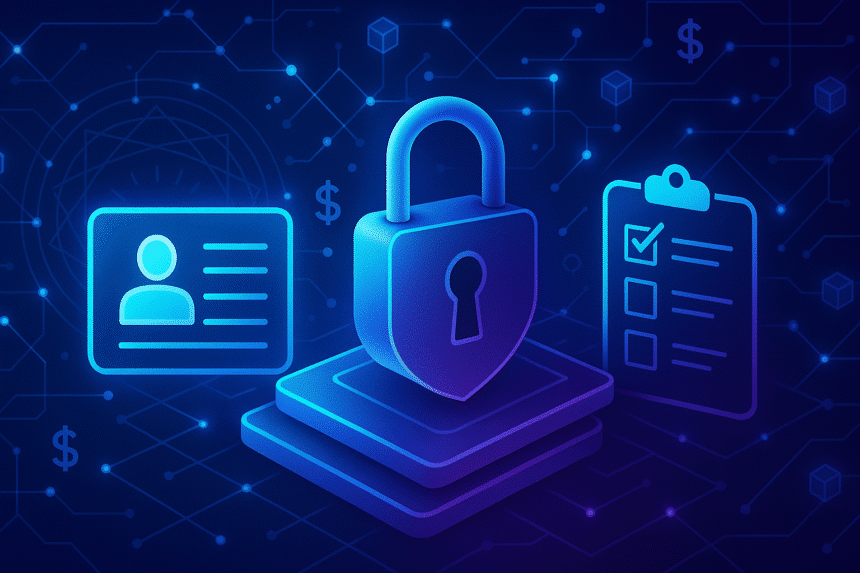

KYC and AML rules are getting harder every year. Banks, crypto apps, fintech companies, and even insurance services must follow strict laws to stop fraud and money laundering. The problem grows fast because criminals also get smarter. Many businesses spend more money on compliance each year, and the work still stays slow and full of errors. So new tools are needed, and blockchain identity is now seen as one of the strongest options for automation. This new method can change how companies verify identities and check risks in a way that is faster, safer, and less costly.
Blockchain identity can be confusing at first. But when explained in simple language, the concept becomes clear. It is like having a digital identity that stays safe on a tamper-proof ledger. The identity can be shared with many platforms without needing to repeat the same long KYC process again. The chain keeps the record secure, and smart contracts can check information automatically. This is the main reason why blockchain identity is slowly becoming the standard for KYC AML automation.
What KYC and AML Really Mean in Simple Words
KYC stands for Know Your Customer. It means businesses must make sure a customer is real and not using fake documents. The company must also check if the person has any risks, such as past fraud or illegal activity. AML means Anti Money Laundering. These rules tell companies to watch how money moves and stop suspicious transfers. Both KYC and AML are legal requirements in most countries.
The big issue today is that these checks still use old systems. Many banks use manual review steps. Documents are sent by email or uploaded online. Staff must review IDs, passports, proofs of address, and more. Every step takes time. Many companies do the same checks again and again for the same customer. It wastes time and money. It is also easy for people to make mistakes because humans get tired or distracted.
Another problem is identity theft. Criminals try to trick companies with fake documents. Some fake IDs look real enough to pass manual checks. This creates serious risk for banks and other financial providers. So a better system is needed, and blockchain identity fits this need.
What Blockchain Identity Means and Why It Helps
Blockchain identity is also called decentralized identity. It stores identity information on a blockchain. The customer controls the identity, and companies can verify details without needing to see all private data. This keeps data safer and reduces privacy problems.
The identity becomes reusable. Once a trusted identity is created, it can be used for many services. A person can access banks, crypto exchanges, insurance apps, and even travel systems without repeating long KYC steps. The chain confirms the details automatically. This is a huge change from old systems.
Another big benefit is the trust factor. A blockchain record can not be changed easily. Once information is written, it stays there in a permanent way. So companies feel more confident when verifying customer identities. This improves KYC and AML compliance because the identity becomes harder to fake.
Blockchain identity is also faster. Verification can happen in seconds. This helps businesses onboard customers quickly without waiting for days or weeks. Companies save money on compliance checks, and customers get smooth access to services.
How Blockchain Automates KYC Checks
Blockchain makes KYC tasks easier by letting companies verify identity details without repeating the same review. The chain stores important data in a trusted way. Smart contracts then help in checking the data automatically.
Instant Identity Verification Using Shared Records
When a customer verifies identity on one platform, the same verified identity can be used somewhere else. The business checks the blockchain instead of doing a full manual check. This cuts onboarding time and reduces errors since the identity is already verified once.
Zero Knowledge Proofs for Privacy and Accuracy
Zero Knowledge Proofs make verification safe. They allow a business to confirm important facts without seeing private data. For example, a business can confirm that a customer is older than 18 without seeing the full date of birth. This helps protect privacy and reduce sensitive data leaks.
Smart Contracts for Automated Rule Checking
Smart contracts follow rules written into code. When a new customer applies to a service, the smart contract checks if the customer has verified identity, valid documents, or meets risk conditions. These checks happen without any human work. So errors become less common, and the compliance team can focus on harder cases.
How Blockchain Identity Helps AML Monitoring
For AML, blockchain offers another set of strong advantages. AML checks focus on watching transactions and identifying risky patterns. A blockchain ledger gives a clear and transparent view of transaction data.
Real Time Monitoring on a Transparent Ledger
Blockchains let companies watch transactions in real time. Suspicious transfers can be flagged quickly. This helps companies respond to risks faster and avoid large fraud losses.
Linking Wallets to Verified Identities
When customer wallets are linked to blockchain identity, AML checks become stronger. It becomes easier to track who owns a wallet. This reduces anonymous crime and improves investigations.
Audit Trails That Are Clear and Automatic
The blockchain keeps every action stored in a traceable record. This removes confusion during audits. Regulators can review activities easily, and companies avoid penalties that come from missing records.
Problems With Old KYC and AML Systems
Many companies still follow traditional KYC methods. These older systems bring many problems. First, they are very slow. A simple KYC process can take days or weeks. Customers get frustrated and may leave the service.
Second, the systems cost too much. Banks must hire large compliance teams. Every employee must review documents manually. Companies spend millions on verification systems and still face delays.
Third, old systems have no shared database. Every company repeats the same work. One bank verifies a customer, and another bank does the same thing again. This is wasted time and money and creates unnecessary delays.
Fake documents are another reason why old systems fail. Criminals keep improving forgery techniques. Manual review teams sometimes miss fake IDs. This puts the financial system at risk.
Long audits also cause stress. Paper documents, old files, and messy digital records make audits time-consuming. Regulators may penalize companies that cannot provide fast proof of compliance.
How Businesses Use Blockchain Identity Today
Blockchain identity is used in many industries. The first industry to adopt it is banking. Banks now use digital identity to speed up onboarding. When a new customer joins, the bank checks blockchain records to confirm identity. This process finishes in minutes, not days.
Crypto exchanges also use blockchain identity. It is natural for them because they already work with blockchain systems. Exchanges can verify a customers identity faster and follow global AML rules. This reduces illegal activity on trading platforms.
Insurance companies also use it. They use identity records to confirm customer details and reduce fraud claims. This helps them approve policies and settlements faster.
Trade and supply chain companies use blockchain identity for customs checks. A verified identity helps track shipments, reduce delays, and avoid fake shipments.
| Industry | Benefit Level | Example Uses |
| Banking | Very high | Faster onboarding |
| Crypto Exchanges | Very high | Wallet verification |
| Insurance | High | Policy checks |
| Supply Chain | High | Customs clearance |
| Fintech | High | App onboarding |
Does Blockchain Make KYC Cheaper for Companies
In most cases, yes. Manual KYC needs many workers. Every document must be checked one by one. This becomes expensive. But blockchain identity reduces staff needs. Companies only focus on special cases or high-risk customers because simple checks run on chain automatically.
Blockchain also cuts repeat work. When a customer is verified once, the identity can be used everywhere. So companies do not spend money on extra verification. Fraud also declines because fake documents cannot fool a decentralized identity system. This reduces losses and penalties.
Blockchain also helps compliance teams save time. Faster checks mean employees handle more cases in a day. This helps reduce cost and increase productivity.
Conclusion
The future looks positive. More governments push digital identity rules. More financial companies adopt blockchain because it saves time and cost. AI tools will make risk scoring faster. Digital identity wallets will become normal for travel, banking, and online shopping.
Global networks may also rise. These networks will let companies verify identities across borders. This will make compliance faster and safer than ever. With more adoption, blockchain identity will soon become the common standard for KYC and AML automation.
Blockchain identity brings a new way to manage KYC and AML. It makes identity safer, faster, and cheaper. It cuts manual work and gives companies a strong way to stop fraud. Even with some challenges, more industries are moving toward blockchain identity because the benefits are clear.
As digital services grow, the need for strong and simple identity verification becomes more important. Blockchain identity is rising to answer this need and will soon become the new standard for compliance work.
FAQ About Blockchain Identity and KYC AML Automation
What is blockchain identity?
Blockchain identity is a digital identity stored safely on a blockchain. It helps companies verify a customer without repeating long checks.
How does blockchain help with KYC?
Blockchain helps by reusing verified identity information. This makes onboarding faster and cuts manual work.
Is blockchain identity safe for private data?
Yes it is safer because the user controls the data. Companies only see what they need through special proofs.
Can blockchain stop money laundering?
It helps a lot because the ledger is clear and easy to track. Suspicious transfers can be seen faster.
Do banks use blockchain identity today?
Many banks and fintech apps already use it for faster verification and lower costs.
Summary
KYC and AML rules are getting stricter, and companies spend large money to follow these laws. Old systems are slow, costly, and full of human mistakes. Blockchain identity creates a better way to manage these checks. It stores identity in a safe digital form that can not be changed easily. Companies can verify customers faster, and the same identity can be reused across many platforms. Smart contracts check rules automatically, so compliance work becomes smoother and cheaper. Blockchain also helps AML because the ledger shows clear transaction trails. This makes suspicious activity easier to find. Even with some challenges like privacy fears and slow adoption in some industries, blockchain identity is growing fast. It brings faster onboarding, lower cost, and stronger protection against fraud. For these reasons, blockchain identity is becoming the new standard for KYC AML automation.