
A few years ago, many people saw pixel art, cartoon animals, and strange collectibles trading for large sums in crypto markets and felt confused. Some images sold for millions, others appeared as free drops inside games, and the whole scene looked like a mix of internet joke and financial experiment. Behind that chaos sat a clear question: what are NFTs (Non-Fungible Tokens), and why do they matter so much to digital ownership?
On a normal app or website, any file can be copied in seconds. A picture, audio track, or document can move from one device to another without losing quality. That is convenient, but it breaks the idea of scarcity. If anyone can copy anything, it becomes very hard to prove which version is the original or who actually owns a specific item. This is exactly the problem that the NFT concept tries to solve at scale.
NFT meaning in Simple Terms
At its core, what are NFTs (Non-Fungible Tokens) is a question about identity and proof. NFT meaning is easiest to understand as a special type of crypto token on a blockchain that represents something unique. Regular cryptocurrencies, like many common coins, are interchangeable. One unit is the same as another. NFTs are different. Each token is designed to stand apart from every other token, like a numbered print, a rare card, or a one-of-one artwork.
NFT meaning also includes the idea of verifiable scarcity. A creator can issue a limited number of NFTs in a collection and lock that supply into a smart contract. Collectors can check the maximum number at any time. That transparency gives digital items a kind of scarcity that looks closer to physical collectibles, only with a public ledger instead of a closed database that no one can inspect.
How Do NFTs Work Under The Hood
To answer what are NFTs in a practical way, it helps to look at how they are built. An NFT is created, or “minted”, through a smart contract on a blockchain such as Ethereum, Solana, or other NFT capable networks. The smart contract defines rules for minting, transferring, and recording ownership. When a project mints an NFT, the contract assigns a unique identifier to that token and records the first owner’s wallet address.
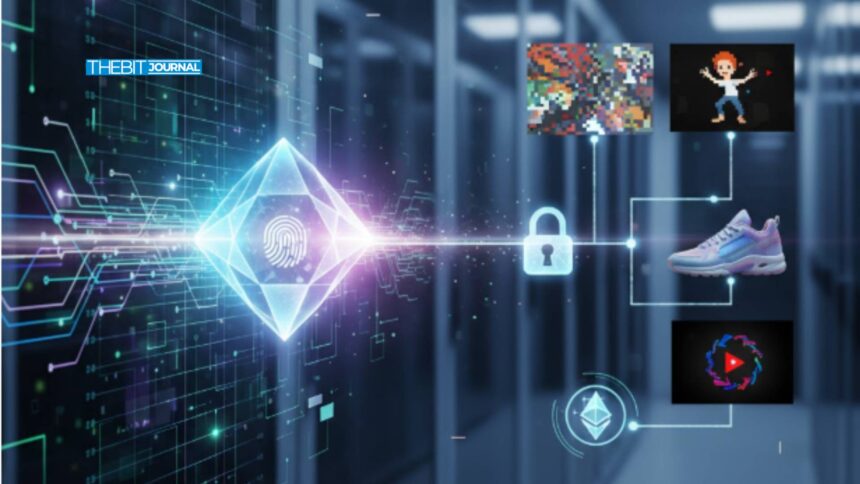
The media file itself, such as an image, video, or audio track, is usually stored off-chain, either on decentralised storage or regular servers. The NFT holds a link to that file through metadata, along with information such as the name, collection, traits, and sometimes royalty details for the creator. NFT meaning, therefore, refers not only to the token ID, but also to the package of data and rights attached to it.
When someone buys or receives an NFT, the blockchain records a transfer from one wallet to another. Anyone can check that history. This traceable trail is a key part of the answer to what are NFTs, because it turns a digital item into an asset with a permanent record of ownership. Marketplaces and tools simply sit on top of that infrastructure and make it easier for users to view, list, bid, and trade.
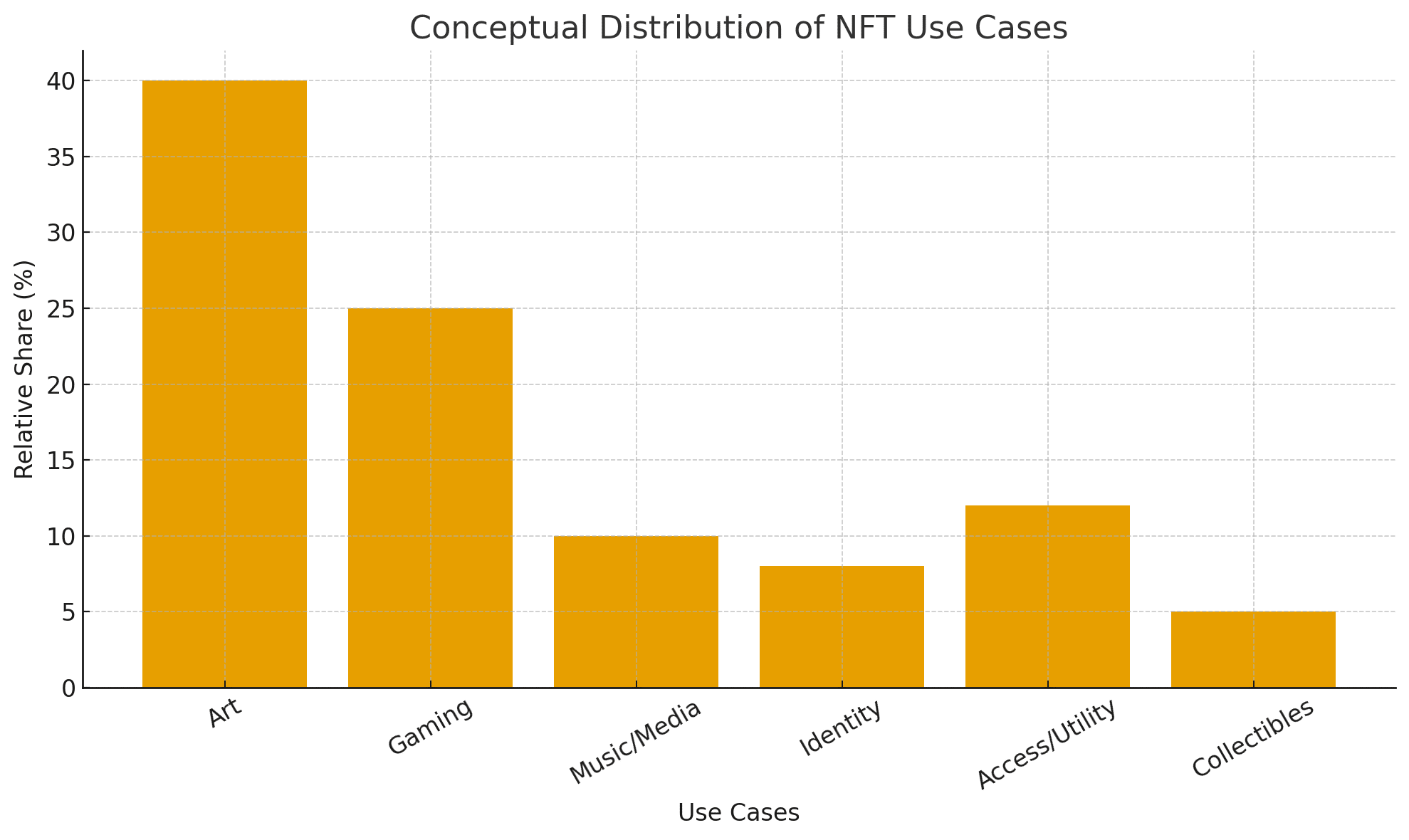
Key Use Cases: Art, Gaming, Music, And More
For many observers, the first real look at what are NFTs came from digital art. Artists began to mint limited edition collections and sell them directly to global audiences without traditional gatekeepers. Each token acted like a signed digital certificate that proved ownership of a work. Even if the image circulated widely online, the blockchain still showed which wallet held the official original.
In games, NFT meaning shifts into a different context. NFTs can represent in game characters, skins, weapons, plot of land, or special passes. Instead of being locked inside a central server, these items live in a player’s wallet. In some ecosystems, those assets can move between games or into open marketplaces where players trade them for crypto or even fiat currency. Digital items start to feel less like temporary perks and more like portable assets.
In music and broader media, what are NFTs often connects to access and membership. A token can grant entry to private communities, early listening sessions, or limited edition physical drops. Some experimental projects tie NFTs to shares of future revenue or on chain royalty splits. Whenever financial promises appear, NFT meaning has to be designed with regulation in mind, so serious teams often take legal and compliance work very seriously.
Scarcity, Provenance, And Value
A major reason people ask what are NFTs is simple confusion about value. One collection might trade for high prices, while another receives almost no interest. That pattern is not very different from the traditional art world. Scarcity, story, brand power, and social status all play a role. NFTs just move those familiar forces into a digital, transparent environment.
Provenance is central to NFT meaning. Every transfer, from the original mint to the latest sale, is recorded on chain. Anyone can check whether a token really came from an artist’s official wallet or from a verified project address. This makes it harder for bad actors to pass off fake editions as genuine. A digital artwork can have many visual copies, but only one verified original within the smart contract.
The Role Of Community And Culture
Another honest way to explain what are NFTs is through the lens of community. Many of the most visible NFT projects did not grow only because of their visual style. They expanded because groups of people built culture around them. Holders met in online chats, at conferences, and at in person events. The token turned into a badge of membership, a ticket to experiences, and a social symbol.
In that sense, NFT meaning stretches beyond technology. Memes, fashion collaborations, sports tie ins, and charity campaigns often emerge out of NFT communities. Some collections partner with brands or artists, while others fade as attention drifts elsewhere. Anyone who studies what are NFTs for long enough sees that they sit at a crossroads of technology, culture, and finance, not in a narrow technical box.
Risks, Scams, And Market Cycles
Any serious answer to what are NFTs also needs a clear look at risk. NFT prices are highly volatile. During heated market phases, buyers sometimes chase hype instead of research, then face sharp drops when sentiment cools. The space has also seen scams, including fake collections, phishing links that drain wallets, and founders who disappear after raising funds.
Because of these issues, NFT meaning includes a strong reminder about education and security. Wallet safety, contract checking, and sceptical thinking are vital habits for anyone dealing with NFTs. Some projects now try to follow stricter standards, publish clearer roadmaps, and show transparent leadership in order to earn trust. Regulators in different regions are actively exploring how NFTs fit into existing frameworks for securities, consumer protection, and tax rules.
How NFTs Connect To The Wider Crypto Ecosystem
The question what are NFTs does not sit apart from the rest of the crypto world. NFTs interact with decentralised finance, gaming, digital identity, and tokenised real world assets. Some platforms let users borrow against NFTs as collateral. Others build index style products that spread exposure across several collections to reduce concentration risk.
Developers also link NFT meaning to identity and reputation. A non transferable NFT can represent an achievement, a certificate, or a verified credential. As scaling solutions improve, cheaper and faster networks allow more practical use cases, such as event tickets, loyalty rewards, and micro licensing for creative work. In these situations, NFTs act less like speculative art and more like flexible digital wrappers that carry rights and access.
From Hype Cycle To Long Term Utility
Early headlines about what are NFTs often focused on extreme sale prices and celebrity drops. That hype phase put NFTs on the global map, but it also shaped a noisy narrative. As markets mature, attention is slowly shifting from pure speculation toward lasting infrastructure and utility.
Institutions and brands test NFTs for certificates, ownership records, and customer engagement. Game studios look at models where players truly own their items instead of renting them. Creators explore ways to share long term value with core supporters in a fairer way. Over time, NFT meaning may feel as normal as the idea of a digital boarding pass or an online ticket. A blockchain record links a token to a wallet, and that token stands in for something that matters in the real or digital world.
Conclusion: Why NFTs Still Matter In A Crowded Crypto World
In the end, what are NFTs is not only a technical question. It is a cultural and economic question that touches creators, collectors, gamers, and institutions. NFTs combine digital scarcity, transparent provenance, and programmable rights in a way that traditional systems struggled to deliver. They give brands and builders new tools to reach communities and experiment with ownership.
At the same time, NFT meaning carries responsibility. Participants need clear information, realistic expectations, and strong security habits. Some experiments will fail, and some may shape entire industries over the long term. For anyone trying to understand what are NFTs, ongoing education is the most important habit. With patient research and a balanced mindset, NFTs start to look less like a passing trend and more like a significant chapter in the story of value on the internet.
Frequently Asked Questions (FAQ) about what are NFTs
1. Are NFTs a type of cryptocurrency?
NFTs are built on top of blockchains that also support regular cryptocurrencies, but they are not the same thing. A cryptocurrency is fungible, meaning each unit is interchangeable with any other unit.
2. Can an NFT be copied or screenshotted?
The image or media linked to an NFT can be copied, downloaded, or screenshotted like any other file on the internet. What cannot be copied is the on chain record that proves ownership of the original token. The blockchain shows which wallet holds the authentic token, and that verifiable record is what collectors value when they trade or display their assets.
3. Do NFTs always represent digital art?
No. While digital art was the most visible early use case, NFTs can represent many things. Projects have used them for game items, membership passes, event tickets, domain names, virtual land, and experiments with tokenised real world assets.
4. Are NFTs environmentally harmful?
Early criticism focused on NFTs that lived on blockchains using energy intensive consensus mechanisms. The environmental impact of an NFT now depends largely on the underlying blockchain and its consensus design, rather than the NFT format itself.
5. Are NFTs a safe investment?
NFTs are high risk assets. Prices can move sharply, liquidity is often thin, and many projects never deliver long term value. Safety depends on research, diversification, and a realistic view of risk.
Glossary of Key Terms
Non Fungible Token (NFT)
A unique crypto token on a blockchain that represents a specific asset, record, or right, rather than an interchangeable currency unit.
Fungible
A term for items that are interchangeable on a one to one basis. Traditional cryptocurrencies are fungible, since one unit has the same value as another unit of the same type.
Smart Contract
Self executing code on a blockchain that defines rules and actions, such as how NFTs are minted, transferred, and tracked over time.
Metadata
Descriptive information stored with an NFT, including the media link, name, traits, collection details, and sometimes royalty rules for the creator.
Minting
The process of creating new NFTs on a blockchain by interacting with a smart contract, which assigns unique token identifiers and initial ownership.
Provenance
The recorded history of an asset. For NFTs, this refers to the on chain record of creation and transfers that shows where a token came from and who has owned it.
Wallet
A software or hardware tool that holds the private keys needed to control blockchain addresses. A wallet allows a holder to send, receive, and manage NFTs and other tokens.
References/Sources
ethereumorg