
The Rise of Crypto Exchanges: A Gateway to the Digital Economy
The subject “What are Crypto Exchanges?” has become essential to the financial debate as digital assets gain traction. These platforms serve as marketplaces where people and institutions may exchange cryptocurrencies including as Bitcoin, Ethereum, and Solana.
Similar to stock exchanges, they provide liquidity, price discovery, and security features. However, the architecture of cryptocurrency exchanges extends beyond traditional markets, offering a global, decentralized layer that has changed finance.
According to industry sources, trade volumes on top exchanges frequently outperform those of major stock markets, demonstrating how important these platforms have grown in global finance. According to a Chainalysis analysis, exchanges processed over $1 trillion in transactions in 2024, emphasizing their critical role in the development of blockchain assets.
Crypto Exchanges: Centralized vs. Decentralized Platforms
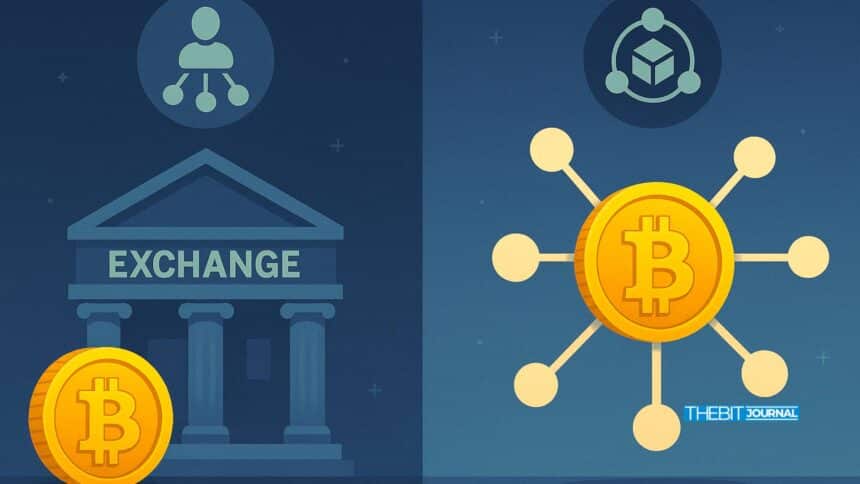
To completely comprehend what are crypto exchanges, it is necessary to differentiate between controlled exchanges (CEXs) and decentralized exchanges (DEXs).
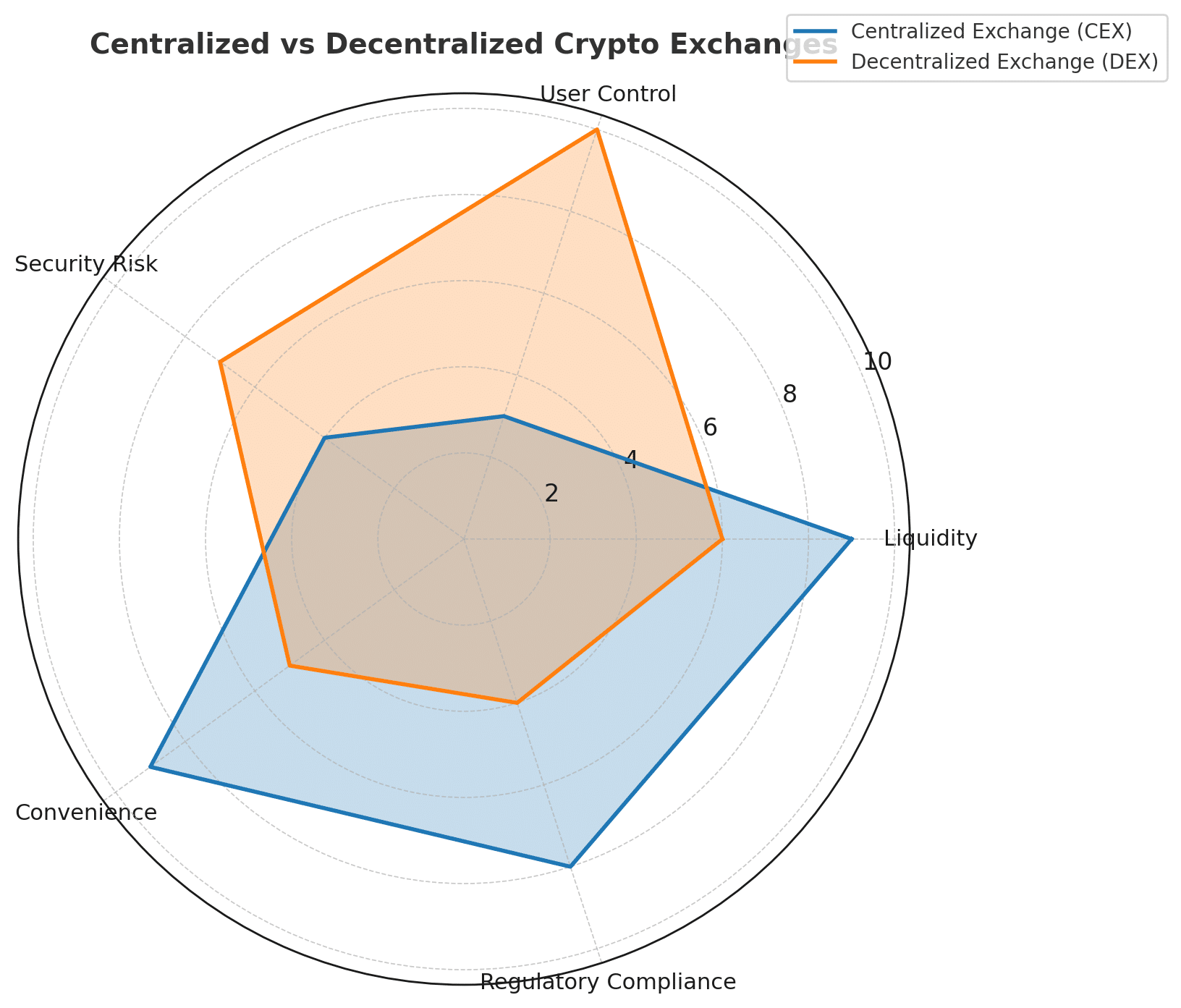
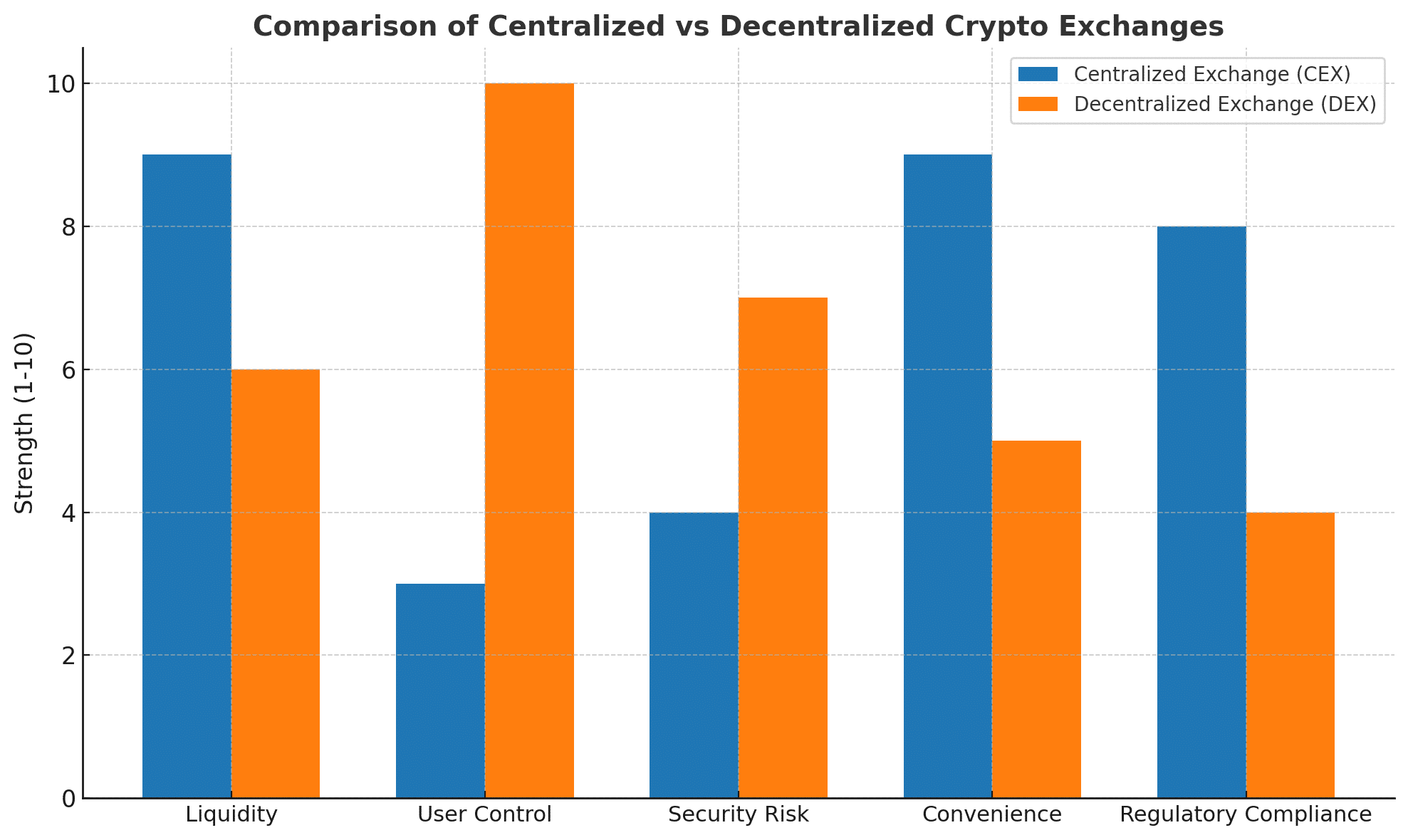
Centralized exchanges serve as mediators. They manage user funds, connect buyers and sellers, and frequently provide extra services like as futures trading, staking, and lending. These platforms are similar to traditional banks in terms of ease and liquidity.
They do, however, create custodial concerns because consumers rely on the exchange to secure their cash. Notable occurrences of exchange hacking have highlighted the significance of thorough security assessments and regulatory compliance.
Decentralized exchanges adopt a whole different approach. Instead of intermediaries, they employ blockchain networks’ smart contracts to conduct peer-to-peer trading. This eliminates the need to place your faith in a third party. Users keep control over their wallets, ensuring that their assets are always under their possession.
DEXs thrive at transparency and self-custody, but they frequently suffer with liquidity and scalability. According to Ethereum’s official data, prominent DEXs conduct billions of trades each day, however abrupt spikes in activity might result in hefty gas fees.
How Crypto Exchanges Work: Wallets and Matching Engines
A cryptocurrency exchange’s matching engine is a mechanism that pairs buy and sell orders. Centralized platforms keep order books in which buyers submit bids and sellers publish offers. The matching engine guarantees that deals are performed at the best available price, similar to the process that drives equities markets.
In decentralized platforms, order books are replaced by liquidity pools. Users deposit tokens into pools, and automated market makers (AMMs) use mathematical formulae to fix prices. For example, in Uniswap-style AMMs, the product of two assets in a pool must be constant to ensure supply and demand equilibrium. While this invention has democratized market making, it also exposes consumers to short-term loss if asset values change significantly.
Both types require wallets to facilitate participation. On CEXs, customers deposit cryptocurrency into custodial wallets controlled by the platform. DEXs allow users to link personal wallets like as MetaMask or Phantom directly to the protocol. This critical distinction informs the debate over control, security, and risk tolerance.
Which Platform Is Best for Your Goals? Security versus Convenience
Individual interests and risk tolerance dictate whether to use centralized or decentralized exchanges.
Centralized exchanges provide users with intuitive interfaces, customer service, and connectivity with traditional banking. They are perfect for newbies or institutions wanting high liquidity and advanced trading capabilities.
Decentralized exchanges, on the other hand, provide consumers with complete ownership over their assets, which they value highly. No third party has custody, lowering the danger of exchange insolvency. DEXs are popular among developers and blockchain enthusiasts because they are open source and accord with the decentralization concept.
According to analysts, many traders use a hybrid strategy, depending on centralized exchanges for liquidity and quickness and decentralized platforms for self-custody and anonymity. This dual approach demonstrates how diversified the ecosystem has developed, with exchanges catering to certain demands.
Key Indicators That Define Crypto Exchanges
Evaluating a cryptocurrency exchange necessitates examining various variables that determine safety and performance. One of the most important factors is liquidity, which affects whether consumers can make transactions without experiencing slippage. Security audits are also crucial, with exchanges that do frequent penetration testing perceived as more trustworthy.
Regulatory compliance has also been a defining characteristic. In places such as the European Union, the MiCA framework requires transparency and consumer protection. In the United States, platforms are overseen by institutions such as the SEC and CFTC. Exchanges that do not satisfy these requirements frequently face delisting or legal action.
Community trust is another important metric. Social media sites and cryptocurrency forums can give early warnings of technical faults or liquidity threats. Discussions on Solana’s price potential, for example, are common in online groups, where traders evaluate whether exchange support increases adoption.
Finally, innovation has an impact. Exchanges that offer novel services such as staking, tokenized assets, or cross-chain interoperability are likely to attract forward-thinking investors. These qualities demonstrate how exchanges have evolved from basic markets to complex ecosystems.
Conclusion: The Future of Crypto Exchanges
Cryptocurrency exchanges are no longer just for early adopters. They have become essential components of modern banking, bridging the gap between established systems and decentralized networks. Understanding “What are Crypto Exchanges?” is more than just a technical description; it is about comprehending the revolution in how value is transferred internationally.
There are advantages and disadvantages to both centralized and decentralized methods. Together, they represent a burgeoning market in which financial students, blockchain engineers, and institutional investors may discover novel ways to contribute.
The future of these exchanges will be determined by legislative certainty, technical developments, and a careful balance of consumer convenience and financial sovereignty.
This article is for informational purposes only and does not constitute financial advice. Readers should conduct their own research before making investment decisions.
Glossary of Terms
Centralized Exchange (CEX): A platform managed by an intermediary that holds user funds and executes trades.
Decentralized Exchange (DEX): A peer-to-peer platform where trades are executed via smart contracts.
Liquidity Pool: A reserve of tokens in decentralized platforms that enables trading.
Matching Engine: The core system in CEXs that pairs buy and sell orders.
AMM (Automated Market Maker): A protocol that uses formulas to set token prices in DEXs.
Impermanent Loss: A temporary loss of funds when providing liquidity to a DEX due to price fluctuations.
FAQs on Crypto Exchanges?
1. What are Crypto Exchanges and why are they important?
Crypto exchanges are platforms where users trade digital currencies. They are essential for liquidity, price discovery, and adoption.
2. How do centralized and decentralized exchanges differ?
Centralized exchanges are managed by companies and hold user funds. Decentralized exchanges use smart contracts and let users keep control of their assets.
3. Which exchange type is safer?
Decentralized exchanges reduce custody risks, but centralized exchanges often provide better liquidity and customer support.
4. What risks exist in using crypto exchanges?
Risks include price volatility, hacks, regulatory actions, and technical issues such as network congestion or smart contract bugs.
5. Can exchanges influence the price of cryptocurrencies?
Yes. Liquidity, listings, and investor sentiment on exchanges often drive short-term price movements and adoption trends.
Sources/References