




Blockchain is a new type of technology that lets people send money or share data without a bank or middleman. It works like a digital book that everyone can see. But the book keeps getting bigger, and more people want to use it at the same time. When this happens, the system can become slow, and sometimes it even costs a lot to use.
Scalability is the word used to explain whether a blockchain can handle more users and more transactions without slowing down. Security is about making sure no one can cheat or change the data. These two things are very important. The problem is that many blockchains cannot scale well while also staying secure.
Sharding is a new idea that people think can fix this problem. It promises faster speed and lower cost, but without making the blockchain weak. In this blog, the idea of sharding will be explained in simple words, so that it is easier to see how it works and why it matters for the future of blockchain.
What is Blockchain Sharding?
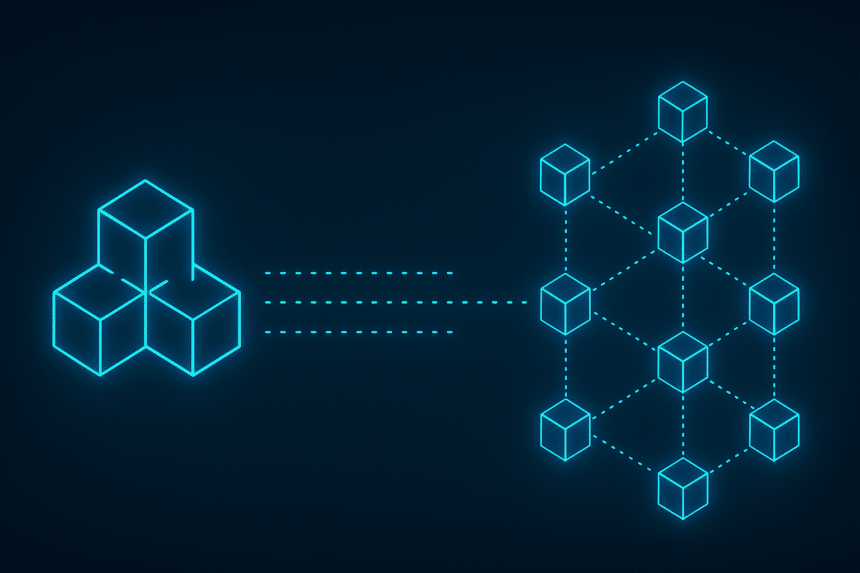
The word “shard” means a small piece of something. In blockchain, sharding is the method of breaking the big chain into smaller chains, or pieces. Each piece is called a shard. These shards can then process their own transactions and store their own data.
Think of a supermarket with only one checkout counter. Everyone has to stand in the same line, and it takes forever. But if the supermarket opens 10 checkout counters, people can go to different lines and things move much faster. This is the same idea with blockchain sharding. Each shard is like a separate checkout counter, helping the system run in parallel.
In regular databases, sharding has been used for years to store large amounts of information. In blockchain it is a little harder because all the shards still need to stay connected and trust each other. That is why blockchain sharding is considered more complex but also more powerful.
Why Scalability is a Problem in Blockchain
Scalability is one of the biggest problems in blockchain today. When a blockchain has only a few people using it, the system works fine. But when millions of people start using it at once, the chain becomes crowded. Transactions pile up and the system slows down.
Bitcoin, for example, can only process around 7 transactions per second. Ethereum can handle a little more, around 15 to 30 per second. This is very small if compared to Visa or Mastercard, which can do thousands of transactions per second. This makes it clear why scalability is such a big deal.
Another problem with poor scalability is high cost. On Ethereum during busy times, the fee for one small transaction can go very high, sometimes even more than the value of the transaction itself. People then feel blocked out of using it.
Scalability also hurts user experience. If a person has to wait minutes or even hours for a payment to confirm, they will not feel happy using that system. For blockchain to be used by everyone in daily life, scalability must be fixed without losing the security and trust that makes blockchain special.
How Sharding Solves Scalability
Sharding is like breaking one big job into many small jobs. Instead of every computer on the network checking every single transaction, the system is split into shards. Each shard checks only a part of the transactions. This makes the work lighter and faster.
https://www.youtube.com/watch?v=ShRZy5bP704
When shards work at the same time, transactions can happen in parallel. That means thousands of trades or payments can be processed at once. This is very different from older blockchains where every node had to handle the same block.
For example, if one blockchain without sharding can process 30 transactions per second, adding sharding may increase it to hundreds or even thousands. This makes the system more like traditional payment companies.
Transaction Speeds With and Without Sharding
| Blockchain System | Transactions Per Second (TPS) | Notes |
| Bitcoin (no sharding) | ~7 | Very slow compared to banks |
| Ethereum (before shard) | 15–30 | Higher fees during busy time |
| Ethereum with sharding | 1,000+ (expected) | Still in upgrade process |
| Zilliqa (sharded) | 2,500+ | Already using sharding |
This table shows how sharding can make a big difference. It shows why many projects are working hard to add blockchain sharding to their network.
Does Sharding Keep Security Safe?
Some people worry that if the blockchain is split into many shards, it will be easier to attack. The reason is simple. A hacker might not need to attack the whole chain. They may only target one shard.
But sharding systems have ways to stop this. One way is random assignment of validators. Validators are people or computers that check transactions. By randomly placing validators in different shards, it becomes very hard for an attacker to control one shard fully.
Cross-shard communication is another important part. Shards need to talk with each other. For example, if one person sends money from shard A to shard B, both shards must agree the transaction is real. Protocols like Ethereum 2.0 are building secure methods for this cross-shard talk.
So even if sharding looks risky at first, with the right design, security can stay very strong.
Security in Sharded vs Non-Sharded Blockchains
| Feature | Non-Sharded Blockchain | Sharded Blockchain |
| Validator Workload | All nodes check everything | Nodes check only one shard |
| Attack Surface | One whole chain | Each shard separately |
| Defense Method | Many nodes confirm together | Random validator rotation |
| Risk Level | Lower, but less scalable | Balanced with right design |
This table makes it easier to see the trade-off. Blockchain sharding is not perfect, but it is built to keep both speed and safety.
Examples of Blockchains Using Sharding
Not every blockchain has sharding today. Some are already testing it, while others are still planning.
Ethereum 2.0 and Sharding Plans
Ethereum is one of the biggest blockchains and is slowly moving to a new system with blockchain sharding. The upgrade is part of Ethereum 2.0. It plans to split the network into 64 shards. Each shard will handle its own data and transactions, while still connecting back to the main chain. This is expected to make Ethereum much faster and cheaper to use.
Zilliqa and Its Sharding Success
Zilliqa was one of the first blockchains to launch sharding in a live network. It has shown that sharding can really work. Zilliqa can process thousands of transactions per second. This makes it stand out compared to older chains.
Other Chains Testing Sharding
Other projects like NEAR Protocol are also using sharding ideas. NEAR uses something called “Nightshade” sharding, which splits the chain but still shows it as one chain to the user. This helps keep the system simple for developers and users.
Blockchains With and Without Sharding
| Blockchain | Sharding Status | Speed (TPS) | Notes |
| Bitcoin | No sharding | ~7 | Very secure but slow |
| Ethereum 2.0 | Sharding in progress | 1,000+ expected | Rollout happening in phases |
| Zilliqa | Sharding live | 2,500+ | Proved sharding works in real world |
| NEAR Protocol | Sharding live | 1,000+ | Uses Nightshade model |
This table shows that sharding is not just theory. Some blockchains are already using it, while others are moving toward it.
Challenges of Blockchain Sharding
Blockchain sharding is not easy to build. It has many problems that must be solved before it can fully work.
Cross-Shard Communication Problems
When there are many shards, they need to talk with each other. If someone sends money from one shard to another, both shards must agree that the transaction is real. This process can be slow and tricky. If cross-shard messages are delayed or broken, users may see errors or even double spending. Making sure this does not happen is one of the hardest parts of sharding.
Validator Assignment and Risks
Validators keep the system safe. But in sharding, they are split across shards. If one shard gets weak validators or if an attacker controls a big part of them, that shard can be attacked. To fix this, most designs use random rotation of validators. Still, it is not perfect and always a risk.
Risk of Centralization in Shards
If shards get controlled by small groups, power becomes centralized. This breaks the idea of decentralization. Rich actors with more tokens may have more chance to control shards. If that happens, it could damage the fairness of the blockchain.
So while sharding looks very good, these challenges are real and developers spend years trying to solve them.
Benefits of Blockchain Sharding
Even with the problems, the benefits are too big to ignore.
Faster Transactions
With sharding, transactions no longer wait in one line. Each shard runs its own line, and everything moves in parallel. This means payments, trades, and apps run much faster.
Lower Fees
When the chain is faster and less crowded, the cost of using it also goes down. High gas fees are one of the biggest complaints about Ethereum today. Blockchain sharding is expected to make fees much cheaper, maybe even a few cents instead of dollars.
Better User Experience
Users want things that just work. If payments confirm in seconds and cost almost nothing, more people will use blockchain apps. Businesses will also feel safer to build on such systems.
Benefits of Blockchain Sharding for Users and Developers
| Benefit | For Users | For Developers |
| Speed | Faster payments and apps | Can build more complex apps |
| Cost | Lower fees to send money | Cheaper cost for smart contracts |
| Scaling | Can handle millions of users | Easier to grow apps without limits |
The benefits explain why so many big projects are racing to add sharding. It can change blockchain from a niche tool to something used in daily life.
Sharding vs Other Scaling Solutions
Sharding is not the only way to fix scalability. Other methods exist, but each has its own limits.
Sharding vs Layer 2 (Rollups, State Channels)
Layer 2 solutions work on top of the main chain. They make things faster by moving some transactions off the main chain and only recording the result back. Rollups are popular on Ethereum. But layer 2 still depends on the base chain, and if the base chain is too slow, it can still be a bottleneck.
Blockchain Sharding vs Sidechains
Sidechains are separate blockchains connected to the main chain. They can run fast and cheap, but they may not be as secure as the main chain. If the sidechain gets hacked, users lose funds. Sharding keeps everything under one system, which makes it safer.
Sharding vs Bigger Blocks Approach
Some blockchains try to scale by making blocks bigger. This lets them store more transactions in each block. But bigger blocks also need more storage and bandwidth. Small nodes cannot keep up, which risks centralization. Sharding avoids this by splitting work across shards instead of making one block heavier.
Sharding vs Other Scaling Methods
| Scaling Method | Pros | Cons |
| Sharding | Very fast, keeps security | Hard to build, complex |
| Layer 2 | Works today, fast upgrades | Depends on base chain |
| Sidechains | Flexible and independent | Lower security, trust issues |
| Bigger Blocks | Simple upgrade, easy to add | Risk of centralization |
This shows why blockchain sharding is seen as the long-term fix, while other solutions are good for short-term relief.
Future of Blockchain Sharding
Sharding is still new in blockchain. Not many blockchains are fully using it yet. Ethereum is still building its sharding upgrade, while other chains like Zilliqa and NEAR already use it. But the future looks strong because it can fix one of the biggest problems in blockchain.
Experts believe that once blockchain sharding is fully live on big chains, blockchain can reach the same level as Visa or Mastercard in speed. That will make it possible to use blockchain for daily payments, gaming, banking, and even social media apps without delays.
There are also ideas to mix sharding with other technologies like AI and automation. AI could help decide how validators rotate between shards, making the system even harder to attack. Automation could help shards talk with each other faster.
Another important part of the future is combining blockchain sharding with other scaling methods. For example, sharding plus layer 2 rollups can give both high speed and extra security. This “multi-layer” scaling will likely become the normal path for most blockchains.
Future Expectations of Blockchain Sharding
| Area | Today Status | Future Possibility |
| Speed | Hundreds to a few thousand TPS | Millions of TPS possible |
| Cost | Lower but not lowest yet | Very small fees, cents or less |
| Security | Still being tested | Stronger with AI + validator tools |
| Adoption | Few blockchains live | Many blockchains using it daily |
This table makes it clear that sharding is not done yet, but it can change the way blockchain works for everyone.
Conclusion
Scalability has always been the biggest roadblock for blockchain. Security and decentralization are already strong, but the speed and cost have been weak. Blockchain sharding is one of the best answers to this issue. By splitting the chain into many shards, the system can run faster, cheaper, and still safe.
Ethereum, Zilliqa, and NEAR show that sharding is not only an idea, but something that works. The challenges like cross-shard talk and validator safety are real, but developers are building strong solutions. The benefits, such as lower fees and faster apps, make the risk worth it.
In the future, blockchain sharding will likely mix with layer 2 and AI-driven tools, making blockchain stronger than ever. The world is moving toward a place where millions can use blockchain at the same time, without waiting and without paying high costs. Sharding will be at the center of this growth.
Frequently Asked Questions About Blockchain Sharding
What is blockchain sharding in simple words?
Blockchain sharding means breaking one big blockchain into smaller pieces, called shards, so that each shard can process its own transactions faster.
Is blockchain sharding safe for blockchain?
Yes, if designed well. Validators are randomly rotated, and cross-shard messages are checked carefully to keep security strong.
Which blockchain is using sharding right now?
Zilliqa and NEAR already use sharding. Ethereum is working on adding it soon.
How does sharding lower fees?
When transactions run faster and the chain is less crowded, the fees to use it also go down.
Will sharding replace Layer 2 scaling?
Not really. Sharding and layer 2 can work together. Sharding helps the base chain, while layer 2 adds extra speed and features on top.
Glossary
Blockchain
A digital record that stores transactions. It is shared by many computers so no one can cheat or change it alone.
Scalability
The ability of a blockchain to handle more users and more transactions without slowing down.
Security
Protection of the blockchain from hacks, fraud, or cheating.
Sharding
Breaking a blockchain into smaller pieces called shards. Each shard processes its own transactions to make the system faster.
Shard
One small part of a sharded blockchain. Works like a mini blockchain inside the big chain.
Validator
A computer or person who checks and approves transactions to make sure they are correct.
Cross-Shard Communication
When one shard sends or receives information from another shard. For example, sending money from shard A to shard B.
Layer 2
A second layer built on top of a blockchain that helps make it faster and cheaper, like rollups and state channels.
Sidechain
A separate blockchain connected to the main blockchain, often used for faster or cheaper transactions.
TPS (Transactions Per Second)
How many transactions a blockchain can process in one second.
Summary
Blockchain is powerful but has always faced a big problem called scalability. It is hard for blockchains like Bitcoin and Ethereum to process many transactions at once. This makes them slow and expensive when millions of people try to use them.
Blockchain sharding is a new way to fix this issue. By splitting the blockchain into shards, the network can process many transactions in parallel. This makes it faster and cheaper without removing the security that keeps blockchain safe. Shards are protected by validators, and cross-shard communication makes sure money or data moves correctly between shards.
Some blockchains like Zilliqa and NEAR already use blockchain sharding, while Ethereum is working on adding it in Ethereum 2.0. The challenges are real, such as cross-shard talk and the risk of centralization, but the benefits are much stronger. Faster speed, lower fees, and better user experience make blockchain sharding very important.
In the future, sharding will work together with other solutions like layer 2 and maybe even AI tools. This can help blockchain scale to millions of users and become part of daily life. Sharding is seen as one of the best answers to blockchain scalability without losing security.