
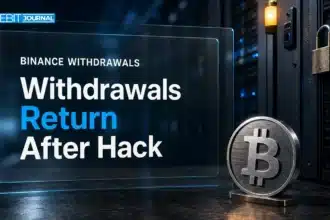


Binance withdrawals began reopening on November 1, three days after attackers stole about $6.3 billion from the exchange in what BeInCrypto described as the largest crypto hack in history. Binance is restoring transfers network by network and says it has covered about 95% of the stolen amount from its own reserves.
The staged restart restores withdrawals on some networks, but does not resolve every question about the breach or the remaining recovery. Bitcoin and several other networks are available, while Binance says further openings will follow checks.
Why it matters
Binance’s reported reserve coverage is substantial, but the available reporting does not include a detailed account of the exploit, a token-by-token breakdown of the coverage, or the results of the checks still underway. The phased reopening also means users should check which specific networks and assets Binance has enabled before assuming a transfer is available.
What we know about Binance withdrawals
How Binance withdrawals are returning
According to BeInCrypto, the attack began on October 29 and drained about $6.3 billion from Binance hot wallets across multiple blockchains in less than four hours. Most of the funds reportedly left within roughly 20 minutes. On November 1, Binance began a controlled, phased reopening, starting with Bitcoin.
In updates that day, Binance listed BTC, ETH, BNB, XRP and assets on the BSC and Base networks as available for withdrawals. It later added POL, USDT and USDC on Polygon, along with AVAX, USDT and USDC on the AVAXC network. Binance said more assets and networks would return progressively after checks, and warned that high volume could cause temporary delays. Deposits remained available during the incident, according to BeInCrypto.
Binance says it set aside more than $6.34 billion and has covered about 95% of the stolen amount. BeInCrypto reported that the outstanding portion involves less liquid tokens that Binance is still buying. This is the exchange’s account of its response. The reporting does not provide a token-by-token breakdown of the funds or the coverage.
BeInCrypto reported that the FBI attributed the theft to North Korea’s TraderTraitor group and urged industry participants to block related addresses. The outlet said partners froze an estimated $2.7 billion to $3 billion. That estimate refers to partner action, not necessarily assets returned to Binance or its customers.

What is still unclear
The phased return of Binance withdrawals does not, by itself, explain how attackers accessed the hot wallets or how the theft moved across multiple networks. The research available for this report does not include a detailed technical postmortem, an independent audit of Binance’s reserve claim or a confirmed schedule for every remaining asset.
There is also no complete public accounting in the available reporting of how much stolen crypto has been frozen, recovered or remains under attacker control. The reported $2.7 billion to $3 billion freeze estimate concerns partner action. It does not establish that those assets have been returned to Binance or customers. The reporting says the remaining gap includes less liquid tokens that Binance is still buying, but does not give further details.
Binance says user funds remain safe. That is the company’s statement; the information provided for this report does not independently verify it. Binance also warned that high volume could cause temporary withdrawal delays. Further network updates and any later incident report may provide more information about the checks and recovery.
How markets reacted
BeInCrypto reported that Bitcoin fell more than 3% after the breach and briefly touched a six-week low near $76,000. Ethereum and BNB also declined. Liquidations exceeded $628 million in an hour, mostly among long positions, according to CoinGlass data cited by the outlet.
CoinGecko market data at 13:13 UTC on November 1 showed BTC at $77,917, up 0.6% over 24 hours but down 3.34% over seven days. ETH was $2,263.64, up 0.8% over 24 hours and down 3.31% over seven days. BNB stood at $713.73, up 1.27% over 24 hours and down 4.08% over seven days. These readings show prices and percentage changes for the stated periods; they do not establish that the withdrawal reopening caused a price move.
| Asset | Price, Nov. 1 at 13:13 UTC | 24-hour change | 7-day change |
|---|---|---|---|
| BTC | $77,917 | +0.6% | -3.34% |
| ETH | $2,263.64 | +0.8% | -3.31% |
| BNB | $713.73 | +1.27% | -4.08% |
The Crypto Fear & Greed Index was 34, classified as Fear, on November 1. That reading describes the index’s classification and is not a forecast. The research available for this report includes no named analyst views or forecasts, so the market figures above describe price action rather than expert consensus.

What it means for investors
Binance withdrawals and exchange risk
The incident shows that a withdrawal pause can limit access to assets held on an exchange while the platform conducts checks. In this case, Binance reopened withdrawals in stages, and its updates warned that high volume could cause delays. BeInCrypto also reported price declines in Bitcoin, Ethereum and BNB and substantial liquidations after the breach.
Reserve coverage claims, frozen addresses and restored Binance withdrawals do not establish that every loss has been recovered or that future losses are impossible. Crypto assets can lose value, and the incident involved theft from exchange hot wallets. The information available here does not establish whether every affected asset has been returned.
Further details to watch include Binance’s network-status updates, a technical explanation of the breach, independent confirmation of the reserve and recovery figures, and additional information from law enforcement or partners about frozen assets. These could clarify what has been recovered and what remains unresolved.
Bottom line
Binance withdrawals are returning in stages after a record theft, and the exchange says its reserves have covered about 95% of the stolen amount. The reopening is an operational step, but the exploit details, final recovery total and status of remaining assets are still unresolved.
Sources
This article is for informational purposes only and does not constitute financial or investment advice. Cryptocurrencies are highly volatile; always do your own research before investing.