





As Bitcoin along with other crypto-assets breaks down heading into Q2, a new report by Coinbase and Glassnode has identified Bitcoin undervalued before entering the fiscal quarter ahead.
The report described the present crypto cycle as a late stage bear market and noted that, despite a poor performance in Q1, various macroeconomic factors are starting to align for what could be a market bottom.
This follows the drastic 18% decrease in global crypto market capitalization during Q1 2026, despite a stablecoin supply growth up from $308 billion to $318 billion, indicating that capital has yet to leave the ecosystem and is simply sitting on the sideline.

Market Sentiment Points to Late Bear Cycle Conditions
The report indicates that a major change in investor psychology is taking place. Approximately 70% of retail participants and 82% of institutional investors currently consider the market to be in a bear or late bear phase.
This is a huge jump from December 2025 levels where only 1% of non-institutional investors and 36% of institutions shared that sentiment. This is due to the general acceptance that the market is no longer just in a temporary correction but going deeper into a cycle downturn.
This phase has often occurred along with accumulation periods in past cycles . Speculative capital leaves and long term investors start re-positioning. The rise in stablecoin supply supports this, suggesting liquidity is being preserved rather than withdrawn entirely.
Bitcoin Undervalued Narrative Gains Strength
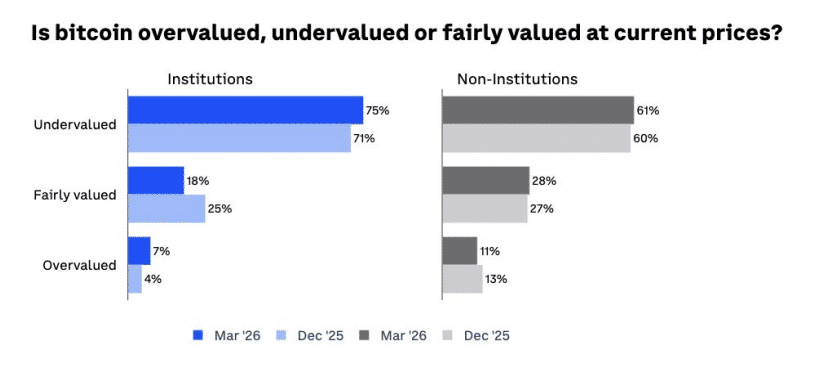
According to institutional participants, the main conviction appears to be Bitcoin undervalued. Based on the report, current price levels do not fully reflect Bitcoin’s future demand profile.
April data shows continued institutional interest, primarily via spot Bitcoin ETFs which racked up $2.135 billion of inflows in the month.
Such inflows are a sign that major investors remain confident even as geopolitical tensions and macro uncertainty weigh on short-term price action. This disconnect of price and demand is exactly why institutions are labeling Bitcoin undervalued instead of weak.
Ethereum Sentiment Shifts to ‘Hope’ Amid Structural Reset
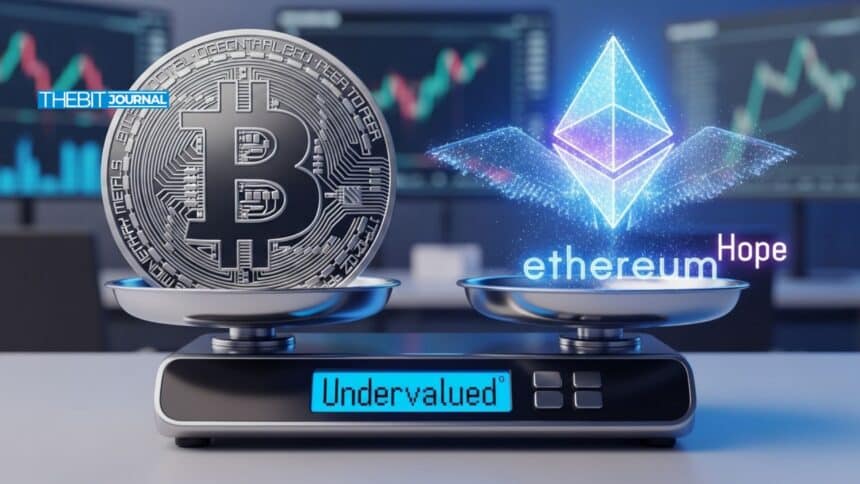
While Bitcoin is viewed through a valuation lens, Ethereum is more about sentiment recovery. Describing Ethereum’s outlook going into Q2 as “hope”, the report suggests a deviation from speculative excess.
The price of Ethereum at the beginning of Q2 was $2324.01, a 12% gain over the previous month. This improvement happens as leverage and speculative activity were flushed out of the system.
The change toward “hope” indicates the market is moving from panic selling to cautious accumulation. It also shows that most participants are conviction driven and not just speculation driven.
Ethereum desperately needs l this reset, especially with institutional demand continuing to swell, and use-cases around tokenization and staking and on-chain finance grows far fuller.
Macro Pressures and Policy Developments Shape Outlook
Geopolitical tensions in the Middle East would rank as the central top factor for volatility in Q1, according to the report. Faced with high oil prices, conflict risk and tightening financial conditions, the environment for risk-inclined assets such as crypto was unfortunately quite challenging.
Outside of geopolitics, regulatory developments especially the proposed CLARITY Act are also important in terms of market expectations. Any moves towards regulatory clarity could support institutional inflows and broader adoption.
Another emerging factor is the rise of agentic AI systems, which are beginning to intersect with crypto infrastructure. This trend is still early but being monitored as a potential long-term driver of activity and capital flows on the network.
Forecasts from Goldman Sachs have implied that the crypto market is also potentially close to its cyclical bottom and will not recover until late 2026.
Conclusion
The projection of Bitcoin undervalued and Ethereum showing renewed “hope” together paint a picture of a market transitioning out of its most difficult phase. Though Q1 2026 delivered an 18% drop in market capitalization, but as stablecoin supply increased and institutional inflows continue to pour in, it looks more like strength not weakness.
The current environment shows a classic late bear cycle: negative sentiment is widespread, speculative excess has been reduced, and long-term capital is beginning to re-enter. However, macro uncertainty and regulatory timelines remain critical variables.
Skepticism remains as long as the Crypto Fear and Greed Index continues to remain in the “fear” zone. However, if historical patterns persist, this phase may just end up being remembered as the ground for the next recovery cycle.
Glossary
Late bear phase: the last stage of a market decline where accumulation typically starts.
Stablecoins: Cryptocurrencies that are pegged to a stable-use asset, such as the US dollar.
ETF Inflows: Money entering into exchange-traded funds, which are often viewed as an indicator of institutional demand.
Fear and Greed Index: Market sentiment indicator ranging from extreme fear to extreme greed.
Frequently Asked Questions About Bitcoin Undervalued Report
Why is Bitcoin undervalued from the report?
This means institutions think prices currently do not represent where demand will be in the future, and that new inflows into ETFs keep going alongside low supply.
What is Ethereum hope sentiment
After the market resets, this represents an evolution from speculation to cautious optimism.
Did the crypto market decline in Q1 2026?
Yes, total market capitalization dropped by 18%.
What role do stablecoins play in this cycle?
Their growth shows evidence of capital staying in crypto and waiting for re-entry.
References