



Blockchain is a special type of database. It does not need a middleman to record or check the data. Once the data goes inside, it cannot be changed. This makes it trusted and safe for money, contracts, and records.
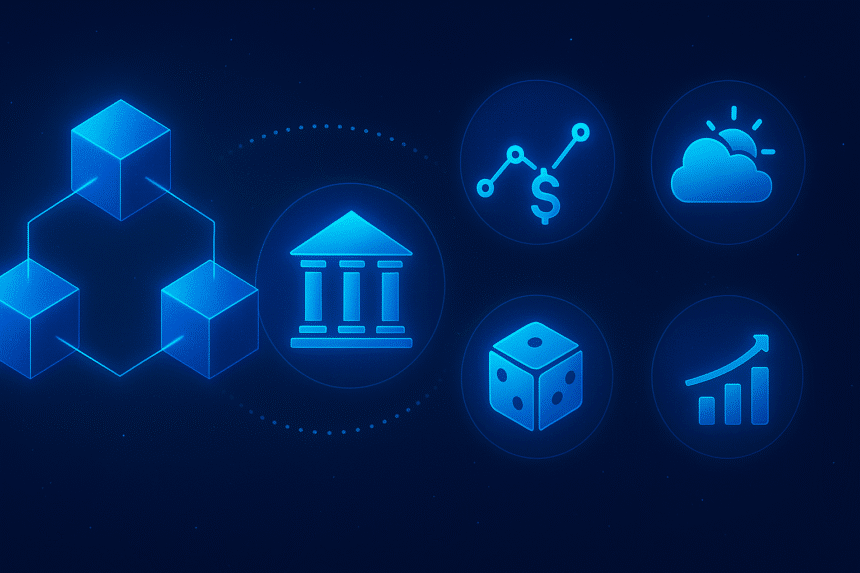
But blockchain has one big problem. It only knows what is already inside the chain. It cannot see outside events like stock prices, weather, sports scores, or even who won an election. This makes it very limited if only on-chain data is used.
For blockchains to become useful in the real world, they need information from outside. This outside information is called off-chain data. The problem is how to bring this data in a way that is secure and trusted. That is where oracles come in.
An oracle is like a bridge between blockchain and the outside world. It takes real-world data and delivers it into the chain so smart contracts can use it. When the oracle is decentralized, the trust and security are higher because no single person controls the data flow.
What Are Decentralized Oracles?
A decentralized oracle is a system that brings outside data into a blockchain in a safe way. The word decentralized means that many different people or machines work together to provide the data. This makes the system fair and more difficult to cheat.
When data is provided by a single company or server, then it is known as the centralized oracle. This is dangerous since should that single source fail (lies or is hacked) the entire blockchain application will break down. To illustrate, with a DeFi app, when the price feed of a single website is attacked, millions of dollars can be lost.
In case of decentralized oracles, there are numerous sources of data. These are then verified and accepted prior to being put on the blockchain. This will decrease the possibility of fraud or manipulation.
The reason why decentralized oracles are important is trust. Blockchains are built to remove trust in middlemen. If the oracle itself is centralized, then the whole system becomes weak again. Decentralized oracles solve this by spreading the trust across many providers.
How Oracles Bring Off-Chain Data On-Chain
The word off-chain data means information that is not stored inside the blockchain. This includes almost everything around us like weather, prices, temperature from IoT devices, election results, and even GPS locations.
To take the crop insurance example, the blockchain must be aware whether it rained excessively or excessively in a single location. This is provided by external weather stations off the blockchain. Oracles gather this information, validate it by a large number of different sources, and supply it to the smart contract.
Bringing data process is normally a step by step process. The oracle network gathers the data, first in APIs, sensor, or feeds. Subsequently, the information is confirmed by various nodes. Then, the information is stored into the blockchain in a readable form by smart contracts. Lastly, the smart contract applies this information to execute the activity, such as issuing an insurance payment or modifying a loan.
Here is a simple table that explains the flow of data:
| Step | Action | Example |
| 1 | Data collected from outside | Weather station temperature |
| 2 | Data verified by oracle nodes | Cross-checking multiple stations |
| 3 | Data delivered to blockchain | Sent to Ethereum smart contract |
| 4 | Smart contract runs action | Insurance payout triggered |
Without oracles, blockchain apps would stay cut off from the real world. With oracles, they become powerful tools that can connect money, contracts, and logic with real events and conditions.
Types of Decentralized Oracles
Not all oracles are the same. They provide different types of off-chain data depending on what the blockchain app needs. Some give financial prices, some give random numbers, and others bring weather or cross-chain information.
Price Feed Oracles
Price feed oracles are the most common. They deliver the latest price of crypto coins, stocks, or even commodities like gold and oil.
DeFi platforms use these oracles to set loan values, liquidations, or trading pairs. For example, if a DeFi lending app gives out loans in Ethereum, it must know the current price of Ethereum in US dollars. A price feed oracle keeps sending the live price to the blockchain, so smart contracts can act correctly.
If this oracle was wrong or delayed, people could cheat the system and drain funds. That is why most DeFi apps only trust decentralized price feed oracles like Chainlink.
Weather Oracles
Weather oracles deliver data about rainfall, temperature, wind speed, and natural events. This type of data is very useful in agriculture insurance.
For example, if a farmer has an insurance contract on the blockchain, the payout will depend on rainfall. If it rains less than expected, the oracle sends that info into the smart contract, and the insurance payout happens without needing a human.
Randomness Oracles
Random numbers are important for blockchain gaming, lotteries, and even NFT minting. But blockchains cannot generate real random numbers on their own because they are deterministic systems.
That’s why randomness oracles exist. They provide verified random numbers that smart contracts can use. Without them, games and lotteries on blockchain would not be fair.
Cross-Chain Oracles
Cross-chain oracles allow data and assets to move between different blockchains. For example, if a smart contract on Ethereum needs to know the price of Bitcoin, a cross-chain oracle can provide it.
This makes blockchain networks more connected and helps users move assets between chains in a safe way.
Here is a table that shows the main types of decentralized oracles and their uses:
| Oracle Type | Data Provided | Example Use Case |
| Price Feed Oracles | Crypto or stock prices | DeFi lending, trading |
| Weather Oracles | Rain, temperature, storms | Crop insurance contracts |
| Randomness Oracles | Random numbers | Games, lotteries, NFT drops |
| Cross-Chain Oracles | Data across blockchains | Multi-chain DeFi, token swaps |
Why Off-Chain Data Integration Is Important
Blockchains are powerful but they have a big limit. They can only see and use the data that is already inside the chain. This is good for security but it also makes the system blind to what happens in the real world. Without outside data, most smart contracts would not be useful.
Take finance as an example. A DeFi loan app needs to know the live price of crypto tokens. If the price falls below a certain level, the loan must be liquidated to protect the lender. Without off-chain data, the smart contract would never know the price, and the whole system could collapse.
Another case is insurance. Imagine a crop insurance contract that pays a farmer when rain is too low or too high. The blockchain cannot sense the weather on its own. Oracles are the tool that bring this weather information into the chain, so the contract can run by itself.
Gaming and NFT projects also depend on oracles. Randomness oracles provide fair random numbers, so games cannot be rigged. Without oracles, blockchain games would always have fixed results, and no player would trust them.
Supply chain tracking is another area. Companies want to know if goods have reached a port, if temperature stayed safe for medicine, or if shipping delays happened. Off-chain sensors and GPS data feed into oracles, which then update the blockchain records. This creates trusted supply chain systems that cannot be faked.
To show this clearly, here is a table that connects industries with the type of off-chain data they use:
| Industry | Type of Off-Chain Data | Role of Oracles |
| Finance (DeFi) | Live token or stock prices | Loans, trading, liquidations |
| Insurance | Weather, disaster reports | Automatic payouts |
| Gaming & NFTs | Random numbers | Fair gaming, NFT minting |
| Supply Chain | GPS, sensor data | Tracking goods, quality checks |
So, the importance of off-chain data integration is simple. Without it, blockchain would just be a closed system with very few uses. With it, blockchain connects to real-world events and becomes much more powerful.
Problems and Risks with Oracles
Oracles are important, but they are not perfect. When outside data is moved into blockchain, some risks and problems can happen. If not handled, these problems can cause big losses for apps and users.
One of the biggest risks is data manipulation. If an attacker controls the source of the data or the oracle itself, the wrong information can be sent into the blockchain. For example, if a DeFi app depends on a price feed and a hacker changes the price, the smart contract may give out unfair liquidations or wrong payouts. This already happened in some DeFi hacks where millions were lost.
Another risk is single point of failure. If an app uses only one centralized oracle, the whole system depends on that one source. If the oracle goes offline, gets hacked, or lies, then the blockchain contract cannot work correctly. This breaks the whole idea of decentralization.
Latency is also a problem. Latency means the delay in sending data from outside into the chain. If price or weather data comes late, the smart contract may act too slowly. In trading or insurance, even a short delay can mean huge money loss.
There is also the problem of trust. If people do not believe the oracle data is correct, then the blockchain app loses credibility. The value of using blockchain is that it removes middlemen and builds trust. But if the oracle is weak or dishonest, then the app becomes as risky as a normal system.
Here is a table that shows common oracle problems and their impact:
| Problem | What Happens | Real Impact |
| Data Manipulation | Wrong data is sent to blockchain | Hackers drain DeFi funds |
| Single Point of Failure | One oracle controls everything | Whole app shuts down if it fails |
| Latency | Data arrives too late | Wrong trades or delayed payouts |
| Lack of Trust | Users doubt data quality | Less adoption of blockchain apps |
These problems show why decentralized oracles are needed. A centralized oracle is easy to attack or corrupt, but a decentralized one is harder to break because many providers check the same data.
How Decentralized Oracles Solve These Problems
The risks of oracles are serious, but decentralized oracles are designed to fix them. Instead of depending on one data source or one company, they spread out the job across many nodes and systems. This makes the whole process more safe and fair.
Multiple Data Sources
One of the best solutions is using multiple sources for the same data. For example, a price feed oracle will not just take the price from one crypto exchange. It will collect prices from ten or twenty exchanges, then average them. If one exchange is hacked or shows wrong data, it does not affect the final number much.
This makes it very hard for attackers to cheat the system. They would need to hack many exchanges at the same time, which is almost impossible.
Incentive Models
Decentralized oracles also use incentive models. This means the nodes or providers that give correct data get rewards, usually in tokens. If they lie or send wrong data, they get punished or lose money.
This creates a strong reason for providers to stay honest. They know they will earn more if they report the right data.
Cryptography
Another solution is cryptography. This includes signatures, proofs, and even zero-knowledge proofs that make sure the data is real. When a source signs the data with its private key, anyone can check it with the public key. This proves the data was not changed on the way.
Some oracles also use secure hardware that keeps the data safe before it is sent to the chain. This adds an extra layer of trust.
Here is a table that explains how decentralized oracles solve each problem:
| Problem | Decentralized Solution | How It Helps |
| Data Manipulation | Multiple sources for same data | Wrong info is filtered out |
| Single Point of Failure | Many nodes provide data | No one controls everything |
| Latency | Distributed networks update faster | More real-time data feeds |
| Lack of Trust | Incentives and cryptography | Honest reporting, verified data |
Popular Oracle Projects in Blockchain
Decentralized oracles are not just a theory. Many real projects are already working today and are used by hundreds of blockchain apps. Some are more famous than others because they provide reliable data and have built strong networks.
Chainlink
Chainlink is the most well-known decentralized oracle network. It started on Ethereum but now works across many chains. Most DeFi apps like Aave, Synthetix, and Compound use Chainlink price feeds to keep their systems safe.
Chainlink has thousands of node operators that bring data from many sources. The network uses staking, rewards, and cryptography to make sure the data is correct. It also has extra services like randomness oracles (called VRF) and proof of reserves for stablecoins.
Because Chainlink has been around for many years, it is seen as the standard oracle project. Almost every big DeFi app has used it.
Band Protocol
Band Protocol is another oracle network. It focuses on being faster and cheaper compared to Chainlink. It works on Cosmos and also connects to other blockchains.
Band Protocol collects data from many APIs and then confirms it using its validators. This makes it very useful for projects that want low-cost oracle services. While not as big as Chainlink, Band still powers many apps, especially in Asia.
API3
API3 is a newer oracle project with a different approach. Instead of using third-party node operators, it allows data providers to run their own first-party oracles.
This means companies like airlines, weather stations, or stock exchanges can give data directly to blockchain without middlemen. It reduces trust issues and makes the data more direct. API3 also uses something called Airnode, which is easy for providers to install.
Here is a table that compares these oracle projects:
| Project | Key Feature | Main Use Case | Strength |
| Chainlink | Decentralized network of nodes | DeFi, randomness, proof of reserves | Most trusted and widely used |
| Band Protocol | Fast and low cost | Multi-chain oracle for apps | Speed and cheaper fees |
| API3 | First-party oracles with Airnode | Direct data from providers | Direct trust and less middlemen |
These projects show how oracles have become a core part of blockchain growth. Without them, smart contracts would not have access to the real world.
Future of Decentralized Oracles
The role of decentralized oracles is only going to grow bigger in the future. As more apps depend on outside data, the demand for secure oracle networks will increase. Blockchains by themselves cannot see the world, so oracles will always be the key to connect them.
One trend is the use of AI and machine learning with oracles. Right now, most oracles just collect and deliver data. In the future, they might also analyze and clean the data before it goes on-chain. AI could filter out fake or corrupted data, making smart contracts even more reliable.
Another important part is the Internet of Things (IoT). Billions of devices like sensors, cameras, and GPS trackers are now connected. These devices can feed real-time information to oracles. For example, a shipping container with a temperature sensor can send its data directly into the blockchain through an oracle. This makes supply chain contracts more powerful.
Insurance is another area that will grow with oracles. More companies are testing blockchain-based insurance for crops, cars, health, and travel. These contracts cannot work without reliable off-chain data. Decentralized oracles will play the main role in giving that trusted data.
Finance will also expand. Central banks and global markets are exploring tokenized assets, digital currencies, and cross-border payments. Oracles will be needed to bring in exchange rates, interest rates, and economic data.
Over time, decentralized oracles may also work more across different blockchains. Cross-chain oracles will allow apps on Ethereum, Solana, and other networks to share the same real-world data without needing separate systems.
Here is a simple table that shows where oracles are heading:
| Future Trend | Role of Oracles | Example |
| AI & Machine Learning | Cleaning and verifying data | Detecting fake price feeds |
| IoT Integration | Real-time sensor data | Shipping, medicine tracking |
| Insurance Growth | Event-based triggers | Automatic travel refunds |
| Finance Expansion | Economic and market data | Central bank digital currencies |
| Cross-Chain Growth | Sharing data across blockchains | Ethereum and Solana using same oracle |
The future looks strong for decentralized oracles. As blockchain adoption grows, the link between off-chain and on-chain data will be even more important.
Conclusion
Blockchains were built to be trustless and secure, but they cannot do much if they only use the data inside the chain. Real life is full of information that smart contracts need, like prices, weather, events, and sensor readings. Without this, blockchain apps would be limited to only sending tokens around.
Decentralized oracles are the missing piece. They bring off-chain data into the chain in a way that is safe, fair, and reliable. By using many data sources, cryptography, and incentive models, they remove the risk of lies or manipulation.
The future of decentralized oracles looks very big. From finance to insurance, from gaming to supply chain, every industry that wants blockchain needs oracles to work. As AI and IoT grow, oracles will become even stronger and more useful.
So, it can be said that decentralized oracles are not just helpers of blockchain. They are the foundation for the next wave of smart contracts that will run real-world logic in a trusted digital system.
FAQs
1. What is a decentralized oracle in blockchain?
A decentralized oracle is a network that brings outside data into the blockchain. Instead of trusting one server, it uses many data sources and nodes. This makes the data more secure and harder to cheat.
2. Why does blockchain need off-chain data?
Blockchain itself cannot see real world events. It only knows what is inside the chain. Off-chain data integration allows smart contracts to react to things like prices, weather, or sensor readings, making blockchain apps useful.
3. What are examples of decentralized oracles?
Some popular examples are Chainlink, Band Protocol, and API3. These networks bring data like prices, randomness, or cross-chain info into blockchains.
Glossary
Blockchain
A type of digital database that records information in blocks linked together. Once data is added, it cannot be changed.
Smart Contract
A computer program stored on blockchain that runs automatically when certain conditions are met.
Oracle
A tool that brings outside data (off-chain) into a blockchain so smart contracts can use it.
Decentralized Oracle
An oracle that uses many sources and nodes to provide data, instead of one single provider. This makes it more secure.
Off-Chain Data
Information that exists outside the blockchain, like weather, stock prices, or GPS locations.
On-Chain Data
Information that is already stored inside the blockchain, like wallet balances and past transactions.
Latency
The delay or time gap between when data is created and when it reaches the blockchain.
Randomness Oracle
A special oracle that provides random numbers for blockchain games, lotteries, and NFTs.
Cross-Chain Oracle
An oracle that shares data between different blockchains, such as Ethereum and Solana.
Incentive Model
A system of rewards and punishments that makes oracle nodes provide honest and correct data.
Summary
Blockchains are powerful, but without outside data, they are blind. Decentralized oracles are the bridge that connects real world events to smart contracts. They fix problems like data manipulation and single point of failure by using multiple sources, incentives, and cryptography.
Popular oracle projects like Chainlink, Band Protocol, and API3 already power many apps. In the future, AI, IoT, and cross-chain growth will make oracles even more important. From DeFi to insurance and gaming, decentralized oracles are the backbone for real world blockchain use.