




Crypto exchanges are a major part of the digital finance world. They are the main places where people buy and sell crypto, and they help keep trading active by providing liquidity. As we move into 2026, the conversation around centralized and decentralized exchanges matters more than ever, whether you are an investor, a developer, or part of an institution.
Centralized and decentralized exchanges work differently, and each has its own advantages. Centralized platforms are simple to use and offer more features, while decentralized platforms give users more control and tend to be more transparent. As blockchain tools and smart contract systems continue to strengthen, it is important to understand how these exchange types compare and how they might shape the next stage of global crypto adoption.
What are Centralized Exchanges (CEXs)?
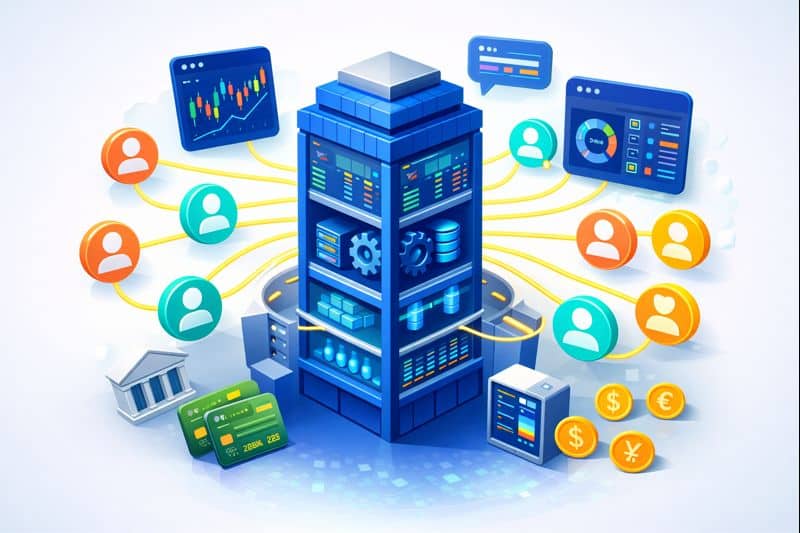
Centralized exchanges (CEXs) are crypto trading apps or websites run by a company. They act as middlemen, helping people buy and sell cryptocurrency. Firstly, register, set up an account, deposit cash or cryptocurrency, then use the exchange’s system to trade. The platform handles everything in the background, from matching your order with someone else’s to storing your assets until you withdraw them. In many ways, a CEX feels similar to a stock or forex trading platform, just built for digital assets.
Behind the scenes, most CEXs use their own internal order books and matching engines. This means trades usually happen inside the exchange’s system rather than directly on the blockchain. The blockchain is mainly used when you deposit or withdraw funds, not for every single trade. That’s a big reason why CEXs can feel fast and smooth.
Key Features of a CEX
- Run by a single organization that decides the rules, listings, and how the platform operates
- Custodial setup, meaning the exchange holds your funds while you trade
- Trades happen off-chain through an internal order book system
- Account-based access, usually with email, password, and extra security options like 2FA
Why Many People Still Prefer CEXs
Strong Liquidity
Large communities of dealers and experienced market makers are typical of centralized exchanges. Increased buying and selling activity frequently results in lower spreads, better prices, and less slippage when placing large orders.
Faster Trading Experience
Execution is usually faster because trades are handled within the platform rather than on the blockchain. For active traders, leverage tactics, futures, and other fast-paced trading approaches, this is particularly crucial.
Easy Ways to Buy Crypto With Fiat
CEXs often support bank transfers, cards, and local payment methods. For many users, this is the simplest way to enter the crypto market without already owning crypto.
More Trading Features in One Place
Most big CEXs offer far more than basic spot trading. You’ll often find futures, options, staking, lending, copy trading, and other advanced tools that a typical DEX may not provide in the same way.
Cleaner, More Guided User Experience
Centralized exchanges usually invest heavily in apps, customer support, learning resources, and smoother interfaces. That matters when you want a platform that feels structured and easy to use.
Limitations of Centralized Exchanges
Custody Risk
You must have faith in the exchange to handle security as it is the one holding your money. Users may be impacted if the platform is compromised, poorly run, or freezes withdrawals.
Regulations and Identity Checks
Most CEXs must follow strict rules in the regions they operate. That often means KYC requirements, limits for certain countries, and more restrictions compared to open-access platforms.
Single Point of Failure
A CEX is still a centralized system. Outages, internal mistakes, regulatory action, or security breaches can disrupt access and affect users simultaneously.
Fewer Token Options than DEXs
Listings on centralized exchanges are typically selective. Smaller or more recent tokens may surface on DEXs long before they reach a large CEX because they frequently have to adhere to compliance and approval requirements.
In 2026, centralized exchanges will continue to be one of the primary engines of cryptocurrency trading. They are still the preferred alternative for many individuals due to their high liquidity, rapidity, and convenience. However, their basic flaws remain the same: consumers give up some power, and the platform is subject to stricter regulation and centralized risk management. That is why many traders now combine CEX and DEX trading or experiment with newer hybrid models that attempt to combine the best of both worlds.
What are Decentralized Exchanges (DEXs)?

DEXs, or decentralized exchanges, are blockchain-based cryptocurrency trading platforms that allow users to trade directly from their wallets. There is no central company holding your funds or managing your account. Instead of depositing crypto into an exchange, you connect your wallet and trade through smart contracts that handle the swap. In simple terms, a DEX works more like a self-service marketplace where the rules are written into code.
Unlike centralized platforms, DEX trading happens on-chain. Every swap is processed and settled through smart contracts on networks like Ethereum, BNB Chain, Solana, and many Layer 2 chains. Most popular DEXs today use automated market makers (AMMs). These don’t rely on a traditional buyer-seller order book. Instead, they use liquidity pools, which are token reserves funded by users. Some DEXs also use on-chain order books or mixed models, but the core idea stays the same: you keep control of your assets the whole time.
Key Features of DEXs
- Non-custodial by design, meaning your crypto stays in your wallet
- Trades happen through smart contracts and settle directly on the blockchain
- Open access, usually with no sign-up process and no identity checks
- Transparent activity, since transactions are recorded publicly on-chain
Why DEXs Attract So Much Attention
Authority
The biggest appeal is ownership. On a DEX, you hold your private keys and keep your assets in your own wallet. That reduces the need to trust a third party to safeguard your funds.
Global Access
Most DEXs are permissionless. If you have a compatible wallet, you can trade from anywhere. This global access is one reason DEXs have become such a strong part of the crypto world.
Visibility
DEX trades are processed on public blockchains, so transactions can be verified by anyone. Many protocols are open source too, which adds another layer of transparency compared to closed, company-run platforms.
Faster Access to New Tokens
New tokens often show up on DEXs long before centralized exchanges list them. Since there is no formal listing process, trading can start as soon as there is liquidity and a market.
Fits Naturally With DeFi
DEXs are easily integrated into the larger DeFi ecosystem. They can be used in conjunction with yield farming techniques, staking platforms, loan apps, and more, frequently in a manner that resembles building blocks coming together.
The Challenges That Still Matter in 2026
Liquidity
Liquidity is no longer tied to a single chain. It is spread across many networks and protocols. That fragmentation can cause worse prices or more slippage, especially for large orders or less popular assets.
Fees
On some blockchains, fees can spike during congestion. Even with Layer 2 growth, fee unpredictability is still a real issue, depending on where you trade.
Smart Contract Risks
DEXs rely on code, and code can fail. If a smart contract has a bug or gets exploited, losses can be sudden and permanent. There is usually no customer support desk to undo the damage.
In 2026, decentralized exchanges are a major force in crypto because they support self-custody, open access, and constant innovation. They give people more independence and connect deeply with DeFi. At the same time, they still come with learning curves, liquidity quirks, and smart contract risks. For many traders and investors, DEXs work best alongside centralized exchanges, not necessarily as a total replacement, but as a powerful option when autonomy and flexibility matter most.
CEX or DEX? Key Differences Every Trader Should Know
People can buy and sell crypto on either centralized exchanges or decentralized ones. While both let you trade, they operate in very different ways, and in 2026 that difference matters much more than it did a few years ago.
| Topic | Centralized exchanges (CEXs) | Decentralized exchanges (DEXs) |
| Who controls the funds | Your crypto is usually stored in the exchange’s wallets while you trade. | Your crypto stays in your own wallet the whole time. |
| How trades happen | Orders are processed inside the platform’s system, then balances update on your account. | Swaps and trades run through smart contracts directly on the blockchain. |
| Liquidity | Often concentrated in one place, which helps big trades fill smoothly. | Spread across pools and networks, so pricing can vary between platforms. |
| Costs | Typically a clear trading fee, and you do not pay a blockchain fee for every trade. | You may pay protocol fees plus blockchain fees, which can rise during busy periods. |
| Speed | Usually very quick since the platform does most actions internally. | Depends on the chain’s speed and how crowded the network is. |
| Ease of use | Simple login, familiar dashboards, and usually customer support. | Requires wallet setup, understanding approvals, and signing transactions. |
| Privacy | Identity checks are common due to compliance rules. | Often open-access, with fewer identity steps in many cases. |
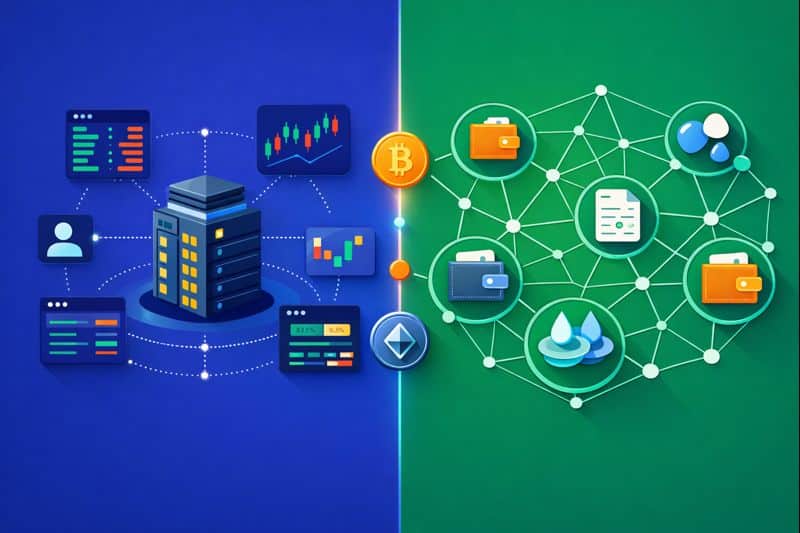
At a glance, CEXs focus on convenience and speed by running trades through their own internal systems. DEXs focus on control and transparency by letting you trade directly from your wallet through blockchain smart contracts. Neither approach is perfect for everyone, which is exactly why understanding the trade-offs matters before you pick a platform.
Conclusion
As we look at crypto exchanges in 2026, it is clear that both centralized and decentralized models bring value. Neither is universally “better” for every investor or trader. The choice depends on individual priorities: speed and ease of use, or control and autonomy.
The landscape will keep changing as regulations develop, technology advances, and new models take shape. Rather than asking which option is better in general, it is more useful to ask which one fits your goals in a given situation.
That nuanced perspective reflects the reality of crypto today. It is a complicated ecology with various instruments accessible for various purposes, rather than a conflict between two opposing forces. In that ecosystem, the future of trading and liquidity may well lie in a synthesis of centralized efficiency and decentralized freedom.
Glossary of Key Terms
Frequently Asked Questions
Is a DEX safer than a CEX in 2026?
It depends on what you mean by “safe.” A DEX reduces custodial risk because you keep your funds in your own wallet. But you take on smart contract risk and user-error risk. A CEX can be convenient and may have strong security teams, but you still rely on the platform to protect and release your funds when needed.
Can I buy crypto with cash or a bank card on a DEX?
Usually, not directly. Most DEXs are designed for crypto-to-crypto trading, so you need a wallet funded with crypto first. CEXs are typically better for fiat deposits, card purchases, and local payment methods.
Why do DEX fees sometimes feel higher even if trading fees are low?
Because DEX trades often include blockchain network fees (gas). Even if the DEX charges a small swap fee, gas costs can rise during congestion. On a CEX, trades happen internally, so you typically pay only the trading fee, not a network fee per trade.
Why do new tokens appear on DEXs before CEXs?
DEXs do not have the same listing process as centralized platforms. If a token has liquidity and a trading pair exists, it can be traded. CEXs usually require reviews, compliance checks, and listing approvals, which takes time.
Should I use both a CEX and a DEX in 2026?
Many people do. A common approach is to use a CEX for fiat on-ramps, high liquidity, and advanced tools, then use a DEX for self-custody trading, early token access, and DeFi opportunities. The best setup depends on your goals and your comfort with wallets and smart contracts.
References