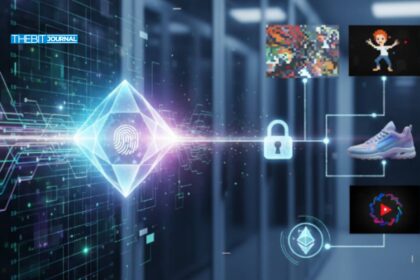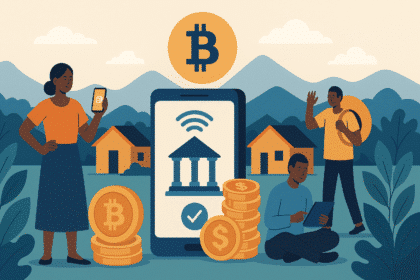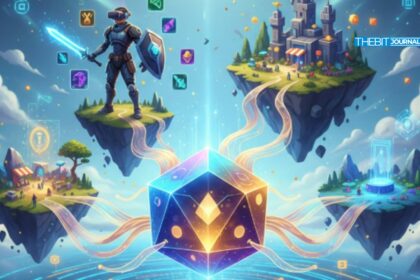




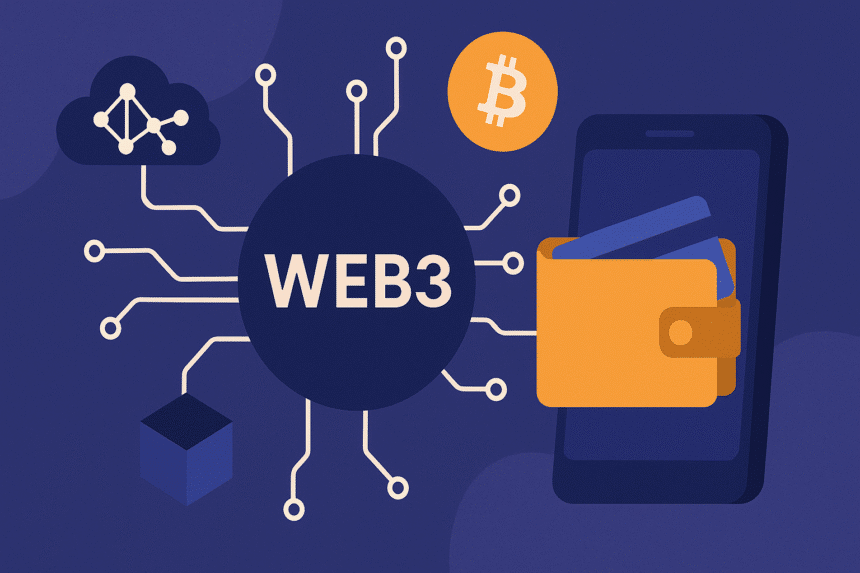

A Web3 wallet is the front door to the decentralized web. It lets a person hold tokens, prove identity, and use apps without a bank or platform in the middle. This guide gives a Web3 explanation in plain language. It covers Web3 meaning, Web3 definition, and how a wallet fits into daily use. It also shows risks, rules, and smart ways to stay safe.
Billions use the internet today. Hundreds of millions now hold crypto. In 2024, global crypto users reached about 562 million, showing rapid growth. A Web3 wallet is how many of them join and act online.
Web3 Basics: The Big Idea
Web3 definition: The next stage of the internet, where users own assets, data, and identity. They can act without a central authority.
Blockchain basics: A blockchain is a shared database. Many computers keep the same record. No single company controls it.
Smart contracts: These are programs on a blockchain. They run as written. They cut the need for middlemen.
dApps (decentralized apps): These are apps that run on smart contracts. A Web3 wallet connects a user to them.
Tokenization: This is turning rights or assets into digital tokens. It can be money, tickets, game items, or shares.
Digital ownership: When a wallet holds a token, the user controls it. No platform can take it away.

Web 3.0 Vs Web2
Web2 made the social web. Platforms own the data. Web 3.0 aims to flip that. The wallet puts users in control.
Comparison Table
| Feature | Web2 | Web 3.0 |
| Identity | Platform accounts | Wallet keys the user controls |
| Ownership | Platforms store value and data | Tokens live on-chain under user keys |
| Payments | Cards and banks | On-chain transfers in seconds |
| Apps | Central servers | dApps on smart contracts |
| Censorship | Platform rules | Protocol rules with open access |
How A Web3 Wallet Works
A Web3 wallet has two things. A public address and a private key. The address receives funds or NFTs. The private key signs actions. The seed phrase backs up the key. Anyone with the seed phrase owns the wallet.
Most wallets also show a token list, NFTs, and recent activity. Many let users swap, stake, or bridge. The wallet works inside a browser or a phone app. Some pair with a hardware device for extra safety.
Types Of Web3 Wallets
By Custody
Self-custody wallets put the user in full control. The user holds the keys and signs every action. No one else can move funds. Custodial wallets work differently. A company holds the keys on the user’s behalf. This feels easier for beginners and offers simple recovery. It also adds trust risk because access depends on the provider.
By Hardware
Software, or hot, wallets live on phones or browsers. They are quick to set up and simple to use. They suit small to mid balances and daily activity. Hardware, or cold, wallets keep keys offline on a separate device. This reduces attack surfaces and protects savings. They fit long-term storage and larger sums, though they add extra steps.
Quick Guide Table
| Wallet Type | Best For | Pros | Cons |
| Self-custody hot | Daily use | Fast, free, simple | Risk if phone or PC is hacked |
| Self-custody hardware | Savings | Strong security | Cost and extra steps |
| Custodial exchange | New users | Easy recovery | Depends on the company |
| Smart contract wallet | Power users | Social recovery, rules | Fees and setup steps |
Popular Web3 Sites And Tools
Here is a short list of sites and apps people use with a Web3 wallet. These help show real use today.
MetaMask
MetaMask is a popular Web3 wallet for browsers and phones. It lets users hold tokens, connect to dApps, and sign transactions with clear prompts. It supports many networks and shows tokens and NFTs in a simple view. Users can add custom networks and adjust gas before sending.
Coinbase Wallet
Coinbase Wallet is a self-custody app that works with many chains. It helps users store crypto and NFTs in one place. It also includes a built-in browser for dApps. Simple backups and recovery tools make it friendly for beginners.
Trust Wallet
Trust Wallet is a mobile wallet with multi-chain support. It helps users view balances, send tokens, and explore dApps. It comes with staking for select assets. The app is fast to set up and does not require a separate account.
Ledger
Ledger is a hardware wallet that keeps keys offline. Users sign on the device while apps handle the rest. It pairs with Ledger Live and many third-party wallets. This setup reduces online attack risk for long-term holders.
Trezor
Trezor is a hardware wallet focused on safe key storage. It connects by cable and confirms actions on its screen. Its software guides users through setup and backups. It works with many desktop and browser wallets for daily use.
Uniswap
Uniswap is a decentralized exchange. Users swap tokens from a Web3 wallet without accounts or custody. Prices come from liquidity pools. Slippage, fees, and approvals appear before each trade so users can review them.
OpenSea
OpenSea is an NFT marketplace. It lets users mint, buy, and sell digital items from a connected wallet. Listings and bids are on-chain. Royalties and collection settings are set by creators where supported.
Aave
Aave is a lending protocol. Users supply assets to earn yield or borrow against their collateral. Rates move with supply and demand. Health factors and liquidation rules are visible before any action.
IPFS
IPFS is a decentralized storage network. It shares files across many nodes using content addressing. Links point to what a file is, not where it sits. This helps resist single points of failure.
Arweave
Arweave offers durable data storage. Users pay once to store files for very long periods. Apps can pin site data, images, or metadata. This helps preserve records for audits and archives.
ENS
ENS provides human-readable names for crypto addresses. Names map to long strings so they are easy to share. Users can set primary names and records for wallets, sites, and profiles. Many wallets resolve ENS by default.
Why A Web3 Wallet Matters
A Web3 wallet gives control. It ties money, identity, and access together. It supports direct payment. It lets creators sell to fans and keep more of the value. It unlocks new models for games, media, and tickets. It lets people join DAOs, vote on ideas, and share in rewards.
It also travels well. A wallet can move between apps with one click. No need to create a new account each time.
Core Concepts In Action
Payments And Value
On-chain payments clear fast. Fees depend on network load. Layer 2 scaling helps lower costs. People can tip, pay, or stream value by the second.
Identity And Reputation
A wallet can hold badges that prove skills or actions. This can replace weak login systems. It can protect privacy too.
Ownership And Markets
Tokens allow real digital ownership. A player can sell an item from one game to a buyer in another. An artist can earn royalties on each resale.
Web3 Wallet Setup And Safety
A safe start matters. Follow these steps.
- Choose the chain and wallet. Pick a reputable app for the network you plan to use.
- Back up the seed phrase. Write it on paper. Store it in two safe places.
- Turn on extra checks. Use hardware signing if you can.
- Use a fresh wallet for new dApps. Limit risk by splitting funds.
- Verify every signature. Read what you sign. Do not sign blind.
Real-World Risks
Crime has not gone away. In 2024, hackers stole about 2.2 billion dollars across crypto, and private key compromises led the losses. Wallet drainers alone took about 494 million dollars, up 67 percent year over year. North Korean groups were linked to many large cases.
Scams also target users with fake sites and approvals. Reports suggest more than 50 billion dollars in 2024 on-chain flows touched illicit wallets, though only a small share of total activity. This shows risk is real even as most use is lawful.

Safety Checklist
- Verify URLs. Bookmark trusted links.
- Use a hardware wallet for savings.
- Set spending limits in smart contract wallets.
- Revoke stale token approvals.
- Keep devices clean and updated.
- Treat seed phrases like gold. Never share them.
The Web3 Stack: From Chains To dApps
The stack starts with base chains like Ethereum. Then come scaling networks. Smart contracts run on top. dApps connect the logic to users. The Web3 wallet is the bridge.
- Layer 1: Security and settlement
- Layer 2: Faster and cheaper
- dApps: Markets, games, finance
- Wallet: Keys, identity, and access
Web3 Explained Through A Simple Flow
- A user opens a wallet.
- The wallet creates keys on the device.
- The user funds the address.
- The user connects to a dApp.
- The wallet signs a transaction.
- The network confirms it.
- The token or item moves.
That is Web3 explained in one path.
When To Use Which Wallet
| Situation | Suggested Wallet | Why |
| Learn and test | Hot wallet with small funds | Simple and quick |
| Hold savings | Hardware wallet | Keys stay offline |
| Frequent dApp use | Smart contract wallet | Spend limits and recovery |
| Family funds | Multisig wallet | Shared control |
Security And Regulatory Context
Rules are forming. The EU’s MiCA set core standards for stablecoins from June 30, 2024, and for most other tokens and providers from December 30, 2024. Firms must meet capital, disclosure, and conduct rules.
Supervisors still warn about gaps. In October 2025, the EU risk board called for stronger safeguards on cross-border stablecoins that mix issuers in and out of the EU. This aims to prevent runs and reduce spillovers.
In the United States, a 2020 plan to add strict KYC to non-custodial wallets drew heavy pushback and was later withdrawn. Work on travel rule and reporting continues, but self-custody remains legal. Users still bear the duty to keep keys safe.

Key stats at a glance
- 562 million global crypto owners in 2024.
- $2.2 billion stolen by hackers in 2024. Private key theft led losses.
- $494 million lost to wallet drainers in 2024. Up 67 percent year over year.
These facts show why setup and habits matter as much as tech.
Building A Web3 Wallet Plan
A simple plan helps most users.
- Start small. Use a hot wallet for tiny spends.
- Protect savings. Move larger sums to a hardware wallet.
- Segment risk. Keep a clean wallet for high-risk dApps.
- Log activity. Track swaps, approvals, and NFTs.
- Use social recovery if the wallet supports it. Pick guardians with care.
Web3 Wallet And The Creator Economy
Creators can mint passes, music, and art. They can share revenue with fans using smart contracts. Royalties can trigger on each resale. A wallet becomes the fan pass and payment rail at once.
Web3 Wallet And Identity
A wallet can hold proofs like diplomas, tickets, and KYC attestations. These can be private by default. A user decides when to share them. This supports privacy and trust together.
Conclusion
The Web3 wallet is the key to the decentralized web. It gives users control of value, data, and access. It links identity and payments across apps. It also brings new duties. Users must guard keys, read what they sign, and pick trusted tools.
The shift from Web2 to Web 3.0 is real. The wallet sits at the center. Learn the basics, start small, and build safe habits. That is how Web3 explained becomes Web3 used in daily life.
FAQs About Web3 Wallet
What is a Web3 wallet?
A Web3 wallet holds keys that control blockchain addresses. It lets users send funds, hold NFTs, and use dApps.
Is a Web3 wallet free?
Most wallet apps are free. Network fees apply when sending or using dApps.
Can a Web3 wallet be recovered?
Yes, with the seed phrase. Some smart wallets allow social recovery.
Which wallet is safest?
Hardware wallets are safest for large sums. Use hot wallets for daily use.
Do Web3 wallets support many chains?
Many do. Check supported networks before you move funds.
Glossary
Web3: The user-owned internet built on blockchains.
Web3 wallet: A tool that holds keys, signs actions, and connects to dApps.
Blockchain: A shared ledger kept by many computers.
Smart contract: Code that runs on a blockchain without middlemen.
dApp: A decentralized app that uses smart contracts.
Tokenization: Turning rights or assets into on-chain tokens.
NFT: A unique token that proves ownership of an item.
Layer 2: A network that scales a base chain with faster, cheaper transactions.
Seed phrase: Words that back up a wallet’s keys.
Multisig: A wallet that needs more than one approval to act.
Summary
A Web3 wallet is the core tool for the decentralized web. It holds keys, signs actions, and connects people to dApps. It enables tokenization, direct payments, and true digital ownership with no platform middleman. This guide covers Web3 definition, blockchain basics, smart contracts, and Web 3.0 vs Web2. It explains wallet types, safe setup, and common threats such as wallet drainers and key theft, with recent figures on hacks and scams. It highlights MiCA rules in the EU and the status of U.S. policy on self-custody. It also lists popular sites and tools across wallets, DeFi, NFTs, and storage. The takeaway is simple. Start small, secure the seed phrase, use hardware for savings, and treat the Web3 wallet as both login and bank.