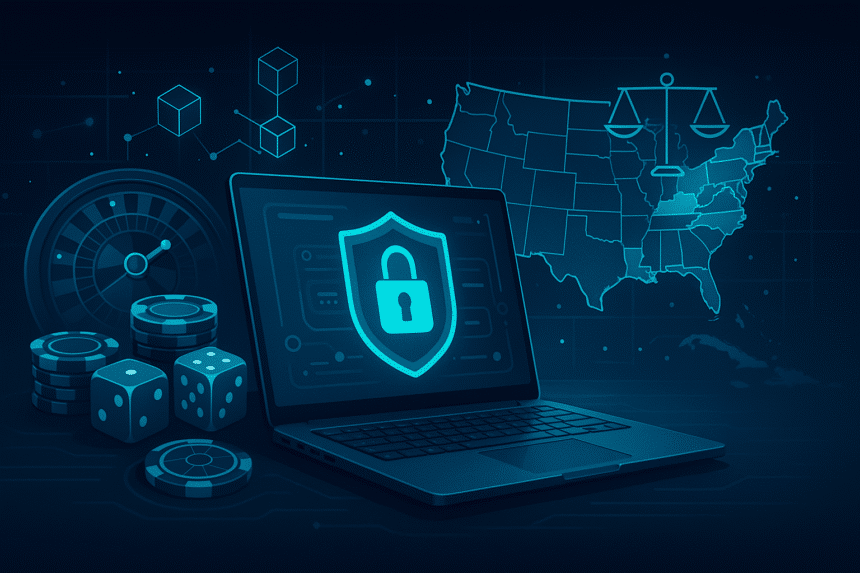

Crypto casinos promise speed and privacy. In the United States, gambling law sits with each state. Some states run legal online casinos with strict rules. Many crypto-only sites operate offshore and accept USA traffic without a USA license. That choice changes a player’s rights and remedies.
Security standards also matter. Regulated sites use audits, verified RNGs, and clear payout rules. They run KYC and AML checks, use geolocation, and publish dispute paths. Offshore sites may not match those safeguards. Many readers ask one question first: crypto casinos legal USA. The answer depends on the player’s location. The safest option is a state-approved brand where it is available. Read on for clear steps, tools, and data.
Quick Answer: Are Crypto Casinos Legal in the US?
The United States does not have one national rule. Gambling law is set by each state. Only a few states offer legal, state-regulated online casinos today: Connecticut, Delaware, Michigan, New Jersey, Pennsylvania, Rhode Island, and West Virginia. Nevada allows online poker, not full casino games. Sites outside this list are not part of a regulated US market.
US iGaming is growing fast where it is legal. In 2024, regulated online casinos across seven states generated about $8.41 billion, up 28.7% year over year.
Many “crypto casinos” run from offshore. They often accept US players without US licenses. That puts players outside US consumer protections. Check the sections below before sending any funds.
How To Vet a Crypto Casino in 10 Minutes
Goal: confirm the site is legal where the player lives, fair, and secure.
- License check: Find the license at the footer. Then verify it on the regulator’s public register. Do not trust a logo that does not link back to the regulator.
- Jurisdiction match: US players should stick to sites approved by their state regulator when available. If a site claims New Jersey approval, its brand and URL must appear on the DGE’s approved list. Pennsylvania and Michigan offer similar public lists.
- Audit seals: Look for independent testing from labs like eCOGRA or iTech Labs. Click through to a live certificate or report. The seal should confirm RNG tests and game RTP checks.
- KYC and geoblocking: Serious operators verify identity, screen sanctions, and block restricted locations. That is not a nuisance. It is a sign of compliance.
- Dispute path: Legal US markets publish complaint procedures and permit holders. If something goes wrong, players can escalate.
Common Regulators and How To Verify
| Jurisdiction | What the logo means | Where to verify | What to look for |
| New Jersey (DGE) | State license for internet gaming | DGE “Internet Gaming Sites” page | Brand name and URL listed as approved |
| Pennsylvania (PGCB) | State license for interactive gaming | PGCB list of licensed interactive gaming operators | Operator, certificate holder, and authorized sites |
| Michigan (MGCB) | State license for internet gaming | MGCB resources and licensee lists | Operator name and active status |
| United Kingdom (UKGC) | Remote casino license | UKGC Public Register | Matching domain, active status, any sanctions |
| Malta (MGA) | B2C gaming service license | MGA Licensee Register | Dynamic seal and matching URL |
| Curaçao (CGA under LOK) | New national license replacing “master license” model | News and legal updates on LOK | Named licensee under the new framework |
Security and Regulatory Context: Facts That Matter
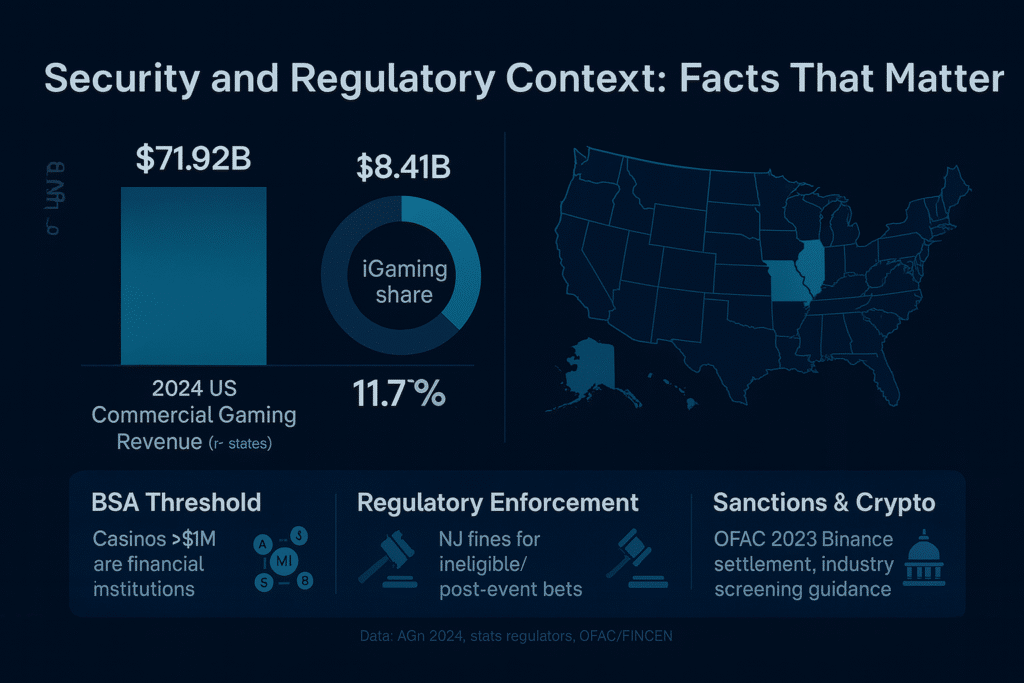
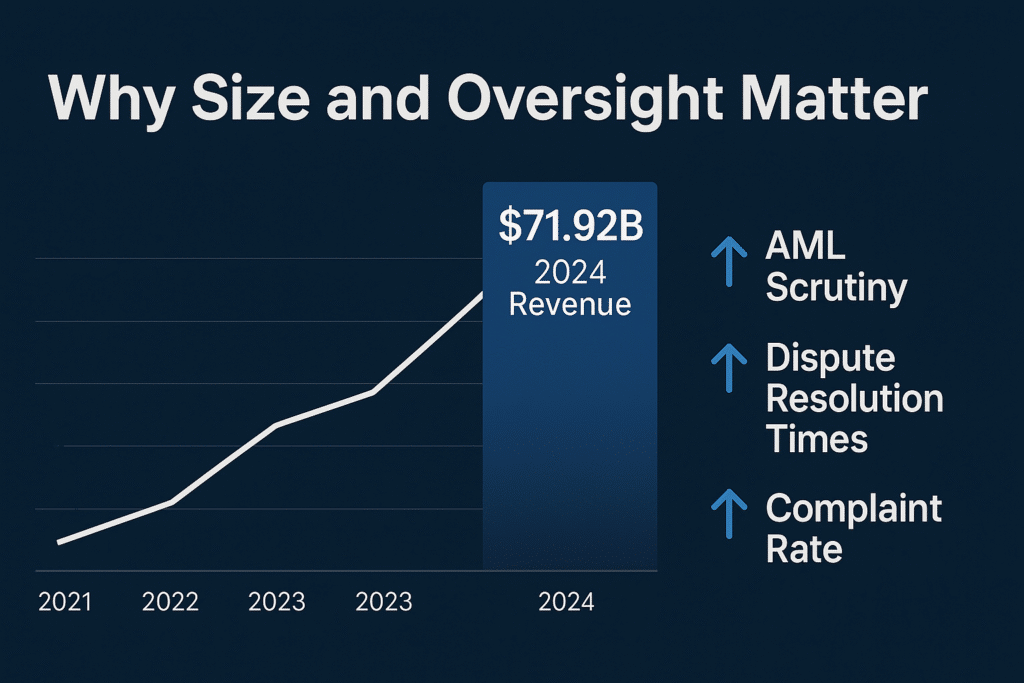
USA commercial gaming set another record in 2024 with $71.92 billion in revenue. That includes land-based casinos, sports betting, and iGaming. Growth keeps pushing regulators to tighten standards.
Within that total, regulated iGaming revenue hit $8.41 billion in 2024 across seven states. That rise shows how large the legal market has become.
Casinos in the US count as “financial institutions” under the Bank Secrecy Act when annual gaming revenue exceeds $1 million. That triggers AML duties, KYC, and SAR filings.
Regulators also police mistakes. New Jersey fined operators for taking ineligible bets and bets after events ended. That shows active oversight in a legal market.
Sanctions rules matter for crypto. In 2023 the US Treasury’s OFAC announced a record settlement with Binance tied to sanctions violations and required a compliance monitor. That case raised the bar for screening customers and wallets.
OFAC offers specific guidance for the virtual currency industry, including best practices on screening and blocking. Reputable casinos and payment partners follow this playbook.
Licensing: Why It Protects Players
A real license binds the casino to rules on fairness, security, marketing, and responsible gambling. It also forces external audits and gives players a regulator to contact.
US state sites must publish contact details and dispute steps. Offshore sites often cannot offer that level of recourse to US residents.
How to verify fast:
- Scroll to the footer for a license number and link.
- Open the regulator’s public register.
- Search for the operator’s legal name and URL.
- Confirm status is active and matches the site.
Audits and Fairness: What Those Seals Actually Mean
Independent labs test game code and RNGs. eCOGRA’s seal signals ongoing monitoring and fairness benchmarks. iTech Labs certifies RNGs and platform compliance. A live certificate shows dates, scope, and products covered. If a seal does not link to a cert page, treat it as marketing art. Real certs list the domain, vendor, and timestamp.
KYC, AML, and Player Identity: What to Expect
Legal sites verify identity at signup or before cash-out. Expect a photo ID, a selfie check, and proof of address. Operators also screen sanctions lists and politically exposed persons. This protects both the casino and the player.
US rules make this non-optional for covered casinos. Title 31 requires a written AML program with internal controls, training, and independent testing.
FinCEN also tracks risks from CVC kiosks and mixing services. The agency asks firms to flag patterns and file SARs. That policy environment shapes how compliant casinos treat crypto deposits.
What good KYC looks like:
- Clear notice of verification steps before first withdrawal.
- No sale of personal data to third parties.
- Sanctions and geo-blocking for barred regions.
- Limits that unlock only after checks pass.
Payments and Wallet Hygiene
Reputable sites accept traceable assets and work with compliant processors. They screen deposits and withdrawals against sanctions and risk lists. That reduces the chance of blocked funds later.
Players should also practice wallet hygiene:
- Use a clean funding source. Avoid coins linked to mixers.
- Keep gambling funds in a separate wallet.
- Save on-chain transaction IDs for any dispute.
Red Flags That Mean Close the Tab
- No regulator named, only “international license.”
- Audit logos that do not click through to a cert.
- No KYC at signup or withdrawal.
- Bonus terms that cap winnings or delay payments without cause.
- Promises to accept US players but no US state license in the footer.
What Crypto Casinos Legal USA Really Means for Players
When people search crypto casinos legal USA, they usually want two things. Is the site allowed where they live, and how can they know it is fair. The safest choice is a state-licensed platform in one of the seven iGaming states. Anything else sits outside US protection and comes with extra risk.
Mini-Guide: State Examples and Where to Check
- New Jersey. DGE lists approved internet gaming sites and permit holders. If a site is not on the list, it is not legal in NJ.
- Pennsylvania. PGCB publishes licensed interactive operators and authorized websites.
- Michigan. MGCB posts active licensees and monthly market reports.
These lists change. Always check the latest page before depositing.
Why Size and Oversight Matter
Big markets attract better controls. In 2024, US commercial gaming revenue hit $71.92 billion, the fourth straight record year. As revenue grows, so does scrutiny from AML and sanctions teams. Players see the benefits as faster dispute resolution and clearer rules.
Regulators also publish model policies and push states toward higher tax and consumer standards as iGaming expands. That is a good sign for anyone who wants safe, legal play.
Practical Checklist Before the First Bet
- Is crypto casinos legal USA status clear for the player’s state? If yes, use only state-approved brands.
- License found and verified on the regulator’s site.
- Live audit certificate from eCOGRA or iTech Labs.
- KYC, geolocation, and responsible-gaming tools explained upfront.
- Payment policy covers crypto networks, fees, and withdrawal times, with on-chain IDs supported.
- Clear complaint path to the regulator if needed.
Conclusion
Confirm the license on the regulator’s register. Verify live audit certificates. Expect full KYC. Use clean, segregated wallets. When uncertain, choose a state-approved operator. That choice aligns with the rules and protects funds.
The bottom line on crypto casinos legal USA is clear. Only a few states offer legal options, and those sites provide the strongest safeguards. Stay within those guardrails to play with confidence.
FAQs About Crypto Casinos Legal USA
Are offshore crypto casinos legal for USA players?
Most offshore sites are not licensed by any USA state. That leaves players without USA protections or an easy dispute path.
What documents will KYC require?
A government ID, a selfie, and proof of address. Some sites also request source-of-funds for large withdrawals.
Do legal USA casinos accept crypto?
Some state-licensed brands use payment partners that convert crypto to fiat, but policies vary. Always check the cashier and terms. State rules and processors decide what is allowed.
How can a player verify fairness?
Click the audit seal and confirm a live page from eCOGRA or iTech Labs. Look for RNG and RTP coverage with recent dates.
What happens if a site blocks a withdrawal?
Legal USA sites list a dispute process and a regulator contact. Offshore sites might not. This is why licensing matters.
Glossary
AML (Anti-Money Laundering): Rules that stop criminal funds from moving through casinos and payment systems.
BSA (Bank Secrecy Act): US law that sets AML duties for casinos with over $1 million in gaming revenue.
DGE (Division of Gaming Enforcement): New Jersey regulator for casino and internet gaming.
eCOGRA: Independent lab that certifies fair play and security for online casinos.
iGaming: Internet casino gaming such as slots, blackjack, and live dealer tables.
iTech Labs: Testing lab that certifies RNGs and platforms for fairness.
KYC (Know Your Customer): Identity checks that help casinos stop fraud and meet AML rules.
MGA (Malta Gaming Authority): EU regulator with a public license register and dynamic seal.
OFAC: US Treasury office that enforces sanctions. It issued crypto compliance guidance and settled with Binance in 2023.
PGCB (Pennsylvania Gaming Control Board): Regulates interactive gaming and posts licensed sites.
Summary
The piece explains how Americans can choose safer crypto casinos by verifying licenses, audits, and KYC. It answers the core query, crypto casinos legal USA, by noting that only seven states currently run regulated online casinos, while many crypto-only sites operate offshore without US protections. It shows how to verify a license on state and international registers, why eCOGRA and iTech Labs seals matter, and what proper KYC looks like under US AML rules. It also highlights recent figures from the American Gaming Association and key enforcement trends from OFAC and FinCEN. The takeaway: confirm licensing, audits, and identity checks before depositing, and prefer state-approved sites where available for the strongest safeguards.