





Stablecoins are supposed to address one of the largest issues of cryptocurrency, its volatility. They also offer the best of both worlds, being anchored to a stable asset such as the U.S dollar: the speed of digital and the worldwide reach of digital, but the stability that is familiar to us.
They are currently executing billions of dollars worth of transactions every day, are the backbone of a significant portion of decentralized finance (DeFi) and are also beginning to contribute to remittances and cross-border payments.
But the term stable is deceiving. The last three years have demonstrated how delicate these tools can be. Algorithms collapsing such as TerraUSD or stablecoins such as USDC losing their peg temporarily have shown that stablecoins are not as resilient as regulators and investors would want them to be.
Meanwhile, stablecoins have benefits that are difficult to ignore: cheaper payments, new yield, and financial lifeboats in economies struck by inflation or capital controls.
This blog poses the basic question: Are stablecoins stable? To answer, we weigh stablecoin risks against stablecoin rewards, drawing on insights from the European Central Bank (ECB), Atlantic Council, Wired, and Messari.
What Are Stablecoins?
Definition and Purpose
Stablecoins are defined by the European Central Bankas digital assets of value that are stabilized using a combination of stabilization tools to ensure that the value of a stablecoin remains steady against official currencies or alternative assets. In simpler terms, they are cryptocurrencies which are meant to behave like cash equivalents.
The concept is simple: unlike Bitcoin or Ethereum, which are highly volatile, a stablecoin provides traders and ordinary users with a digital currency that remains near to $1, which makes them convenient to trade, lend, and spend.
Different Types of Stablecoins
Fiat-Backed Stablecoins
These are supported by reserves of real world money like U.S. dollars or euros. All coins are designed to be redeemed at 1 at a bank account. Examples that are most popular are Tether (USDT) and USD Coin (USDC).
Crypto-Collateralized Stablecoins
These are supported by other cryptocurrencies in lieu of fiat. They are often over-collateralized in order to absorb volatility. The DAI stablecoin can serve as an example, in which Ethereum and other assets frozen in smart contracts act as the collateral.
Algorithmic Stablecoins
These are not based on collateral but rather on computer programs that automatically regulate supply to maintain the price at the same level. The best-known one was TerraUSD (UST) but it collapsed in 2022 to demonstrate the vulnerability of this design.
Stablecoin Rewards: Why They Matter
Stablecoins aren’t just speculative tokens. They have become a crucial part of global financial infrastructure.
Payments and Transfers
Among the greatest benefits of stablecoins, we can single out the fact that money can be transferred across borders nearly instantly. Compared to wire transfers, which may take days, payments in stablecoins can be confirmed in a matter of seconds and are much cheaper than a conventional payment.
Financial Inclusion
In countries like Argentina, Turkey, and Nigeria, where inflation eats away at local currencies, stablecoins give citizens access to digital dollars. For many, this is the only practical way to store value.
Trading Stability
Traders rely on stablecoins as a safe zone. Instead of cashing out to a bank, they can shift volatile holdings into USDT or USDC, preserving value and staying in the crypto ecosystem.
DeFi Yields
Stablecoins power the decentralized finance sector. Holders can lend, stake, or provide liquidity to earn interest—rewards that often exceed traditional savings accounts.
Corporate Treasury Use
Companies are also experimenting with stablecoins. In Latin America and Asia, some firms use them to manage foreign exchange risk or make cross-border payments without relying on banks.
Market Growth
Stablecoin adoption has exploded. According to Messari, they now settle more daily value than Visa and Mastercard combined.
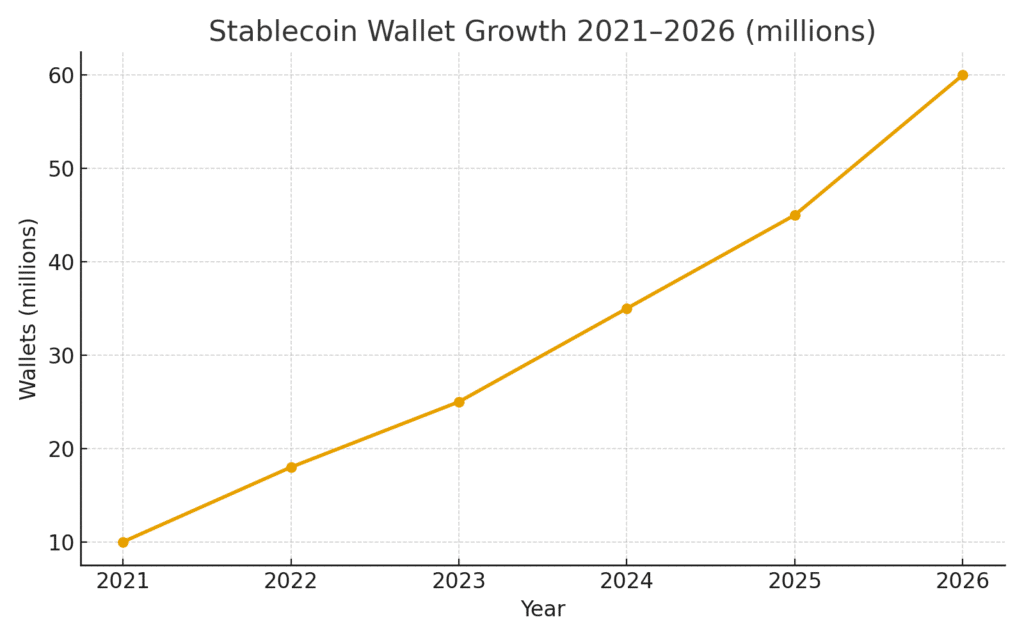
Figure 1: Growth of stablecoin wallets worldwide, based on estimates from The Block and Thunes.
By 2025 the overall market cap had increased by over 1,200 percent to reach 246 billion. It is estimated that wallets will exceed 60 million in 2026.
Stablecoin Risk: The Fragile Side of Stability
While rewards are clear, risks are equally undeniable.
Liquidity Risk
Stablecoins rely on reserves. If too many holders try to redeem at once, issuers may not have enough liquid assets. In March 2023, USDC fell to $0.88 after $3.3 billion of reserves were frozen during the collapse of Silicon Valley Bank. Though Circle restored confidence, the episode exposed real fragility.
Regulatory Risk
The GENIUS Act of 2025 in the U.S. created the first federal framework for stablecoins, requiring redemption at par and safe reserve holdings. But loopholes remain, allowing some issuers to bypass oversight.
Europe’s MiCA regulation, in effect since 2024, takes a stricter approach, demanding licensing and full transparency. The ECB warns that if dollar-backed stablecoins dominate, they could undermine the euro’s role in global finance.
Operational Risk
Stablecoins can fail due to hacks, governance flaws, or smart contract bugs. Algorithmic models are particularly vulnerable, as the collapse of TerraUSD proved.
Systemic Risk
Stablecoins now play a systemic role in crypto markets. The ECB bulletin has flagged that failures could create contagion across exchanges, DeFi protocols, and even traditional banks. TerraUSD’s $40 billion collapse in 2022 was an early warning.
Comparing Stablecoin Risk and Rewards
The best way to assess stablecoins is by comparing both sides.
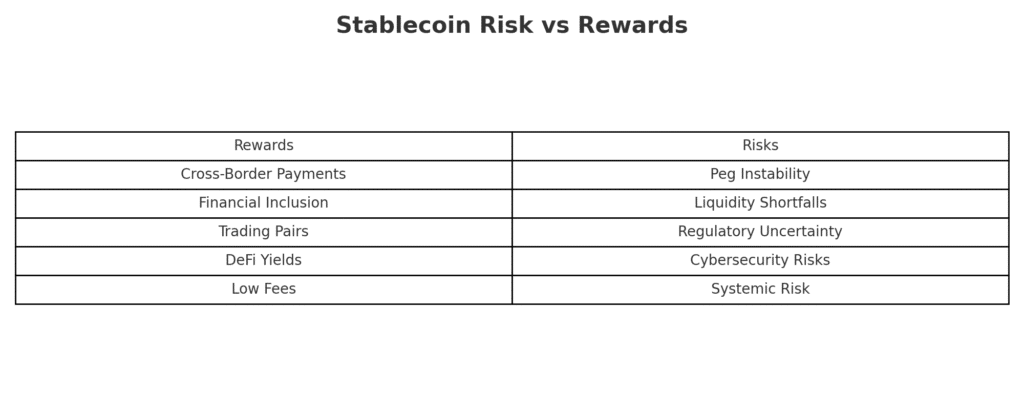
Figure 2: Comparing the main rewards and risks associated with stablecoins.
This contrast highlights the paradox: stablecoins promise stability, but their stability depends on fragile conditions like trust, liquidity, and regulation.
The Regulatory Crossroads
United States
The GENIUS Act of 2025 requires issuers to hold reserves in cash or Treasuries, guarantee redemptions at par, and obtain licenses. But critics argue its loopholes let banks issue stablecoins under looser rules.
European Union
The Markets in Crypto-Assets (MiCA) framework is stricter. It mandates reserve transparency and licensing. The ECB has cautioned that monetary independence of the euro may be undermined by excessive dependence on U.S. dollar pegged stablecoins.
Asia and Emerging Markets
Singapore and Hong Kong are stablecoin hubs in Asia because they have developed a clear licensing regime. Citizens in Nigeria, Argentina and Turkey in the emerging markets rely on stablecoins to protect against inflation and currency devaluation, often without permission to do so.
Adoption Trends and Real-World Usage
Stablecoins are woven into everyday financial life, not just trading.
Usage by Sector
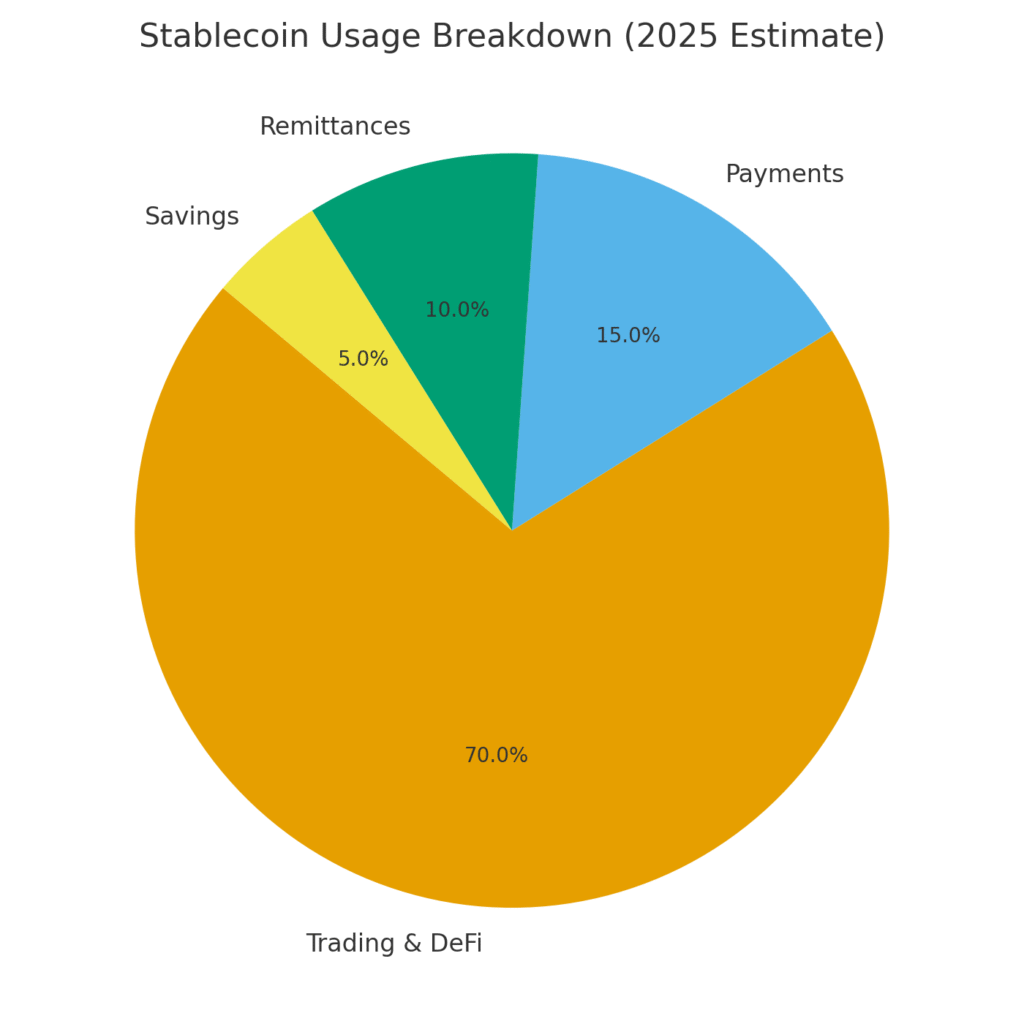
Roughly 70 percent of stablecoin activity is tied to trading and DeFi. Payments and remittances account for 25 percent combined, while the remaining 5 percent covers savings and lending.
Figure 3: Stablecoin usage breakdown by category in 2025 (The Block, Thunes).
Regional Adoption
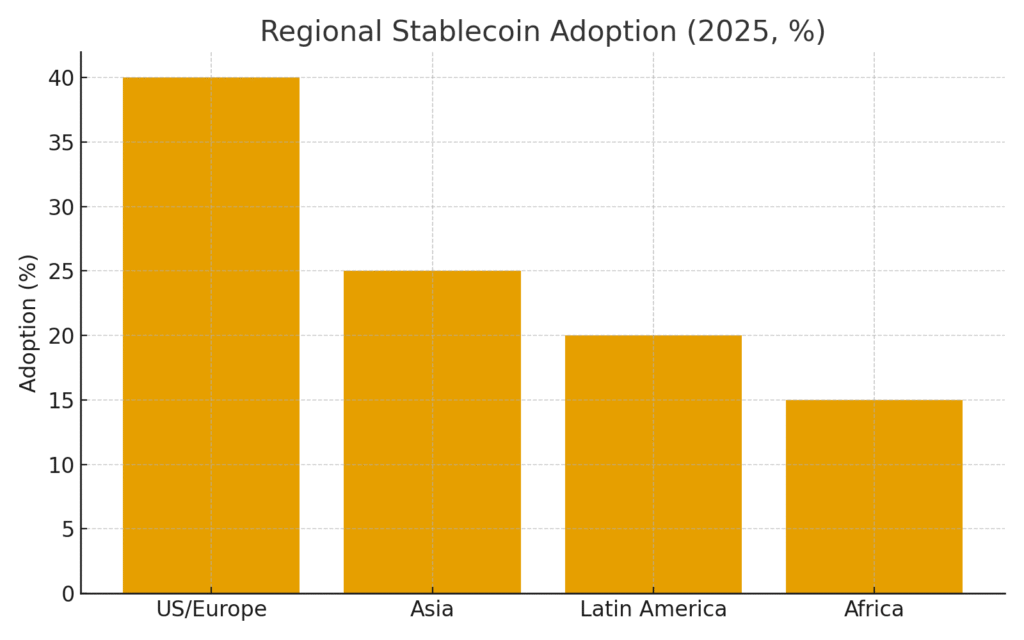
Emerging markets are at the forefront. Latin America is seeing a surge as people flee unstable currencies. Africa is using stablecoins for cheaper remittances, while Asia leads in both adoption and regulation.
Figure 4: Regional adoption trends in 2025, showing Asia and Latin America as key growth markets.
Future Outlook: Stablecoins in Portfolios
Diversification and Liquidity
Investors use them as dry powder, ready to deploy during downturns. For instance, holding 30 percent of a portfolio in USDC allows investors to buy Bitcoin at lower prices.
Tokenized Treasuries
Stablecoins are also anchoring tokenized government bonds, combining the stability of Treasuries with blockchain speed.
ETFs and Asset Management
Firms like Grayscale are exploring ETFs that embed stablecoin yields. This could bring stablecoins directly into mainstream investing.
Global Payments
The IMF has warned that stablecoins could one day rival SWIFT for cross-border settlement. McKinsey projects that by 2030, stablecoins may surpass card networks in daily settlement volumes.
Conclusion: Stable but Fragile
Stablecoins promise and peril at the same time. They allow quick transactions, access to electronic dollars and create new horizons in finance. But they are not always stable. The TerraUSD meltdown and the USDC depeg demonstrate that their safety is pegged on reserves and trust and regulation.
Stablecoins are as stable as possible, but not resistant to stress. Whether oversight and transparency can change rapidly enough to keep pace with their explosive expansion will determine their future.
Frequently Asked Questions
Are stablecoins actually stable?
Not entirely. They hold value most of the time but can depeg under stress.
Do stablecoins have risk?
Yes—liquidity, regulation, systemic exposure, and operational flaws.
What are the disadvantages of stablecoins?
They depend on issuers’ honesty, face regulatory uncertainty, and can collapse under stress.
What are stablecoin rewards for traders?
They provide trading stability, liquidity, and access to DeFi yields.
How safe are fiat-backed stablecoins?
They are safer than algorithmic coins but still depend on banks and reserves.
Can stablecoins replace banks?
No. They rely on banks to hold reserves and connect to fiat systems.
How do regulations affect stablecoin risk?
Clear rules reduce risk; weak oversight leaves gaps that threaten stability.
Glossary
Stablecoin – A cryptocurrency pegged to a stable asset.
Fiat-backed – Tokens backed by government-issued currency reserves.
Crypto-collateralized – Tokens backed by other cryptocurrencies.
Algorithmic – Stabilized by software adjusting supply.
Liquidity risk – Inability to meet redemption requests.
MiCA – EU regulation for crypto assets.
GENIUS Act – U.S. law governing payment stablecoins.
DeFi – Decentralized finance ecosystem.
Collateralization – Assets held to back a token’s value.
Tokenized Treasuries – On-chain versions of government bonds.
Summary
Stablecoins are an interface between blockchain and traditional finance. They offer incentives such as quick remittances, cheap payments, trading stability, and DeFi. Their risks, however, are high: liquidity run-outs, regulatory arbitrage, flaws in operation, and systemic contagion.
The ECB argues that stablecoins are not actually money, but a digital token held by a private company that is prone to crashing. Their violent uptake particularly in the new markets indicates their usefulness as well as their threat. The fragile foundations on which they rest make them a backbone of digital finance or a systemic risk depending on the response of regulators, issuers and markets to the need to manage them.