




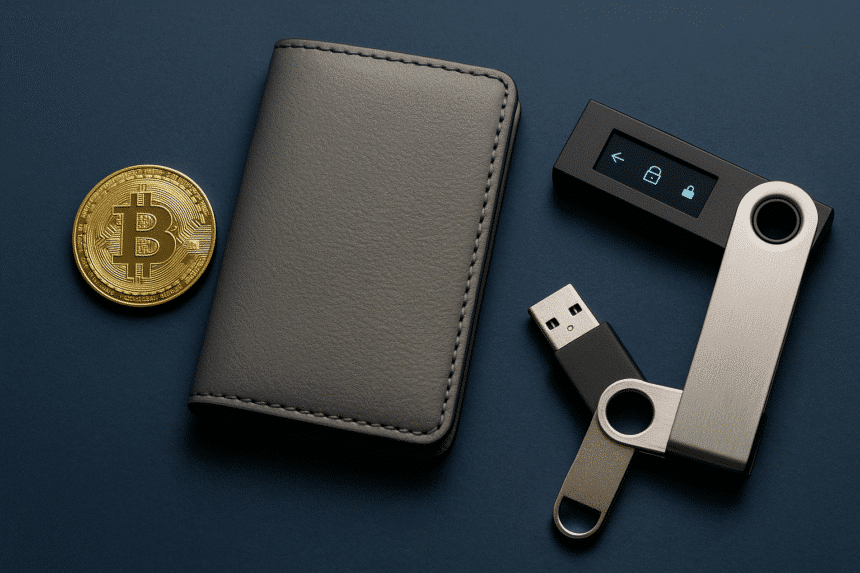

The crypto market has expanded into a trillion-dollar market. Millions of individuals have invested in Bitcoin, Ethereum, and thousands of other coins. However, with growth, there is risk. Cyberattacks, frauds, and exchange failures have already cost investors billions of dollars.
The answer to the question that every crypto holder has is also straightforward: where can coins be stored safely?
Cold storage wallets are the best options when it comes to long-term security. These wallets store keys offline, so they are not accessible to hackers. They are the online version of a safe deposit box.
This article discusses what cold storage wallets are, their history, why they are important, and what some of the best cold storage wallets in 2025 are. It also gives security tips to beginners.
What Are Cold Storage Wallets
Cold storage wallets are crypto wallets that store the secret keys offline. The keys do not get anywhere near the internet, so the hackers cannot steal them remotely.
By comparison, hot wallets are always connected. They are much more convenient but more vulnerable. Cold wallets are slightly less convenient but are the most secure.
Types of Cold Storage Wallets
- Hardware wallets – These are physical gadgets, such as USB sticks that store keys.
- Paper wallets – Printed keys / QR codes, usually stored in a safe.
- Air-gapped devices – Either old phones or laptops that do not have access to the internet, and are solely used to access crypto.
Cold wallets provide the user with absolute control. The funds are not managed by any exchange or third party
A Short History of Cold Storage
Cold storage wallets became popular after early Bitcoin hacks. In 2011, the largest exchange, Mt. Gox, lost 850,000 Bitcoin. A good number of investors became aware of the risk of keeping coins online.
In 2014 happened another failure of Mt. Gox occurred, which caused the massively popular adoption of hardware wallets. Ledger and Trezor soon followed, empowering ordinary investors to store them offline.
By 2025 cold storage is not a niche solution. It is the gold standard of both institutions as well as individuals.
Why Cold Storage Matters
Crypto hacks continue to rise. Chainalysis reported that criminals stole over $3.8 billion in 2023, much of it from online platforms.
Cold storage solves this problem. Without an internet connection, hackers cannot access private keys. Even if an exchange or phone is compromised, the cold wallet remains safe.
This makes cold storage vital for:
- Long-term holders keep crypto for years.
- Institutions managing large reserves.
- Everyday users who want peace of mind.
Cold Storage vs Hot Wallets
| Feature | Cold Storage Wallets | Hot Wallets |
| Internet Access | Offline | Online |
| Security | Very high | Moderate |
| Convenience | Lower | Very high |
| Risk of Hacks | Almost none | High |
| Cost | Free to $200 | Often free |
Hot wallets are useful for daily spending. Cold wallets are better for saving large sums securely.
Case Studies: Lessons From Crypto Hacks
Mt. Gox Collapse
In 2014, Mt. Gox lost 850,000 Bitcoin worth $450 million at the time. The cause was poor online storage. Cold wallets could have prevented this.
FTX Exchange Crash
In 2022, FTX went bankrupt and billions in customer assets were locked away. Many users who trusted the exchange lost everything. Investors holding coins in cold storage were unaffected.
Ronin Network Hack
In 2022, hackers stole $620 million from Ronin, a gaming blockchain. Most of the stolen funds were kept in hot wallets connected to the internet. Cold storage would have blocked this attack.
These cases show one lesson: online wallets carry risks that cold storage avoids.
Best Cold Storage Wallets in 2025
Not all wallets are equal. Some focus on ease of use, others on advanced security. Here are the best cold storage wallets this year:
| Wallet | Type | Key Features | Price Range | Best For |
| Ledger Nano X | Hardware | Bluetooth, supports 5,000+ coins, mobile app | $150 | Everyday investors |
| Trezor Model T | Hardware | Touchscreen, open-source, strong reputation | $220 | Long-term holders |
| Keystone Pro | Hardware | Air-gapped, fingerprint login, QR transactions | $170 | Privacy seekers |
| ColdCard Mk4 | Hardware | Bitcoin-only, layered protection, PIN features | $160 | Bitcoin purists |
| Ellipal Titan 2.0 | Hardware | Fully air-gapped, anti-tamper case | $169 | Travelers and mobile users |
| Paper Wallet | Paper | No device needed, offline printout | Free | DIY users with secure storage |
Short Reviews
- Ledger Nano X – Best mix of features and price. Great for beginners and pros alike.
- Trezor Model T – Extra security with touchscreen. Open-source software builds trust.
- ColdCard Mk4 – Perfect for Bitcoin maximalists who want extreme safety.
- Ellipal Titan – Sealed, tamper-proof design. Great for those worried about physical attacks.
- Paper Wallets – Cheap but risky if lost or damaged. Best as a backup, not primary storage.
Security and Regulation Context
The U.S. SEC has warned that leaving crypto on exchanges is risky. Many exchanges are not insured like banks.
A 2024 MIT study showed cold storage reduces theft risk by over 90 percent.
Institutions now follow strict security rules:
- MicroStrategy stores billions in Bitcoin through multi-signature cold wallets.
- Tesla uses cold wallets for corporate reserves.
- Fidelity Digital Assets provides institutional custody using cold storage.
These examples prove cold storage is not just for hobbyists. It is the standard for serious investors.
How to Set Up a Cold Storage Wallet
The process is simple:
- Buy a trusted hardware wallet from the official source.
- Install its software on a computer or phone.
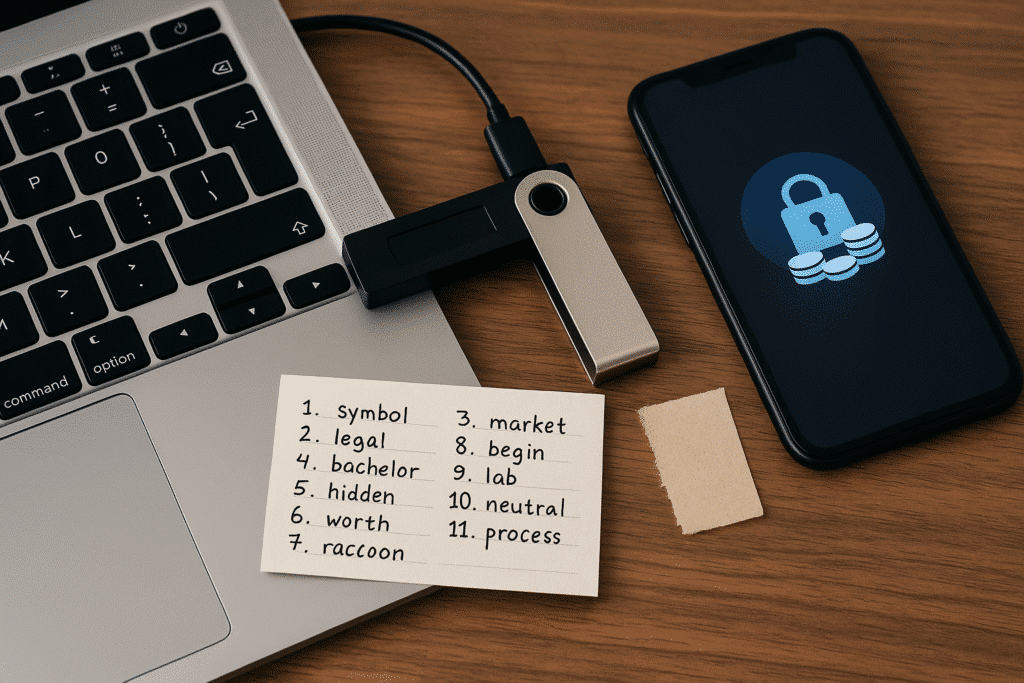
- Generate a seed phrase (12–24 words).
- Write the phrase on paper and store it in a safe or vault.
- Transfer crypto from an exchange into the cold wallet.
Warning: Never save the seed phrase in the cloud or on a phone. Hackers target backups.
Crypto Wallet Security Tips
Even with cold wallets, extra steps strengthen security:
- Use two wallets. Keep one as a backup in case the first fails.
- Split seed phrases. Store parts in different locations.
- Update firmware. Hardware wallet companies release fixes often.
- Use fireproof storage. Protect paper backups from disasters.
- Avoid second-hand wallets. Only buy new, sealed devices.
- Enable passphrases. Many wallets allow an extra password layer.
- Check addresses twice. Malware can alter pasted addresses.
The Future of Cold Storage
By 2025, new trends are shaping the future:
- Biometric wallets. Devices with fingerprint or facial recognition.
- Multi-signature setups. Requiring approval from multiple devices before spending.
- Institutional custody. More funds and banks are offering cold storage services.
- Regulatory push. Governments may require exchanges to use cold storage for customer funds.
- AI-powered fraud detection. Some wallets now integrate alerts for unusual activity.
Cold storage is evolving, but its mission remains the same: maximum safety.
Conclusion
In 2025, cold storage wallets will be the safest method of crypto storage. Offline storage means they can resist hackers, exchange malfunctions, and fraud.
A cold storage is not optional anymore to long-term investors. It is necessary to know that the number of alarming details and reports about the current situation in the country is increasing. The aim is the same regardless of the device used- hardware wallets, such as Ledger, Trezor, or ColdCard, or a paper wallet: to safeguard digital assets.
In crypto, risk usually means convenience. Cold storage is the solution to people who put security in first place.
Frequently Asked Questions For Cold Storage Wallets
What is a cold storage wallet?
It is a wallet that keeps private keys offline for maximum safety.
Why are cold wallets safer than hot wallets?
They are not connected to the internet, blocking most cyberattacks.
Can beginners use cold wallets easily?
Yes. Hardware wallets are designed with simple apps and guides.
What happens if I lose my hardware wallet?
The funds can be restored with the seed phrase backup.
Are paper wallets still recommended?
They are safe if stored carefully but are fragile and easy to lose.
Which cold storage wallet is best in 2025?
Ledger Nano X and Trezor Model T remain top picks.
Do small investors need cold storage?
It is optional, but even small holders gain peace of mind.
Can cold wallets hold multiple coins?
Yes, hardware wallets like Ledger support thousands of assets.
Do institutions use cold storage too?
Yes, companies like Tesla and MicroStrategy store billions this way.
Is cold storage future-proof?
Yes, but new trends like biometric security are making it even stronger.
Glossary of Key Terms
- Private Key – A secret code that gives access to crypto.
- Public Key – The receiving address for transactions.
- Seed Phrase – A backup of private keys in simple words.
- Hot Wallet – A wallet connected to the internet.
- Cold Wallet – A wallet stored offline.
- Hardware Wallet – A physical device for offline storage.
- Paper Wallet – A printed version of private keys.
- Air-Gapped Device – A computer with no internet access.
- Custodial Wallet – A wallet controlled by a third party.
- Non-Custodial Wallet – A wallet fully controlled by the user.
Summary
Cold storage wallets are offline wallets that keep the private keys safe and prevent hackers and other online threats. Cold wallets are as secure as it gets, unlike hot wallets which remain online. This guide describes how cold wallets work, why they are important, and also lists the best cold storage wallets in 2025, such as Ledger Nano X, Trezor Model T, Keystone Pro, ColdCard Mk4, and Ellipal Titan. It also looks at key crypto heists, how to set it up, and the policy initiative to make it safer to hold crypto in custody. To individuals and organizations, cold storage wallets have been the best way to keep crypto secure in an ever-evolving digital world.