





This article was first published on The Bit Journal.
Updated on 07th January, 2026
Blockchain technology started life as the engine behind Bitcoin. Since then, it has grown into a broader toolkit for recording and sharing data in a way that’s hard to tamper with and easy to verify.
That said, blockchain isn’t a magic fix for every problem. In some cases, a regular database is simpler, cheaper, and faster. The real value of blockchain shows up when multiple parties need to share a single “source of truth” without relying on one central gatekeeper.
Key takeaways
Blockchain is a shared record that many computers keep in sync.
Transactions are grouped into blocks, and those blocks are linked together, creating a chain.
Security comes from cryptography + network rules, not from trusting one company or server.
Public blockchains (like Bitcoin) are open to anyone, while private/permissioned blockchains are restricted.
The best use cases usually involve trust, auditing, traceability, or automation across multiple organizations.
What is blockchain technology?
A blockchain is a distributed ledger. Think of it like a logbook that many computers (called nodes) share. When a new set of transactions is added, the network agrees on it, and the record becomes extremely difficult to change later without the network noticing.
Traditional databases usually live in one place (or under one authority). Blockchain is different because control is distributed and updates follow rules that the network enforces.
How blockchain works, step by step
1) Transactions are created
A user initiates a transaction, such as sending a digital asset or updating a record. The transaction is signed using cryptography to prove it came from the rightful owner.
2) Transactions are grouped into a block
Networks collect transactions and bundle them into a “block.” A block typically contains:
Transaction data
A timestamp
A unique identifier (hash) for the block’s contents
A reference to the previous block’s hash, linking the chain
3) The network reaches consensus
Before a block is added, the network must agree it’s valid. This agreement process is called consensus. The method depends on the blockchain design.
Common approaches include:
Proof of Work (PoW): Computers compete to solve a resource-intensive puzzle. This is the model used by Bitcoin.
Proof of Stake (PoS): Validators are selected based on stake and rules set by the network, generally using far less energy than PoW.
4) The block is added and shared
Once accepted, the block becomes part of the chain and is replicated across nodes. From that point forward, changing it would require rewriting history and convincing the network, which is intentionally difficult.
Core features (what people usually mean when they say “blockchain”)
Decentralization
No single entity has full control over the ledger. Decisions are enforced by network rules and participant agreement.
Transparency (in public networks)
Transactions and balances may be visible to anyone, which helps auditing and verification. Note: transparency depends on the chain; privacy-focused designs exist too.
Immutability (practically speaking)
Once data is confirmed, altering it becomes extremely hard. “Immutable” doesn’t mean impossible in a philosophical sense, it means economically and technically resistant to tampering.
Security
Transactions rely on cryptographic signatures. The network structure also reduces “single point of failure” risks that come with centralized systems.
Programmability via smart contracts (where supported)
Some blockchains (like Ethereum and others) can run smart contracts, which are programs that execute automatically when conditions are met.
Smart contracts, explained without the fluff
A smart contract is basically “if-this-then-that” logic stored on-chain.
Example:
If a shipment is confirmed as delivered, then release payment to the supplier.
This can reduce manual paperwork, speed up settlements, and cut disputes. But it also introduces a new risk: code bugs. A contract that’s poorly written can behave exactly as coded, even if that isn’t what people intended.
Types of blockchains (and why it matters)
Not all blockchains are built for the same purpose.
Public (permissionless)
Anyone can join, transact, or validate (depending on rules).
Best for: open networks, digital money, public verification.
Private (permissioned)
Access is restricted to approved participants.
Best for: enterprise settings where organizations want shared records but still need controls.
Consortium
A middle ground where a group of organizations co-manage the network.
Best for: industries where competitors need shared standards (like logistics or trade).
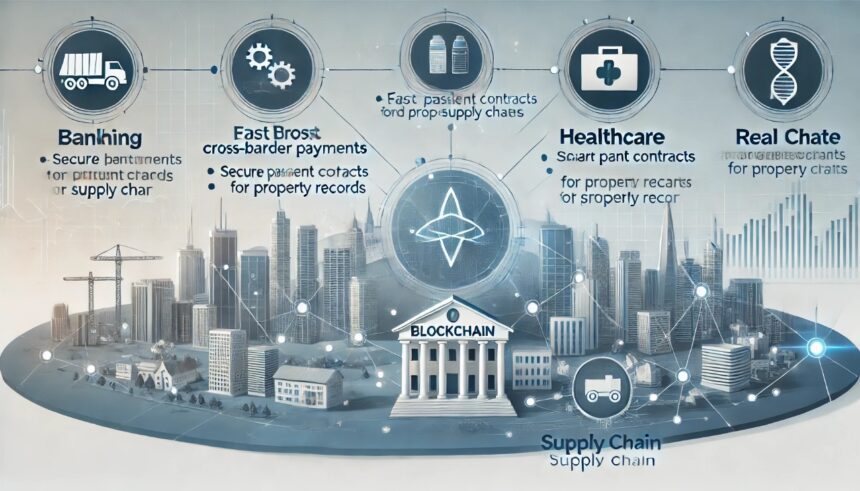
Real-world applications of blockchain technology
1) Banking and payments
Blockchain can make certain transfers faster and more traceable, especially when multiple institutions are involved.
Common use cases:
Cross-border transfers and settlement
Tokenized deposits and digital assets infrastructure
Audit trails that reduce reconciliation work
CBDC pilots (in some jurisdictions)
Worth noting: not every banking workflow needs blockchain. The strongest fit is usually shared settlement and shared records across institutions.
2) Healthcare data management
Healthcare data is sensitive, fragmented, and hard to share safely. Blockchain can help with:
Patient-controlled access to records
Data integrity (knowing records weren’t altered)
Tracking pharmaceuticals to reduce counterfeit risk
More transparent clinical trial logs
Still, healthcare systems often face integration hurdles. The tech is only one part of the puzzle; governance and compliance matter just as much.
3) Real estate and property records
Property transactions are paperwork-heavy and can be vulnerable to disputes.
Blockchain-related use cases include:
Tamper-resistant ownership records
Digitized escrow and settlement using smart contracts
Fractional ownership via tokenization (where legally allowed)
Document verification and audit trails
In practice, real estate adoption depends heavily on regulations and how land registries operate in each country.
4) Supply chain and logistics
This is one of the clearest fits because supply chains involve many parties who don’t always trust each other.
Use cases:
End-to-end traceability (origin → processing → shipping → retail)
Anti-counterfeit tracking for luxury goods, pharma, and electronics
Sustainability reporting (with careful design to avoid fake inputs)
Inventory visibility and dispute reduction
A good way to think about it: blockchain can help prove “what happened and when,” but it still relies on honest data entry at the edges.
Benefits of blockchain (when it’s the right tool)
Stronger auditability and traceability
The ledger can provide a consistent history of actions across parties, which helps audits and compliance.
Reduced reliance on intermediaries
In some workflows, blockchain can remove middle layers that add fees, delays, and reconciliation work.
Automation
Smart contracts can speed up settlement and reduce manual approvals.
Data integrity
Once confirmed, records become difficult to alter quietly, which can increase trust in shared datasets.
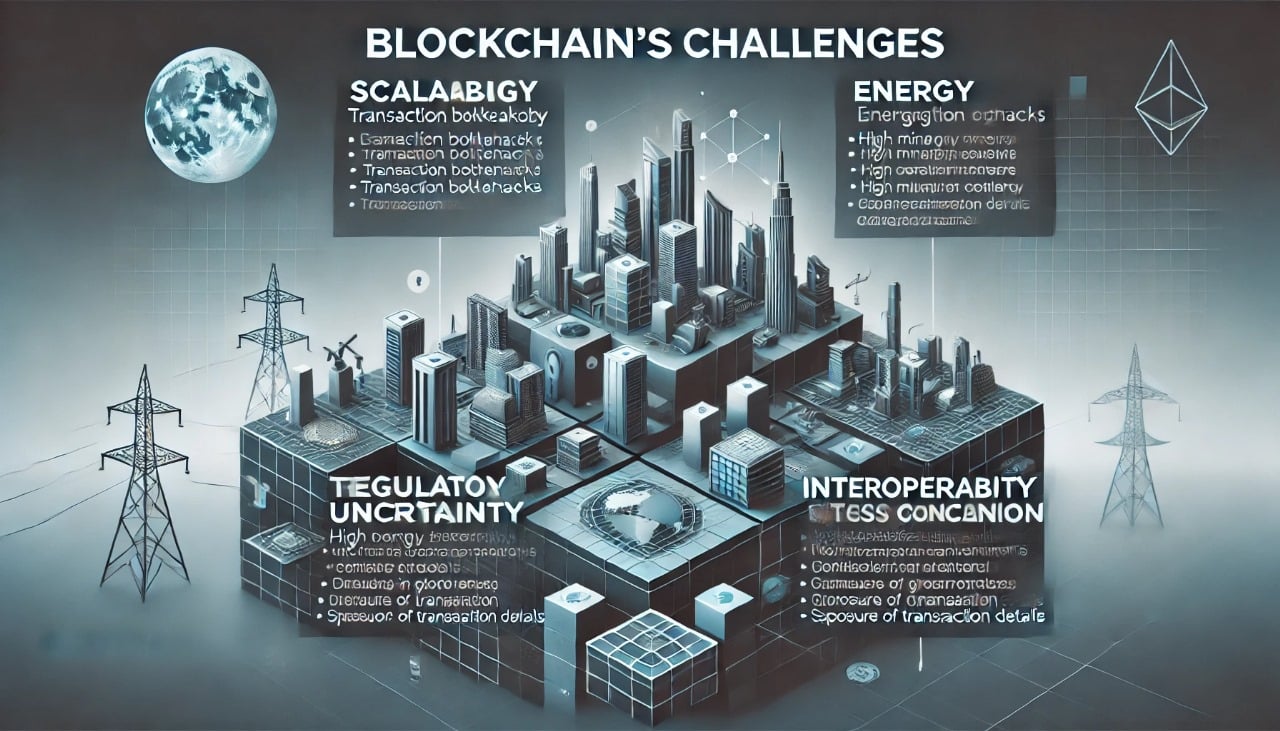
Challenges and trade-offs to know upfront
Scalability and speed
Some networks struggle under heavy load, leading to slower confirmations or higher fees during busy periods.
Energy use (for PoW networks)
Proof of Work systems consume significant energy due to how mining operates. Other consensus methods can reduce this dramatically.
Regulatory uncertainty
Rules differ by country and continue to evolve, especially around tokens, privacy, and compliance.
Integration costs
Connecting blockchain systems to legacy infrastructure can be complex, and the “human process” changes are often the hardest part.
Privacy concerns
Public ledgers can reveal transaction patterns. Privacy-enhancing tech exists, but it can trigger stricter scrutiny depending on how it’s used.
Skills gap
Blockchain development needs specialized skills (cryptography concepts, smart contracts, security practices), and mistakes can be expensive.
The future of blockchain (what to watch in 2026 and beyond)
A few themes keep showing up across serious projects:
Layer-2 scaling to reduce fees and improve throughput
Zero-knowledge proofs (ZK) for privacy-preserving verification
Tokenization of real-world assets, but only where legal frameworks support it
Interoperability (moving data and value between chains more safely)
Better security standards for smart contracts, bridges, and wallets
More enterprise deployments that look “boring” but solve real reconciliation problems
In other words, blockchain’s future won’t only be flashy consumer apps. A lot of the impact is likely to be behind the scenes, like plumbing you don’t think about until it breaks.
Summing Up
FAQs
Is blockchain the same as Bitcoin?
No. Bitcoin is one application of blockchain. Blockchain is the underlying method of keeping a shared ledger. Many blockchains exist, and some aren’t used for currency at all.
Can blockchain be hacked?
The blockchain concept is designed to be resistant to tampering, but real-world systems still face risks, especially through wallet theft, smart contract bugs, compromised keys, or insecure bridges.
Do all blockchains use smart contracts?
No. Some blockchains support complex smart contracts; others are designed mainly for recording transfers and basic scripting.
Is blockchain always decentralized?
Not always. Public chains aim for decentralization, but private/permissioned chains may be more centralized by design, often for governance and compliance reasons.
When should a business not use blockchain?
If a single organization controls the data and there’s no need for multi-party trust or shared auditing, a traditional database is often the better choice.
Glossary of key terms
Block: A batch of transactions grouped together.
Blockchain: A chain of blocks linked by cryptographic references.
Node: A computer that participates in the network and stores/relays data.
Distributed ledger: A database shared across many nodes instead of one server.
Hash: A cryptographic fingerprint of data. Small changes create a totally different hash.
Consensus mechanism: The rule system the network uses to agree on valid updates.
Proof of Work (PoW): A consensus method where computing power secures the network.
Proof of Stake (PoS): A consensus method where validators are selected based on stake and rules.
Smart contract: Code on a blockchain that executes actions automatically when conditions are met.
Public key / private key: Cryptographic keys used to prove ownership and authorize transactions.
Layer 2: A secondary system built on top of a blockchain to improve speed and reduce cost.
Zero-knowledge proof: A method to prove something is true without revealing the underlying data.
Sources
bitcoinpdf
Follow us on Twitter and LinkedIn, and join our Telegram channel to be instantly informed about breaking news!