



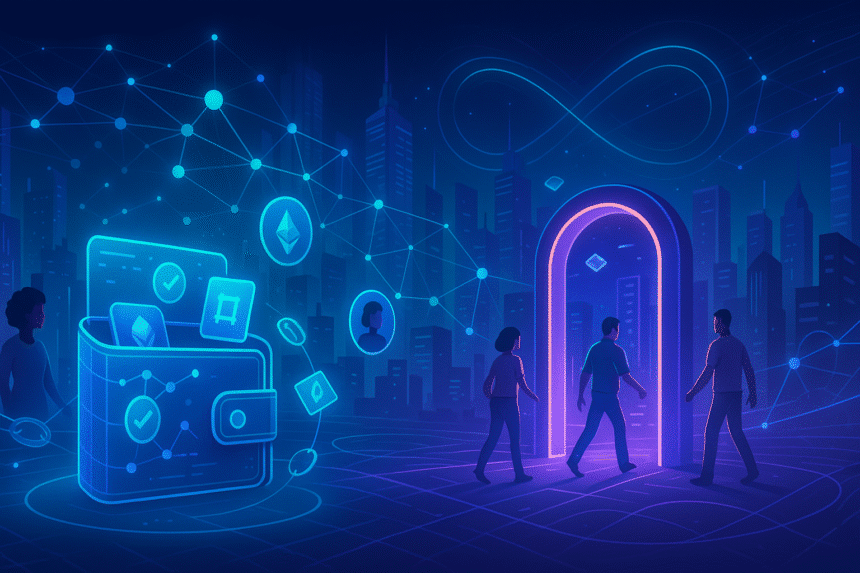

Web3 and the Metaverse now share one path. The Metaverse needs identity, ownership, and trust. Web3 offers all three. Together, they turn virtual spaces into real markets. They turn usernames into portable identities. They turn in-app items into assets a person can own and sell.
The idea is simple. People want control of digital life. They want a wallet to move from one world to another. They want items, tickets, and rights that work across apps. They want proof that a thing is theirs. Web3 integration makes that possible. Metaverse technology gives it a place to live.
This guide explains how the two fit. It shows what changes first. It lists risks and rules. It ends with clear steps for users, brands, and developers.
What Web3 Adds to the Metaverse
Web3 is about ownership, identity, and open protocols. The Metaverse is about shared 3D spaces and social presence. Together they unlock new use cases.
- Ownership of digital goods: People can own items as tokens. These items can move across worlds. A sword, a ticket, or a badge can be used in more than one game or app.
- Portable identity: A wallet can act as a user ID. It can carry names, avatars, and reputations. It can also hold proofs, like a diploma or a work badge.
- Open payments: Tokens allow fast settlement. Fees can be low. Micro-payments can unlock small features. Creators can earn from resales.
- Interoperability: Smart contracts can issue rights that work across apps. A festival pass can unlock access in a game, a chat app, and a live stream.
Why This Convergence Matters Now
The Metaverse needs an economic layer. Web2 accounts do not solve cross-app trade and identity. Web3 offers standards for both. A wallet can log in. A token can prove access. A contract can split revenue with a creator.
Hardware is also improving. Headsets get lighter. Phones render better 3D. Cloud streaming cuts device limits. At the same time, blockchains scale. Layer-2 networks cut fees. Cross-chain bridges improve. These gains make the user flow faster and easier.
The result is a better loop. People enter a world. They use a wallet to unlock rights. They buy items from a creator. They leave with the items and the identity intact. That loop is the core of Web3 and the Metaverse.
Use Cases People Can Understand
The best use cases feel normal. They solve clear tasks and remove friction.
- Tickets and access: A token can be a ticket for a concert in a 3D world. It can also grant access to a replay. It can add a discount in a shop. It can act as proof of fan status.
- Education and work: Badges can prove skills. A 3D class can give a token on completion. A wallet can hold the badge. A portal can check it and unlock the next course.
- Games and digital goods: Items can move between titles that support the same standard. A skin can unlock a special pose in another app. A creator can earn a royalty if the item is resold.
- Brand loyalty: A brand can issue tokens for loyal fans. These tokens unlock early drops, private rooms, or shared spaces. The same tokens can work on the brand site and in a partner game.
- Social presence: A wallet can carry a verified avatar. It can store badges for events joined and roles earned. It can mute bots by using proof of personhood tools.
The Value Stack: From Base Layer to Experience
Layers That Make It Work
Base chains settle transactions and secure assets. Scaling layers cut fees and raise throughput. Identity tools map a wallet to a human or a role. Asset standards define items and rights. Experience layers bring it all to life through games, events, and social apps. Each layer solves one job, and together they create a smooth flow from secure settlement to rich user experiences.
How the Pieces Fit
| Layer | What It Does | Examples of Web3 applications | Role in Metaverse trends |
| Settlement | Records ownership and payments | On-chain tokens, stablecoins | Secure trade of assets in worlds |
| Scaling | Cuts cost and delay | Layer-2 rollups, sidechains | Real-time actions and micro-payments |
| Identity | Links wallets and people | Wallet SSO, human checks | Safer rooms and spam control |
| Assets | Standardizes items | NFTs, SBTs, access tokens | Items that work across apps |
| Logic | Runs rules | Smart contracts | Royalties, splits, quests |
| UX | Makes it usable | Wallet-as-login, paymasters | Web2-like ease with Web3 rights |
A Simple Chart: Adoption Path
Awareness
Introduce the idea in plain words. Show what users gain. Use a short demo or a 30-second clip. Avoid jargon. Invite people to try, not to buy. Keep the promise simple and real.
Free Wallet Login
Let users sign in with email or social, then create a wallet behind the scenes. Offer passkey recovery. Cover gas fees at first. Make the first action one tap. No seed phrase on day one.
Tokenized Rewards
Give free, low-risk rewards for basic actions. Examples include badges for attendance and points for feedback. Explain what each token does. Show it inside the profile. Make the value visible.
Paid Items
Offer small, clear purchases. Start with low prices. Use stablecoins when possible. Show total cost before checkout. Describe rights in one sentence. Make refunds easy to find.
Cross-App Items
Pick one partner app and make an item work in both places. Prove it with a live demo. Keep metadata standard. Document how users move items. Measure use across both apps.
Full Economy
Enable resale, rentals, and royalties. Add spend sinks and earning paths. Publish supply, fees, and rules. Provide support and safety checks. Let users build and trade, not just buy.
What To Expect in the Next 12–24 Months
Better On-Ramps
People will sign in with email or a social login, then upgrade to a wallet. Key recovery will use passkeys and trusted devices. Gas fees will be bundled and paid in app tokens or in stablecoins.
Cross-App Items
Open standards will spread. Items will move between partner worlds. Brands will support the same assets in web, mobile, and 3D spaces.
Clearer Rules
Regulators will set clearer tests for tokens. Tax rules will note in-game assets and rewards. Consumer rules will cover refunds and ads inside worlds.
For Consumers: Practical Steps
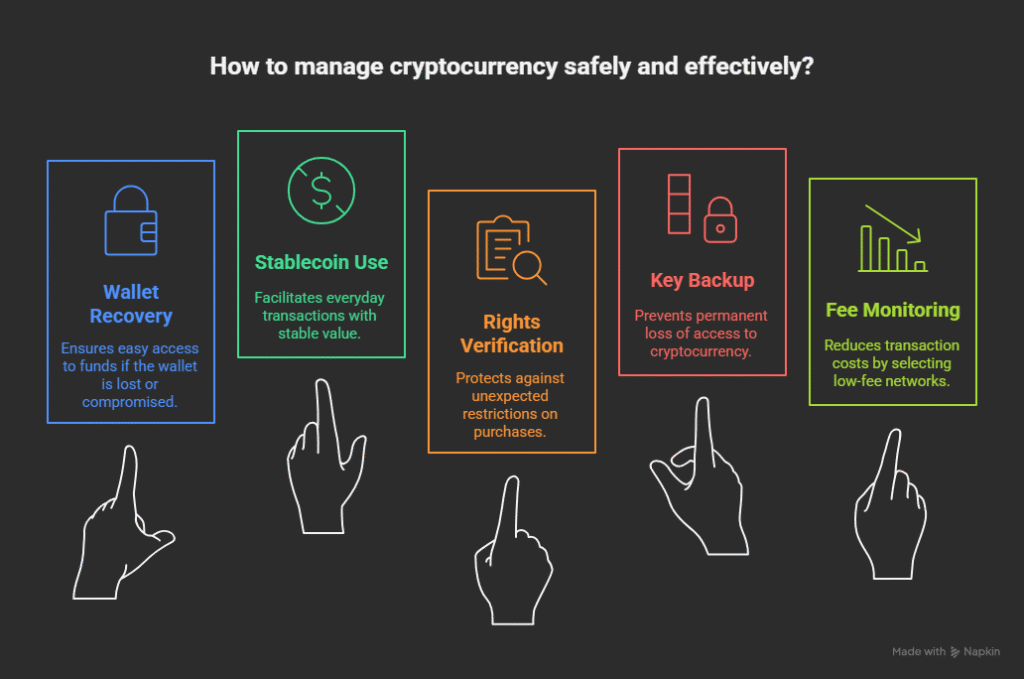
- Use a wallet with easy recovery, then test with free items first.
- Keep a small amount of stablecoin for everyday buys.
- Always check what rights an item grants before you pay.
- Back up keys in two safe places you control.
- Watch fees and pick networks with low cost.
For Brands: A Low-Risk Plan
Start with tokenized access for early entry or trials. Add loyalty tokens that reward visits, shares, or feedback. Enable wallet login on your site to reduce friction. Share a single item with one partner app and study how users interact. Launch a small, capped market and explain royalties and rights in plain language.
For Developers: Build With Open Standards
Developers should keep it simple. Use known token standards. Support wallet-as-login. Cache reads and bundle writes. Add risk checks to smart contracts. Use rate limits and alarms on live flows. Avoid complex systems before the user base grows.
Security and Regulatory Context With Real-World Stats
Security and rules shape trust. The market only grows if users feel safe and refunds are clear.
- Fraud and cybercrime: Law-enforcement reports show high losses from online fraud. The FBI’s IC3 said losses in 2024 were in the tens of billions of dollars, with investment scams as a top driver. That includes many crypto-linked cases.
- Exploit risks: Research firms report large on-chain losses each year from hacks and code flaws. The main causes are bridge exploits, key theft, and contract logic bugs.
- Privacy: Data rules such as GDPR in the EU and state privacy laws in the US cover collection and sharing. Apps must explain what data is on-chain and what data is off-chain.
- Consumer rules: Agencies watch ads, refunds, and kids’ safety. Loot boxes, in-app buys, and claims around tokens draw extra focus.
- Financial rules: Some tokens may count as securities. Stablecoin rules are evolving. Tax rules often treat token rewards as income.
- KYC/AML: When tokens act like money, platforms may need KYC and transaction checks. That includes sanctions screening and suspicious activity reports.
What helps now
- Use audits and public testnets before launch.
- Run a bug bounty.
- Track deploy keys and admin roles.
- Use allowlists for high-risk functions.
- Keep a clear refund policy and a help desk.
- Give a plain-language rights summary for each asset.
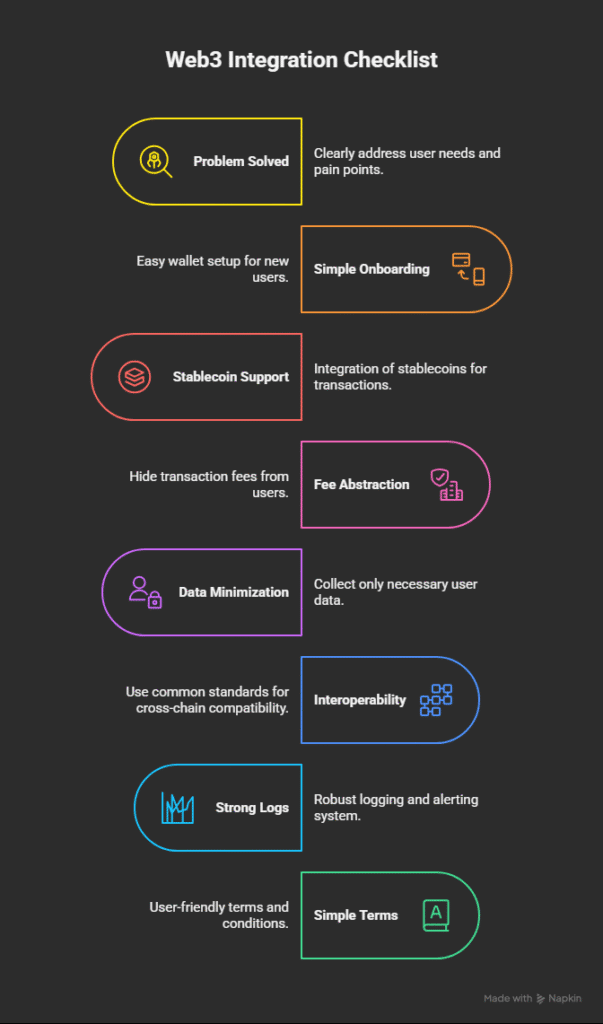
Investors’ Checklist For Web3 integration
- Clear problem solved for users
- Simple wallet onboarding
- Stablecoin support
- Fee abstraction
- Data minimization
- Interop through common standards
- Strong logs and alerts
- Terms that a teen can read
Web3 and the Metaverse in Everyday Life
This is not only for gamers. A fitness app can grant a token for each week of goals met. That token can open a class in a 3D gym. A travel pass can unlock a virtual tour and a real discount. A fan badge can move across music apps. These Web3 applications bring value in small, daily steps.
Metaverse trends point to short sessions on phones, not only long sessions in a headset. That means light, quick rewards. It also means smooth flows. A user should tap once, pay cents, and get value at once.
What Good Looks Like
A good product hides the complex parts. It does not ask a user to write down a long seed phrase on day one. It lets them start fast and add more security later. It gives clear prices and clear rights. It uses simple words. It works on low-end phones.
A good product also respects time. It loads fast. It avoids long waits for on-chain steps. It keeps keys safe and rotates admin rights after each deploy. It uses web3 integration to add value, not to add friction.
Business Models That Fit
- Access passes sell seasonal rights.
- Consumables sell short boosts or event tickets.
- Durables sell items that last and can be resold.
- Subscriptions mix Web2 billing with on-chain proofs of membership.
- Royalties reward creators each time an item trades.
- Each model needs clear math. Prices should reflect utility. Supply should be transparent. Resale fees should be fair and capped.
Risks to Watch
- Speculation: Users may buy for price, not utility. Build for use first.
- Lock-in: Closed worlds block interop. Choose standards and partners.
- Privacy leaks: On-chain data is public. Keep sensitive data off-chain.
- Key loss: Offer recovery flows.
- Bridge risk: Keep assets on fewer chains if possible.
- Hidden fees: Show full cost before a user taps pay.
Sample Roles and Tools
For Product Managers
A product manager should set one clear north star metric, remove complex terms, and use plain copy in every screen. The plan must include refunds, chargebacks, and simple help flows so users feel safe and know what to do when something goes wrong.
For Smart Contract Engineers
A smart contract engineer should ship with unit tests and invariant tests, guard high-risk functions with time locks, and start with conservative limits on supply, spend, and admin powers. Those limits can rise as monitoring improves and real usage proves the design.
For Community Leads
A community lead should teach basic wallet safety and common scams, run regular Q&A sessions to surface issues early, and reward helpful feedback and responsible behavior rather than only trading volume. Clear education, open dialogue, and fair incentives build trust that lasts.
Conclusion: A Clear Path Forward
Web3 and the Metaverse are not two buzzwords. They are parts of one system. Web3 integration supplies identity, ownership, and payments. Metaverse technology supplies place, presence, and context. The result is simple. People take control of digital life and move it across apps.
Growth will come from clear use cases. Start with access, loyalty, and small purchases. Keep costs low. Keep terms clear. Build trust. If teams follow that plan, the Web3 future will feel normal, not new. That is the promise of Web3 and the Metaverse.
FAQs About Web3 and the Metaverse
What is the link between Web3 and the Metaverse?
Web3 adds ownership, payments, and identity to virtual spaces. The Metaverse provides the shared 3D stage. Together they enable real markets and portable rights.
Do users need a crypto background?
No. A good app hides complexity. Users can start with familiar sign-in and add a wallet later.
How do creators earn in this model?
Creators can sell items and get royalties on resales. Smart contracts split revenue with partners.
What are the biggest risks today?
Key theft, scams, and code exploits. Use trusted wallets, avoid unknown links, and favor audited projects.
Will assets work in every world?
Not at once. Interop grows through shared standards and partner deals. Expect early wins between a few aligned apps.
Glossary of Key Terms
- Web3: A model for the web with on-chain ownership and open protocols.
- Metaverse: A network of shared 3D or immersive spaces.
- Wallet: An app that holds keys and signs actions.
- Smart contract: Code on a blockchain that runs rules.
- NFT: A token that proves ownership of a unique item.
- Stablecoin: A token linked to a stable value, often a dollar.
- Layer-2: A network that sits on top of a base chain to scale.
- Interoperability: The ability for items and data to work across apps.
- Decentralized ID: A way to prove identity without a central account.
- Gas fee: The cost to run a transaction on a chain.
Summary
Web3 and the Metaverse are joining into one user flow. Web3 brings ownership, portable identity, and open payments. The Metaverse brings shared 3D spaces and social presence. Together they enable simple use cases such as tokenized access, loyalty, education badges, and cross-app items. The near-term focus is on smoother on-ramps, fee abstraction, and open standards. Risks include scams, code flaws, bridge issues, and privacy leaks. Clear rules on consumer rights, taxes, and tokens will guide growth. Users should start with safe wallets and small steps. Brands should test loyalty tokens and shared items. Developers should use open standards and audits. The goal is simple value with simple words. If done well, Web3 and the Metaverse will feel like a normal part of daily life.