






The U.S. Commodity Futures Trading Commission (CFTC) has taken a significant step in integrating digital assets into traditional finance. On September 23, regulators unveiled a plan to treat stablecoins as eligible collateral in derivatives markets. This marks a turning point for digital currencies, transforming them from speculative tools into recognized financial instruments.
Market observers believe this initiative could reshape the backbone of global trading. With derivatives markets handling trillions in daily volume, granting stablecoins a role in collateral could accelerate adoption across banks, funds, and fintech firms.
Stablecoins as Collateral: A Regulatory Breakthrough
Stablecoins have often been described as the bridge between crypto and cash. The CFTC’s proposal recognizes their stability and liquidity as assets that can support margin requirements. Caroline Pham, Acting Chair of the CFTC, called collateral management the “killer app for stablecoins” and urged stakeholders to submit feedback before October 20.
This regulatory clarity comes at a time when market volatility is raising demand for efficient, reliable settlement tools. By treating stablecoins like U.S. Treasuries or cash in margin frameworks, regulators are signaling a future where tokenized assets power financial plumbing. Experts see this as more than policy. It is a green light for innovation.
Industry Leaders Voice Support
Reactions from major industry players have been swift. Heath Tarbert, president of Circle, said on X: “Stablecoins in regulated collateral frameworks could lower costs and unlock liquidity globally.” His comments highlight the operational efficiency gains expected from tokenized collateral.
Ripple executive Jack McDonald emphasized that clear rules around custody and valuation are essential. “Institutions will not commit capital without knowing reserves are safe and settlement is final,” he stated. Coinbase’s legal head added that the U.S. now has a chance to “leap ahead of Europe and Asia in derivatives infrastructure.”
Global Competition Intensifies
The CFTC’s move positions the United States in a global race to regulate the tokenization of assets. Europe’s MiCA framework already grants stablecoins a defined role in payments, while Asia is testing pilot programs for tokenized bonds and deposits. Allowing stablecoins in derivatives collateral is America’s counterpunch.
Analysts argue that the U.S. cannot afford to lag. By giving stablecoins legitimacy in the largest derivatives market, regulators are signaling intent to lead. If rules are finalized, institutional adoption could expand beyond U.S. borders.
Risks and Opportunities Ahead
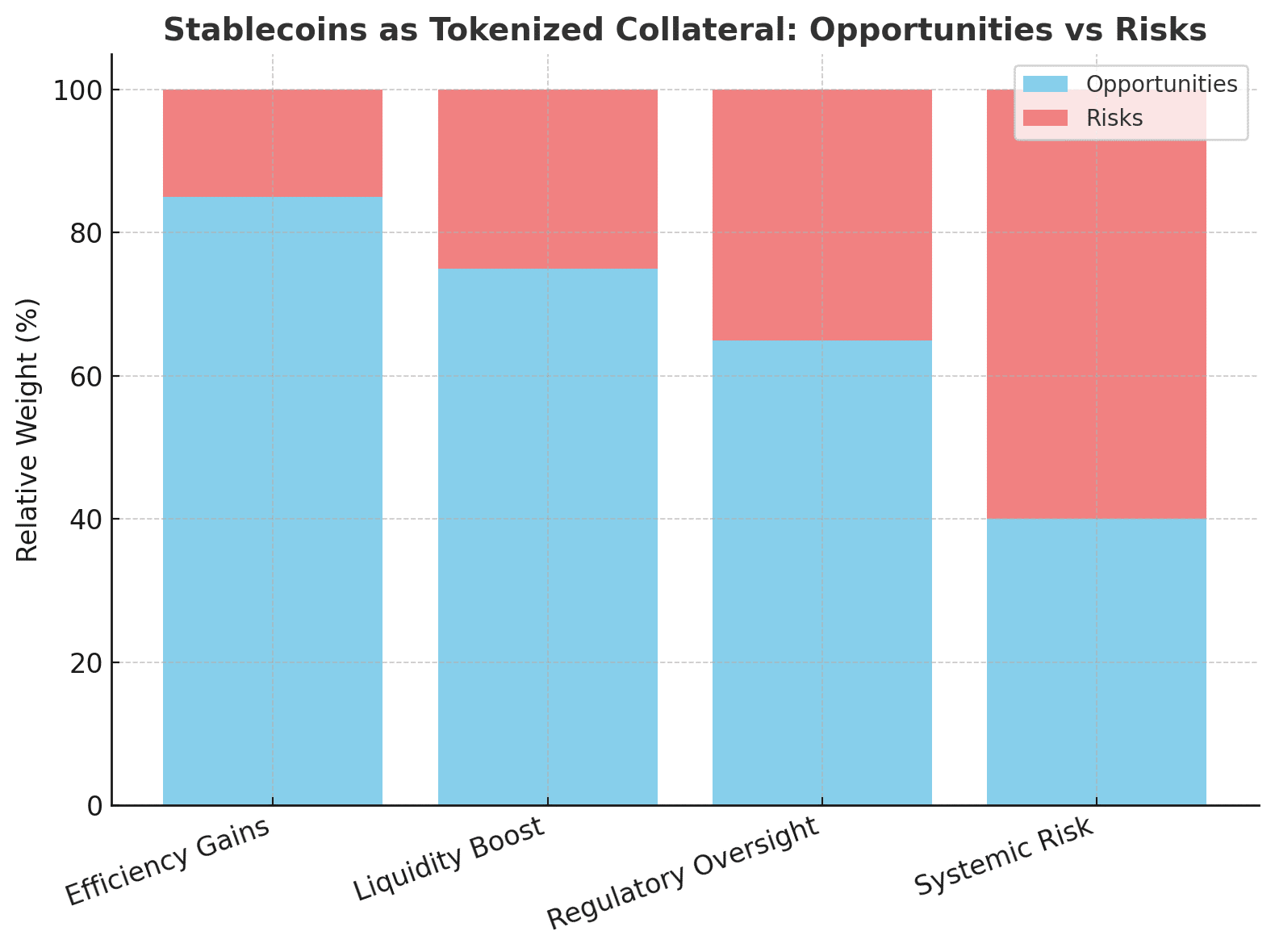
While optimism runs high, risks cannot be ignored. Stablecoins face questions about reserve backing, smart contract vulnerabilities, and operational oversight. Critics argue that without strict guidelines, tokenized collateral could expose markets to systemic shocks.
Yet supporters counter that this initiative will force issuers to uphold higher standards. By pulling stablecoins into regulated systems, authorities can monitor reserves, custody, and settlement with precision. The trade-off may be more compliance, but it paves the way for mainstream trust.
The broader market impact also looms large. If stablecoins are accepted as collateral, capital efficiency could soar. Funds may settle faster, costs may shrink, and liquidity could circulate more freely. Analysts view this as a structural upgrade, the type of development that happens once in a generation.
Conclusion
The CFTC’s stablecoin initiative underscores a pivotal moment in financial history. Collateral management is no longer just about cash or bonds. Digital assets are entering the conversation, backed by regulatory blessing.
With institutions preparing to weigh in before October’s deadline, the balance between innovation and oversight will determine whether stablecoins fulfill their role as tokenized collateral. In the meantime, traders and analysts will continue to watch closely.
FAQs about Tokenized Collateral
Q1: What did the CFTC announce about stablecoins?
The CFTC launched a proposal to include stablecoins as eligible collateral in U.S. derivatives markets.
Q2: Why are stablecoins suitable as collateral?
They maintain price stability, offer liquidity, and can settle transactions faster than traditional assets.
Q3: What risks are associated with this plan?
Key risks include reserve transparency, smart contract vulnerabilities, and systemic exposure if reserves fail.
Q4: How does this affect global markets?
It strengthens U.S. competitiveness, encouraging institutions to adopt tokenized collateral and challenging Europe and Asia.
Glossary
Stablecoin: A cryptocurrency pegged to a stable asset like the U.S. dollar.
Collateral: Assets pledged to secure a loan or trading position.
Tokenization: Converting rights to an asset into a digital token on a blockchain.
Derivatives Market: Financial contracts like futures and options that derive value from underlying assets.
Liquidity: The ease with which an asset can be bought or sold without affecting its price.
Systemic Risk: The risk that failure of one market participant could trigger widespread disruption.