



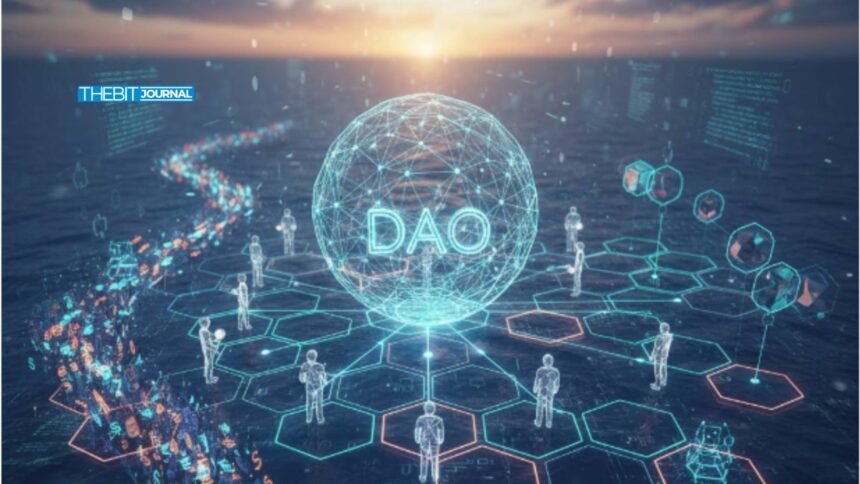

The idea of a digital organization that runs on code feels almost natural. A Decentralized Autonomous Organization (DAO) is a blockchain-based structure that brings that idea to life. It uses smart contracts, on chain voting, and shared treasuries so that communities can make decisions together without a single boss at the top.
Instead of a chief executive signing every approval, members hold governance tokens and vote on what the organization should do. The Decentralized Autonomous Organization model tries to push power to the edges, so that those who hold tokens and care about the project shape its future. Proposals, votes, and treasury movements are recorded on a blockchain for anyone to verify.
This mix of transparency and shared control has turned the Decentralized Autonomous Organization idea into one of the most discussed experiments in the Web3 ecosystem. Some DAOs focus on managing protocols in decentralized finance. Others support creators, invest in digital assets, or coordinate volunteers around a social mission. The core principle is the same in each case: code sets the rules, and the community enforces them through voting.
How a Decentralized Autonomous Organization Works
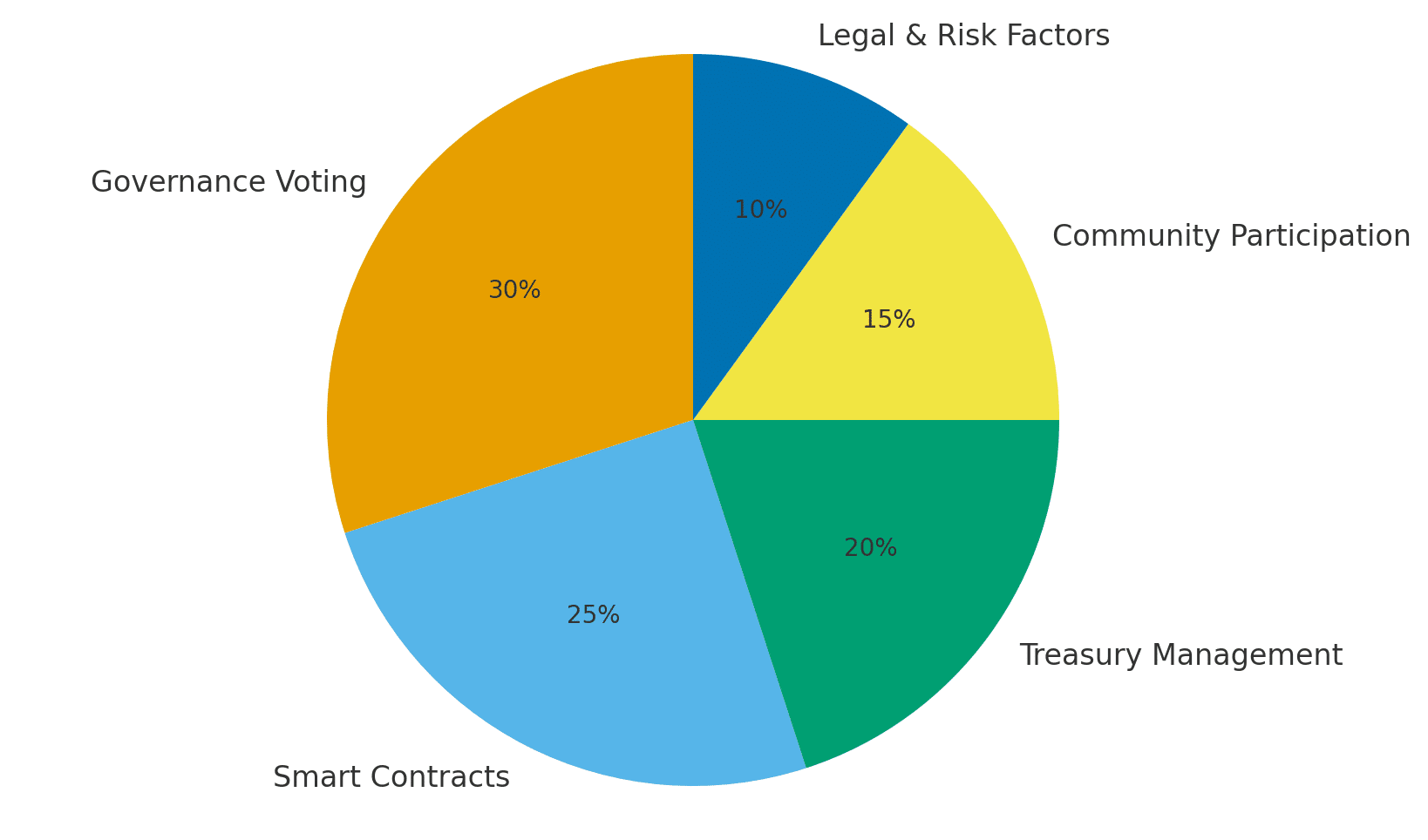
At the heart of every Decentralized Autonomous Organization sits a set of smart contracts. These are pieces of code deployed on a blockchain that define membership, voting rules, and treasury permissions. Once deployed, they operate automatically according to the rules they contain. When a valid vote passes, the smart contract can trigger an on-chain action, such as releasing funds or updating a parameter in a protocol.
Most DAOs issue a governance token. Holding that token usually allows a participant to submit proposals and vote. In some models, one token equals one vote. In others, voting power can be delegated, so active community members speak for quieter holders. A Decentralized Autonomous Organization can also introduce quorum rules, minimum thresholds, or time locks to give members time to react before major changes take effect.
Treasury management is another key part. Funds often sit inside a smart contract wallet that only executes transfers agreed upon through governance. This structure tries to reduce the risk of a single insider moving funds without oversight. When the community approves a grant, partnership, or liquidity decision, the Decentralized Autonomous Organization treasury releases funds according to the vote.
DAOs Explained: The Future of Decentralized Governance
Supporters view the Decentralized Autonomous Organization model as a glimpse of how governance might evolve in the digital age. Members can join from any country, coordinate online, and still share a verifiable record of every decision. This gives DAOs a global, always on character that traditional boardrooms struggle to match.
In decentralized finance, DAOs already decide on fee structures, collateral types, and risk parameters for major protocols. If liquidity providers want lower fees or better rewards, they propose a change and allow token holders to vote. In cultural and creator focused DAOs, members choose which artists to support, which projects to commission, or how to use shared intellectual property.
For many observers, the Decentralized Autonomous Organization represents a response to older corporate models that sometimes separate ownership and control. In a DAO, the lines blur. Holders become both owners and governors. That alignment can encourage long term thinking, because participants are directly exposed to the results of their own decisions.
Why DAOs Matter For Blockchain And Decision Making
DAOs matter because they sit at the intersection of code, money, and community. Blockchains already allow value to move across borders without a central bank. The Decentralized Autonomous Organization structure adds collective control on top of that. Instead of relying on informal chats or closed-door meetings, decisions are formalized as proposals and recorded on a chain.
This can reduce some forms of corruption or favoritism, because treasuries cannot quietly move off chain. Every transfer leaves a trace. It also allows analysts and regulators to study behavior using public data, which is unusual in traditional finance. Some researchers already examine DAO voting records to understand how power concentrates among token holders.
For blockchain ecosystems, DAOs create a way to manage upgrades without handing full control to a single foundation. When a protocol needs a change, the community can weigh trade offs in public, then vote. In practice, influence often clusters around large holders or respected contributors, but the baseline visibility remains higher than in most private companies.
Real World Challenges And Risks For DAOs
The story is not all smooth. A Decentralized Autonomous Organization still faces real world legal, security, and coordination problems. One of the earliest DAOs suffered a major exploit when an attacker found a flaw in its smart contract code and drained a huge amount of funds, which forced a controversial fork of the underlying blockchain.
Security remains a central concern. Smart contracts are difficult to change once deployed. If auditors miss a bug, an attacker may have a clear path to the treasury. Governance risks also appear. When one wallet or a group of wallets accumulates a large share of tokens, it can steer votes in its favor. There have been cases where an individual gained majority voting power and used it to redirect assets.
Legal status is another complex area. Different jurisdictions handle DAOs in different ways. Some regions now recognize DAOs as legal entities, while others still treat them as loose collectives with unclear liability. This matters for taxation, regulatory compliance, and responsibility when things go wrong.
Voter apathy is a softer but persistent issue. In many DAOs, only a small fraction of token holders vote on proposals. That can leave major decisions in the hands of a very engaged minority. The Decentralized Autonomous Organization format offers a tool for participation, but it cannot guarantee that members will actually use it.
DAOs In 2025 And The Road Ahead
The Decentralized Autonomous Organization landscape continues to evolve as technology and regulation catch up. New frameworks experiment with reputation scores, quadratic voting, or non transferable governance badges to balance power between large and small holders. Tooling improves each year, with dashboards, analytics, and communication platforms built specifically for DAO communities.
Regulators now study DAOs more closely. Some focus on how to apply securities and consumer protection laws to token based governance. Others explore ways to acknowledge DAOs as registered entities while preserving their open, international nature. As that work progresses, the Decentralized Autonomous Organization structure may move from experimental to mainstream in certain sectors.
For blockchain networks, DAOs are increasingly treated as core infrastructure rather than side projects. Protocol upgrades, ecosystem grants, marketing funds, and research budgets often flow through a DAO treasury. In the broader economy, experiments with tokenized real-world assets, community-owned brands, and shared data cooperatives all lean on ideas that began with these early governance experiments.
Conclusion: Why DAOs Are More Than A Buzzword
A Decentralized Autonomous Organization (DAO) is not a magic solution that fixes governance overnight. It is a framework that combines transparent code, shared treasuries, and community voting into one digital structure. When designed carefully, it can reduce some forms of centralization and open the door for wider participation in important decisions.
DAOs still face growing pains, from smart contract bugs to uneven voter turnout. However, their rise signals that people are willing to rethink how organizations form, how capital moves, and who gets a voice. As blockchain adoption spreads, DAOs are likely to remain at the center of debates about digital ownership, coordination, and trust.
Frequently Asked Questions
What is a DAO in simple terms?
A DAO is an online organization that uses blockchain technology and smart contracts so members can vote on decisions and control a shared treasury together.
How does a DAO make decisions?
Members hold governance tokens. They submit proposals and vote on them. If a proposal passes under the rules in the smart contract, the decision is executed on chain.
Who owns the funds in a DAO?
The funds belong to the collective. The treasury sits in a smart contract wallet, and transactions occur only when votes approve them according to the rules in the code.
Are DAOs legal?
The legal status depends on the jurisdiction. Some places recognize DAOs as legal entities, while others still treat them as informal groups with shared responsibility.
What are the main risks of joining a DAO?
Key risks include smart contract bugs, concentration of voting power in a few wallets, unclear regulation, and low voter participation that can skew decision making.
Glossary Of Key Terms
DAO:
A blockchain based organization that uses smart contracts and token based voting so members can make collective decisions and manage shared funds.
On Chain Voting:
A voting process recorded directly on a blockchain, where each vote is a transaction that can be verified by anyone.
Treasury:
The pool of funds controlled by a DAO. It is usually held in a smart contract and can move only when governance rules approve a transaction.
Quorum:
The minimum level of participation or voting power required for a DAO proposal to be valid, which helps avoid tiny groups controlling major decisions.
Delegation:
A system where a token holder assigns voting power to another wallet or representative, often to ensure that experts or active members can vote more efficiently.
Protocol:
A set of rules and smart contracts that define how a blockchain application works. Many DeFi protocols rely on DAOs for upgrades and risk management.
Web3:
A broad term for the next stage of the internet that focuses on decentralization, user ownership, blockchain based assets, and open digital economies.
References