













The latest market decline has tied more closely to a looming liquidity squeeze than inflation concerns. Bitcoin slid over 8% after reaching fresh highs last week, and stocks also weakened in tandem. Analysts now point toward the rebuilding of the U.S. Treasury’s $400 billion Treasury General Account (TGA) as the key factor.
Treasury Account Refill Threatens Bitcoin and Stocks
The Treasury General Account functions as the U.S. government’s main operating account at the Federal Reserve. It records inflows from taxes, securities sales, and other receipts, while facilitating outflows for federal obligations. Consequently, the TGA balance rises when inflows exceed spending and falls when payments dominate.

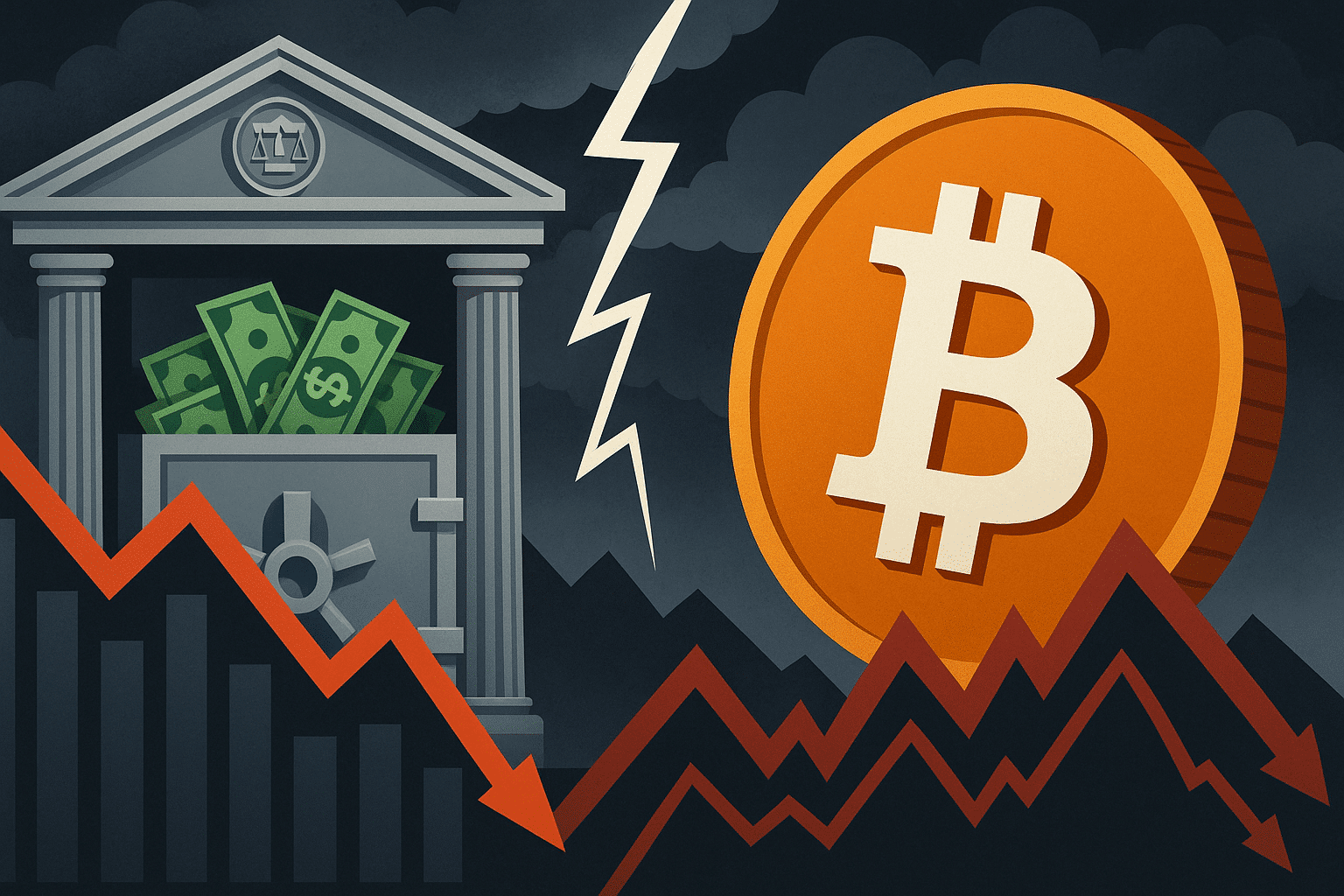
The Treasury sometimes draws down the account during fiscal uncertainty, ensuring the government meets its obligations. This activity temporarily boosts liquidity in the financial system. In contrast, when the Treasury replenishes the account by issuing new debt, system liquidity contracts.
Analysts note this liquidity swing often impacts broader markets, including Bitcoin and equities. A refill pulls money out of private markets as investors purchase Treasuries. As a result, risk assets can weaken sharply during large-scale rebuilds.
The TGA Refill Is Happening Under Fragile Conditions
Data from MacroMicro show the TGA balance rose from $320 billion in late July to over $500 billion this month. Seeking Alpha estimates the Treasury may need $500–$600 billion in new issuance in the coming months. This scale of supply is significant given current financial constraints.
Delphi Digital notes that conditions now differ from prior rebuilds. Liquidity buffers are thinner, balance sheet capacity is tighter, and foreign demand has weakened. These structural changes reduce the system’s ability to absorb large debt issuance without strain.
Marcus Wu of Delphi Digital explained, “Compared to 2023, liquidity backstops are weaker and foreign bids diminished. This heightens market vulnerability.” Analysts stress the mismatch between issuance supply and demand may elevate funding rates. Therefore, risk assets like Bitcoin and equities could face additional volatility.
Bitcoin and Equities React to Liquidity Fears
Bitcoin price fell to around $113,500 after reaching highs above $124,000 last week. The CoinDesk 80 Index also dropped 13% in the same period. Other cryptocurrencies, including Ether, XRP, and Solana tracked similar declines.

On Wall Street, the Nasdaq slipped nearly 1.40% on Tuesday, cooling from a record high reached only a week earlier. Analysts highlight that losses coincided with signals of TGA rebuilding. Therefore, liquidity fears appear more pressing than the anticipation of Federal Reserve speeches.
David Duong of Coinbase emphasized, “Jackson Hole and inflation data are excuses. The true concern is Treasury’s $400B liquidity drain.” His comments underscore the importance of liquidity conditions over monetary policy narratives. Bitcoin and equities may continue to track Treasury actions closely.
Summary
The recent downturn in Bitcoin and equities links primarily to the U.S. Treasury’s TGA rebuild rather than inflation or Jackson Hole expectations. Analysts highlight that a $400 billion liquidity drain will weigh on funding conditions and risk assets. Bitcoin has dropped sharply, while stocks have also retreated amid reduced liquidity buffers and tighter market capacity.
For more crypto news, visit the platform.
FAQs
What is the Treasury General Account?
It is the U.S. government’s main operating account at the Federal Reserve, used for receipts and payments.
Why does the TGA refill affect markets?
Refills remove liquidity from the system, as Treasury debt issuance absorbs cash from private markets.
How much is the Treasury expected to issue?
Analysts estimate $500–$600 billion in new debt may be needed to rebuild the account.
How has Bitcoin reacted?
Bitcoin has fallen over 8% since reaching record highs last week, reflecting tightening liquidity conditions.
What other assets are affected?
Stocks, especially the Nasdaq index, and major cryptocurrencies like Ether, XRP, and Solana have also weakened.
Glossary of Key Terms
The Treasury General Account (TGA): The account the U.S. government holds with the Federal Reserve.
Liquidity Drain: A Decrease in cash available in markets due to the issue of debt or a withdrawal.
Issuance: The action involved by the Treasury in selling securities to produce money.
CoinDesk 80 Index: An index that tracks the performance of 80 significant digital assets.
Liquidity Buffers: Backstop or kinds of increases that can help withstand financial market stress.
References: