






This article was first published on The Bit Journal. The latest slump in the cryptocurrency market may be rooted in liquidity strains facing major market makers, according to BitMine chairman and Fundstrat co-founder Tom Lee. Lee cautioned in an interview with CNBC on a Thursday that structural weaknesses operating in the background, not only investor fear, are straining the prices of digital assets.
Market Makers Face Sudden Capital Shortages

Tom Lee cited the dramatic market event on the 10th of October when approximately 20 billion worth of crypto positions were sold, which amounted to one of the largest wipeouts in a single day in recent history. The scale of the crash, he said, blinded a number of Market Participants
and produced major capital shortages in the industry.
The situation, according to Lee, has led to a domino effect. Firms have been forced to reduce operations with less capital reserves and lower inflows of traders which was usually the primary source of revenue of Market Participants. Most of them are now reducing their balance sheets to release the much-needed capital.
Balance Sheet Pressures Force Trading Cutbacks
Lee said that when there are holes on their balance sheets, they have no option but to withdraw. That is reducing trading activity. And once they begin dropping in price, they are forced to make even more sales. The gradual process that we have witnessed over the last few weeks indicates that the Market Participants are stressed to the end.
Lee stressed that market makers are key to the maintenance of liquidity in digital assets and their impact is comparable to that of central banks in conventional finance. He said the liquidation shock of October 10 dealt a heavy blow on companies that are to take care of the smooth trading conditions.
Mass Liquidation Event Cripples Key Market Makers

On October 10, he had said that the liquidation was so big that it crippled market makers. These participants are essential in crypto that they have markets running. He said:
“And market makers are critical in crypto because they provide liquidity. I mean, they act almost as the central bank in crypto.”
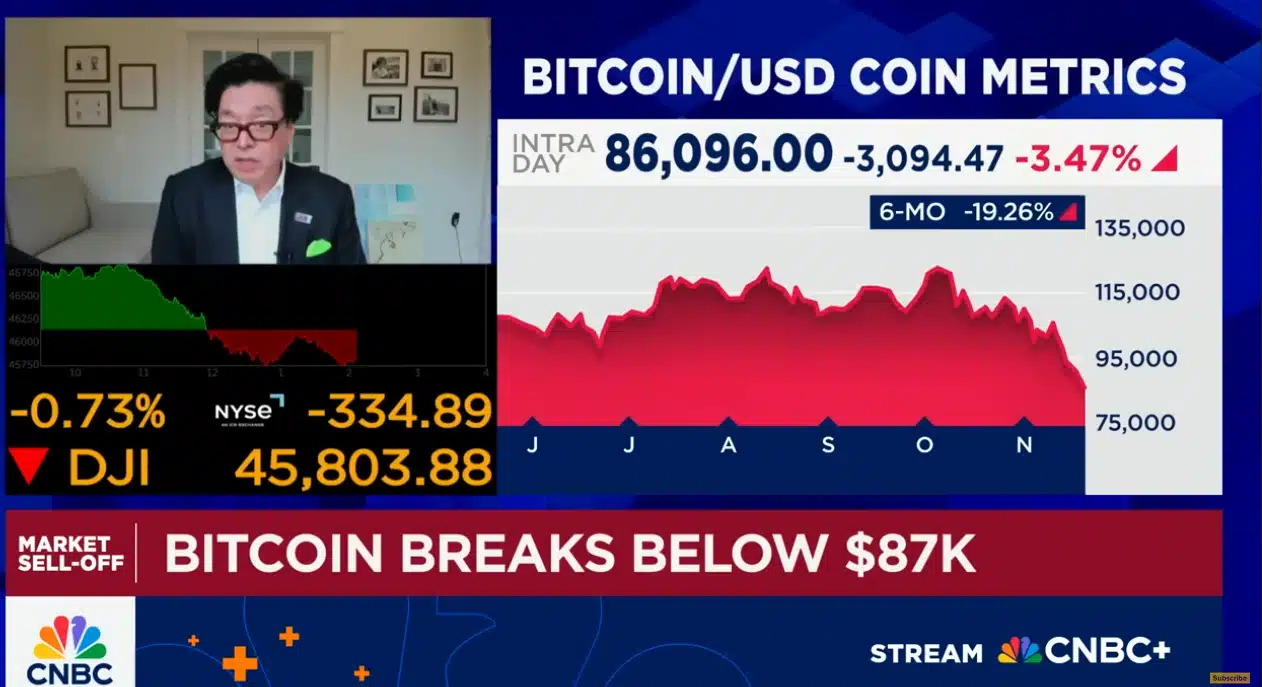
Bitcoin, which traded at over $121,000 prior to the October rout, now trades around $85,900. This downward trend has been reflected by many of the leading cryptocurrencies as liquidity problems spread across Market Participants facing difficulties in keeping normal trading flows.
Liquidity Unwind Mirrors 2022 Crypto Event
Lee opined that the market was yet to completely clear the imbalance. He compared this to a similar liquidity unwind in 2022 and indicated that the present phase would take some weeks before things got normal. He said:
“And so in 2022, it took eight weeks for that to really get flushed out. We’re only six weeks into it. So I kind of concur. I think crypto, Bitcoin and Ethereum are in some ways a leading indicator for equities because of that unwind. And now this sort of limping and weakened liquidity.”
Although the near-term stress may have been intense, Lee indicated that once these structural strains are resolved, it may later lead to stabilization; however, the market is still susceptible until the market makers restore capital buffers.
Conclusion
Tom Lee highlighted that the cryptocurrency market is still under strain but this could improve over time, as soon as the market makers regain liquidity. In comparison to 2022, he proposed that Bitcoin and Ethereum and the broader crypto might be the equities leading indicators of recovery, but until capital buffers are restored the market is still weak.
Follow us on Twitter and LinkedIn, and join our Telegram channel to be instantly informed about breaking news!
Summary
- Tom Lee says crypto’s decline stems from major liquidity gaps in market makers’ balance sheets.
- The Oct. 10 $20B liquidation forced firms to cut trading and sell more assets.
- Lee warns liquidity issues may continue for a few more weeks.
- Bitcoin has fallen from $121K to about $85.9K since the crash.
Glossary of Key Terms
Market Makers: Firms providing liquidity by buying and selling assets, stabilizing markets.
Balance Sheet: Company’s assets, liabilities, and equity; shows financial health.
Capital Reserves: Funds held to cover obligations and absorb losses.
Liquidity Crunch: Lack of funds that forces reduced trading or asset sales.
Liquidation: Forced sale of assets due to margin calls or crashes.
Crypto Crash: Rapid drop in cryptocurrency prices due to market stress.
Liquidity Unwind: Reducing positions or selling assets to restore balance.
Capital Buffers: Extra funds held to withstand market shocks.
Frequently Asked Questions about Market Makers
1. What caused the crypto market drop?
Liquidity gaps in market makers’ balance sheets triggered selling and price declines.
2. Why are market makers important?
They provide liquidity and stabilize crypto markets, acting like central banks.
3. How has Bitcoin been affected?
Bitcoin fell from $121K to around $85,900 since the October 10 crash.
4. When might the market recover?
Recovery may take a few more weeks as market makers rebuild liquidity.
Reference