





Crypto has a habit of turning technical debates into cultural ones as one side talks about electricity, hard money, and battle tested security. The other side talks about efficiency, scalability, and building an internet economy that can actually run at global scale.
In 2026, that debate is less about ideology and more about what the industry is being forced to optimize for: reliability under stress, predictable costs, and regulatory survival. Proof of Stake vs Proof of Work (PoS vs PoW) is still the clearest lens for understanding where blockchain infrastructure is heading, and why some networks keep attracting serious capital while others stall.
There is also a quiet shift happening as users increasingly care about final outcomes, not the mechanism. If a chain is cheap, fast, and dependable, most people shrug at the consensus model. Institutions, regulators, and infrastructure builders do not shrug. They interrogate risk, concentration, attack surfaces, and how governance behaves when money is on the line. That is where 2026 gets interesting.
Proof of Stake vs Proof of Work: the 2026 question is not just technical
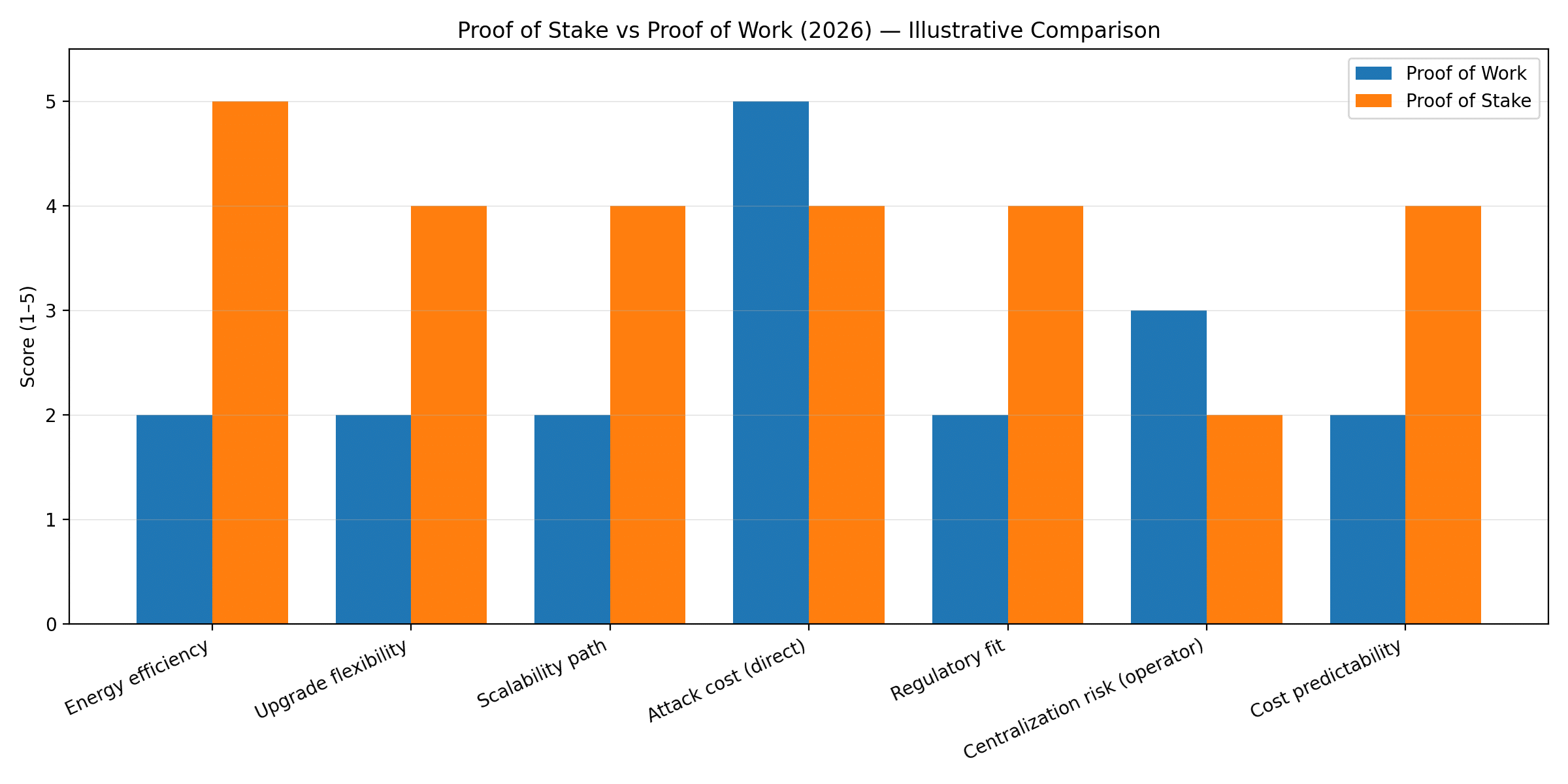
The simplest way to frame the fight is this: Proof of Work buys security with energy and hardware competition, while Proof of Stake buys security with locked capital and penalty rules. Both can be secure. Both can fail in ugly ways. The question for 2026 is which system better fits the world crypto is entering: one with rising electricity demand, tighter compliance expectations, and users who expect “always on” performance like any other financial rail.
On the Proof of Work side, the case rests on a familiar claim: it is the most conservative design for censorship resistance and credible neutrality, because attacking it requires real-world resources that are hard to fake. On the Proof of Stake side, the case is pragmatic: it is dramatically more energy efficient, easier to evolve, and better aligned with networks that need to scale without turning every block into an electricity bill.
Dominance, in this context, does not mean one model eliminates the other. It means which model becomes the default for new networks, which one earns the most developer mindshare, which one regulators and enterprises tolerate more easily, and which one ends up securing the most economic activity beyond simple value storage.
The 2026 backdrop: upgrades, regulation pressure, and a strained power grid
In late 2025, Ethereum shipped a major network upgrade called Fusaka, explicitly focused on scaling data capacity for rollups and creating safer paths to increase throughput over time. In the same period, the official Ethereum roadmap pointed to Glamsterdam as a 2026 upgrade in development.
With features such as enshrined proposer builder separation and block-level access lists, which are the kind of plumbing changes that reduce friction for scaling and improve resilience. This matters because it shows where large smart contract ecosystems are placing their bets: rollup-centric growth, more predictable block building, and validator-friendly design.
At the same time, energy has become a louder part of the conversation again, but not only because of crypto. A recent government energy outlook in the United States projected record electricity consumption in 2025 and 2026, driven in part by data centers and high-power computing demand. That kind of macro pressure changes the political vibe around energy-intensive industries, including mining, especially in regions where grids are already stretched.
Proof of Work is not standing still, either. A major academic industry survey found that Bitcoin mining used a majority share of sustainable energy sources, and it documented a sharp shift away from coal, with natural gas becoming the largest single energy source and sustainable sources collectively reaching 52.4%. That data undercuts simplistic narratives, but it does not remove the core political reality: a large, visible electricity footprint attracts scrutiny when power prices jump or when heat waves hit.
In other words, Proof of Stake vs Proof of Work in 2026 will be judged in a world that is less patient with externalities and more focused on measurable risk.
How Proof of Work keeps winning the “hard security” argument
Proof of Work security is straightforward to explain at a dinner table, which is part of its strength. Miners compete to produce blocks. Competing costs money. If someone wants to rewrite history, that actor must outspend honest miners and keep doing it long enough to matter. It is not impossible, but it is brutally expensive and hard to hide.
That costliness also creates a kind of economic gravity. Specialized mining hardware tends to flow to the cheapest energy, and miners fight for margins like any industrial business. Over time, that dynamic can push mining toward efficiency, even if it also pushes it toward regions with looser rules. The 2025 Cambridge mining survey described how the energy mix has been changing and how the industry continues to relocate and adapt.
There is another underappreciated point: Proof of Work can be conservative by design. Fewer moving parts means fewer ways to accidentally break the system. That does not make it perfect, but it helps explain why Proof of Work remains attractive for a single purpose network that prioritizes neutrality, durability, and simple verification above all else.

In 2026, the strongest Proof of Work narrative is less about speed and more about assurance. When markets wobble, the appeal of a settlement layer that changes slowly can feel like an anchor in choppy seas. That is why the Proof of Work model is unlikely to disappear, even if it stops being the default for new consumer and enterprise applications.
How Proof of Stake turns capital into security and flexibility
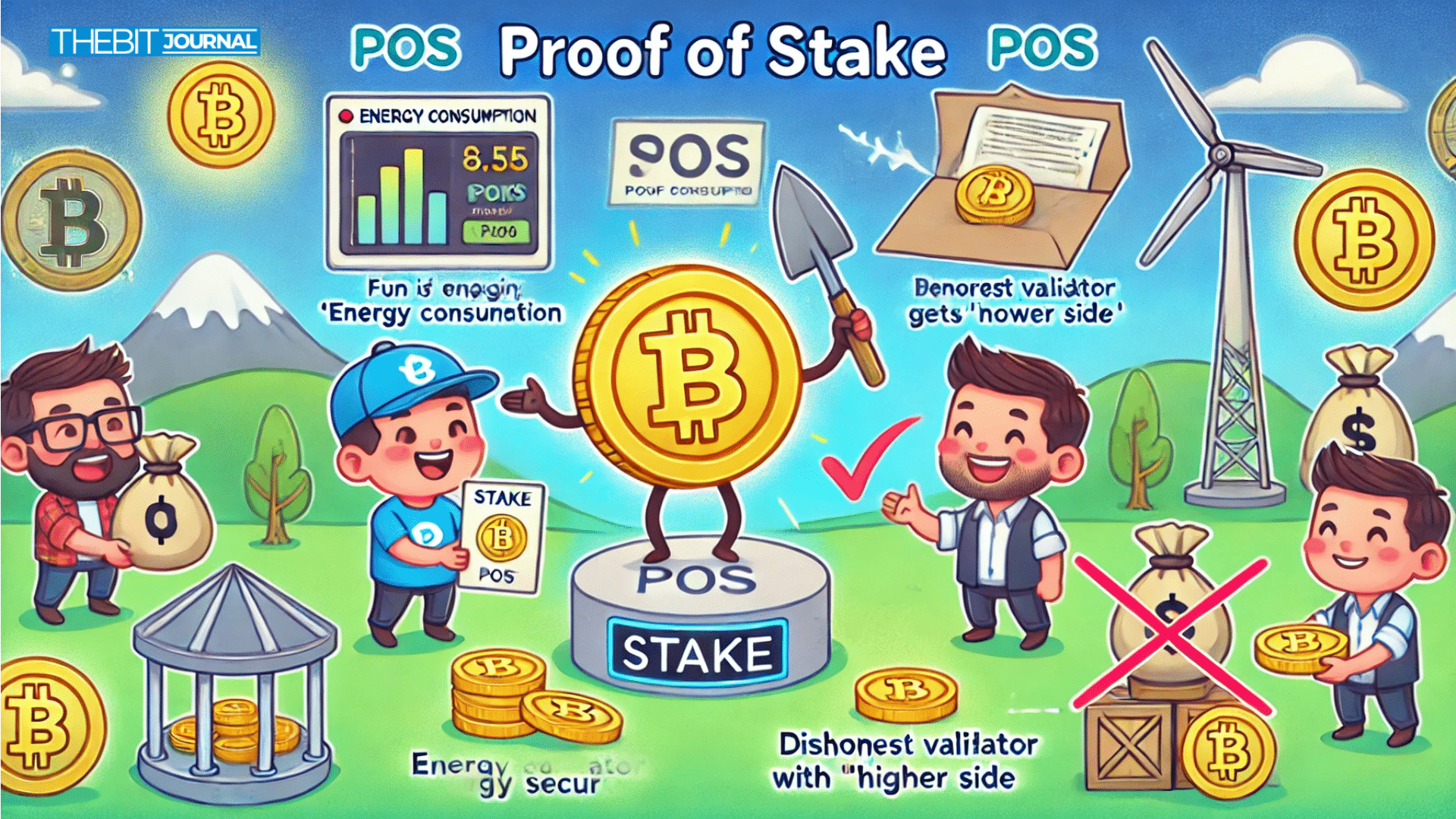
Proof of Stake flips the model. Instead of burning energy to prove honesty, validators lock capital and follow protocol rules. If they break the rules, that stake can be penalized. The mechanism is less physically intuitive than mining, but it offers two practical advantages that 2026 markets seem to reward: energy efficiency and upgradability.
Ethereum is the flagship example after its move to Proof of Stake, and the network has continued to iterate in 2025 and 2026 planning cycles. The Pectra upgrade was activated on mainnet in May 2025, with changes spanning both the execution and consensus layers. That steady cadence matters because modern smart contract platforms are not only about money.
They are infrastructure for lending, settlement, tokenization, identity primitives, and on-chain market structure. Those systems demand frequent but careful improvement, and Proof of Stake governance and validator operations tend to accommodate that pace more naturally than Proof of Work ecosystems that prioritize minimal change.
There is also the scale of economic security. In mid 2025, an industry staking outlook estimated more than 34 million ETH staked and over 1.06 million active validators, putting a large portion of supply directly behind consensus. That kind of participation can strengthen the deterrence effect, but it also introduces a new concern: who controls the validators, how concentrated the staking infrastructure becomes, and how quickly slashing and client bugs can propagate across a huge validator set.
The next frontier is restaking and shared security, where staked assets can secure additional services. That trend can increase capital efficiency, but it can also stack risks on top of each other, especially if slashing conditions become complex or correlated. In plain terms, Proof of Stake can scale the security budget, but it can also turn a simple system into a layered one, and layers sometimes fail together.
This is why Proof of Stake vs Proof of Work is not a morality play. It is an engineering trade.
Where each model is vulnerable in 2026
Proof of Work vulnerabilities in 2026 cluster around perception, policy, and geography. Even if the energy mix improves, a big electricity footprint remains an easy target during grid stress, and mining crackdowns can happen fast when politicians need a villain. One recent example outside major mining hubs showed how quickly enforcement can follow when officials believe mining threatens local power stability.
Proof of Stake vulnerabilities cluster around concentration, complex incentives, and tail risk. If too much stake is controlled by a small number of operators, the system can face censorship pressure, coordinated behavior, or correlated outages. Complexity adds another risk: slashing, client diversity, and sophisticated validator strategies can create failure modes that are hard to explain until something breaks. The Ethereum roadmap focus on block building design and validator friendly upgrades in 2026 is partly a response to those structural concerns.
Put differently, Proof of Work is often attacked through the physical world, while Proof of Stake is often attacked through market structure and operational concentration.
The key indicators that signal who is winning in 2026
Watching price alone is like judging a car by the paint. A better approach is to track indicators that reflect real adoption and real security.
First, developer and application gravity. If the majority of new consumer finance apps, tokenized assets, and settlement experiments continue to build on Proof of Stake chains, that is dominance in practice, even if Proof of Work remains the symbolic backbone for value storage.
Second, cost to attack versus cost to operate. Proof of Work security budgets are tied to mining economics and energy inputs. Proof of Stake security budgets are tied to staked value and penalty credibility. If staking yields compress while participation stays high, that can be a healthy sign, since it implies security is not purely bought with high rewards. If yields spike due to risk, that can be a warning.
Third, concentration metrics. For Proof of Work, hash rate concentration by region and pool matters. For Proof of Stake, validator operator concentration, client diversity, and liquid staking dominance matter. The 2026 winner is the model that keeps decentralization credible while still scaling.
Fourth, regulatory compatibility. Even without outright bans, regulation can shape what institutions can touch. Policy debates in large jurisdictions have already linked sustainability concerns to Proof of Work mining activity and disclosure expectations. In 2026, the systems that dominate everyday finance rails are likely to be the ones that do not constantly trigger policy alarms.
This is where Proof of Stake vs Proof of Work becomes less philosophical and more measurable.
Which system dominates in 2026, realistically
The most likely 2026 outcome is split dominance. Proof of Work continues to dominate the “store of value plus settlement finality” narrative, with Bitcoin as the center of gravity, and with mining gradually professionalizing further as energy sourcing and grid relationships become strategic advantages. The Cambridge mining survey showing a majority sustainable mix supports the view that the industry is adapting, even if political risk remains.
Proof of Stake, meanwhile, is positioned to dominate the “everything else” category: smart contract platforms, app ecosystems, tokenization pilots, and on chain market infrastructure that needs frequent upgrades and predictable operating costs. Ethereum continuing to ship upgrades like Fusaka and planning Glamsterdam for 2026 signals a maturing cadence that institutions tend to prefer because it looks like professional infrastructure, not a permanent experiment.
So the question “which dominates” depends on what is being measured. If dominance means most economic activity and application development, Proof of Stake has a strong edge. If dominance means the most culturally entrenched model for censorship resistance and conservative monetary settlement, Proof of Work keeps its seat at the table.
In that sense, Proof of Stake vs Proof of Work in 2026 is less a winner takes all fight and more a market sorting mechanism, like trucks versus sports cars. Both exist because the roads and the jobs are different.
Conclusion
2026 is shaping up as the year consensus stops being a nerd debate and starts being a compliance and infrastructure decision. Proof of Work remains the heavyweight champion of simple, conservative security, and it is getting better at answering energy questions with real data. Proof of Stake keeps winning where growth and flexibility matter, especially in ecosystems that are scaling through rollups and frequent protocol upgrades.
The honest answer is that both systems will dominate their own lanes. The sharper question for builders, analysts, and investors is which lane a given chain is truly built for, and whether its consensus model matches its promises. This discussion is educational and should not be treated as investment advice. Proof of Stake vs Proof of Work will keep evolving, but in 2026 the market is increasingly rewarding clarity, operational maturity, and measurable resilience.
FAQs
Q: In Proof of Stake vs Proof of Work, which system is more energy efficient in 2026?
Proof of Stake is generally far more energy efficient because it does not require continuous computational competition to secure blocks. Proof of Work consumes significant electricity because miners must run hardware to compete for block production, and the network security budget is tied to that ongoing spend.
Q: Which model is more secure, Proof of Stake or Proof of Work?
Both can be secure, but they defend themselves differently. Proof of Work security is tied to real world resource costs and hardware competition, while Proof of Stake security is tied to staked capital and the credibility of slashing penalties. Security in 2026 depends heavily on decentralization and operational maturity, not only the consensus label.
Q: Why do smart contract platforms often prefer Proof of Stake?
Smart contract ecosystems usually need scalability upgrades, predictable costs, and flexible validator operations. Proof of Stake tends to support faster iteration cycles and lower operating overhead, which helps complex application ecosystems evolve without turning fees into a constant crisis.
Q: What is the biggest risk for Proof of Stake in 2026?
The biggest risks are concentration and correlated failures. If too much stake is controlled by a small set of operators, censorship pressure and operational outages become more plausible. Added layers such as restaking can also increase complexity and link risks across systems.
Glossary of key terms
Consensus mechanism: The method a blockchain uses to agree on the next valid block and maintain a shared history across many independent computers.
Validator: A participant that proposes or attests to blocks in a Proof of Stake network, typically by locking stake and running specialized software.
Miner: A participant that competes to produce blocks in a Proof of Work network by running mining hardware and consuming electricity.
Hash rate: A measure of total mining computation securing a Proof of Work network, often used as a proxy for security budget and competition.
Staking: Locking a crypto asset to support network security in Proof of Stake, usually in exchange for rewards and subject to penalties.
Slashing: A penalty mechanism in Proof of Stake that can reduce a validator stake for harmful behavior or severe operational failures.
Finality: The point at which a transaction is considered irreversible with extremely high confidence, often after a network reaches a strong consensus threshold.
Rollup: A scaling system that executes transactions off the base layer and posts compressed data back to the main chain, aiming for lower fees and higher throughput.
Decentralization: The degree to which control is distributed across many independent actors, reducing reliance on any single party or small group.
References