




The rise of cryptocurrency has introduced an upsurge in the distribution of digital assets on a global scale. Statista shows that more than 420 million individuals possessed cryptocurrency in 2024 and millions more will join the market in 2025.
Along with the increase in digital currencies, there is the threat of hacking, phishing, and withdrawal of wallets. It is no longer a question of convenience to choose the best crypto wallets.
It is important to have security, multi-currency support and it must be simple. This blog examines the 5 most secure crypto wallets in 2025, their characteristics and how to secure crypto assets.
What Makes a Crypto Wallet Secure?
Hardware/software protection and user best practices are features of a secure crypto wallet. Depending on the wallet you use, security features may be different, but the most credible wallets provide:
- Holdings of Private Keys: Non-custodial wallets enable their owners to own their own keys.
- Two-Factor Authentication (2FA): Increases another level of verification to avoid access by the wrong party.
- Backup and Recovery: The funds can be recovered via seed phrases and encrypted backups. Even the most secure wallets must be diligent.
The users have to be careful not to visit phishing websites, keep software up-to-date, and use safe storing techniques.
Top 5 Best and Secure Crypto Wallets for 2025
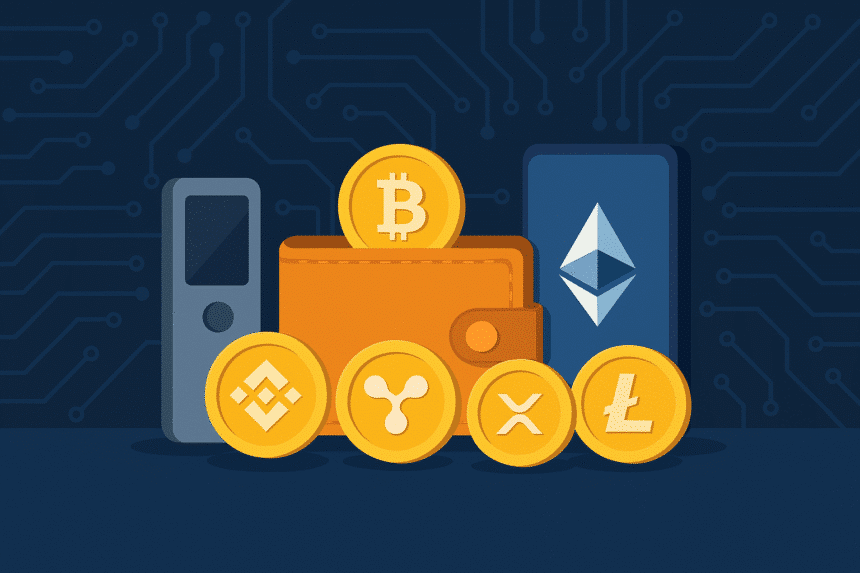
Below is a detailed comparison of the five most secure wallets recommended for both beginners and advanced users.
Wallet Comparison – Security and Features
| Wallet Name | Type | Security Features | Supported Coins | Ease of Use | Platforms |
| Ledger Nano X | Hardware | PIN, 2FA, offline storage | 1800+ | Medium | Desktop, Mobile |
| Trezor Model T | Hardware | PIN, Passphrase, Offline Storage | 1000+ | Medium | Desktop, Mobile |
| Exodus | Software | Backup Phrase, Password Encryption | 250+ | High | Desktop, Mobile |
| Trust Wallet | Mobile | Biometric Auth, Encrypted Keys | 160+ | High | iOS, Android |
| MetaMask | Browser/Mobile | Seed Phrase, 2FA, Hardware Wallet Support | 150+ | High | Desktop, Mobile |
These wallets offer a combination of robust security, user-friendly design, and multi-platform compatibility, making them suitable for all crypto holders.
How to Protect Crypto Wallet from Hackers
Securing a wallet requires a combination of technology and habits. The table below summarizes threat types and protective measures.
Security Layers vs. Threat Types
| Threat Type | Protective Measure |
| Phishing & Fake Websites | Always verify URLs, bookmark official websites |
| Malware / Keyloggers | Use antivirus software, cold wallets |
| Unauthorized Access | Strong passphrases, 2FA, biometric authentication |
| Browser Extensions | Limit to trusted extensions |
| Dusting Attacks | Avoid accepting unsolicited tokens |
Practical Tips:
- Large Holdings in Cold Wallets: Hardware wallets are offline and their keys are not vulnerable to remote attacks.
- Activate Multi-Factor Authentication: Passwords, biometrics and physical devices.
- Keep Software Current: Security patches will prevent already known vulnerabilities from being used.
Crypto Wallet Security Tips for Daily Use
Even secure wallets can be compromised when there is poor daily practice. The following are security tips:
- Strong and Unique Passwords: Do not use the same password across different websites.
- Save Your Seed Phrase: Save as a paper copy, and not on digital devices.
- Avoid Public Wi-Fi: The open networks may leak wallet credentials.
- Threat of Social Engineering: There is a possibility that the hackers pose as support staff and steal financial resources.
These security tips on crypto wallet minimize the exposure to the most typical hacking techniques.
Advanced Security Practices for Power Users
To those users who handle large portfolios, additional protection is offered by the advanced measures:
- Multi-Signature Wallets (Multisig): To authorize transactions, it demands several separate keys.
- Hardware Wallet: Add MetaMask or Trust Wallet to Ledger/ Trezor to add more security.
- Encrypted Backups: Back up wallet data in offline or vaults in an encrypted form.
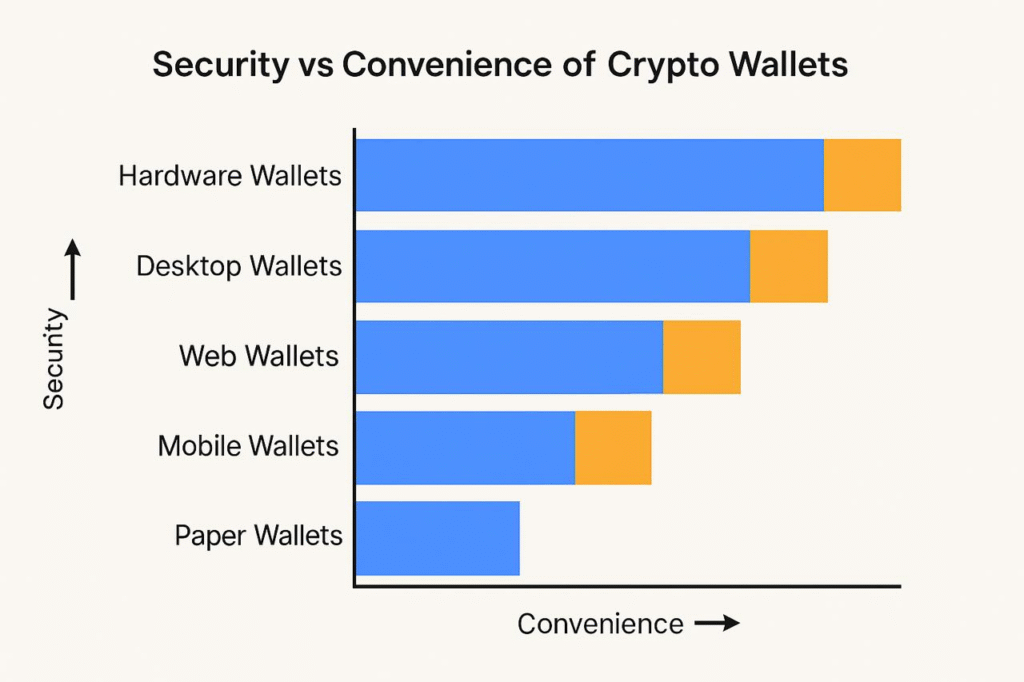
Security vs Convenience Tradeoff
The graph shows that higher security often reduces convenience. Users must balance risk tolerance with usability.
Choosing the Right Wallet for Your Needs
The choice of a wallet depends on the usage patterns, the amount of assets and security priorities:
- Beginner/Small Holdings: Mobile wallets such as Trust Wallet and MetaMask.
- Intermediate Users: Software wallets that are highly backed up and password-protected.
- Big Portfolios: Hardware (Ledger, Trezor) wallets with multisig. Before making a commitment, users ought to assess the supported coins, compatibility with devices and back-up.
Future Trends in Crypto Wallet Security
Cryptocurrency protection is not a choice.With the increased use of crypto, wallet security is changing. The major trends of 2025 are:
- Post-Quantum Cryptography: Securing wallets against quantum computing attacks of the future.
- Biometric Authentication: Facial recognition and fingerprint sensors are going to be standard.
- Enhanced Recovery Protocols: Minimization of funds lost through forgotten keys whilst maintaining decentralization.
Such wallets with those features guarantee long-term security and comfort.
Conclusion: Secure Your Digital Wealth
Cryptocurrency cannot be secured optionally.Choosing the most suitable crypto wallets and following the established security measures will help users avoid hackers and unauthorized intervention.
Technology in the form of hardware wallets to store high-value holdings and mobile wallets with good encryption guarantees the security of digital assets combined with good habits.
Being selected carefully and used responsibly, users may store, send and receive cryptocurrency with a minimal risk exposure.
Frequently Asked Questions (FAQs)
1. Which is the most secure crypto wallet?
Offline key storage allows hardware wallets such as the Ledger Nano X and Trezor Model T to offer the best possible security.
2. Are software wallets safe?
Indeed, software wallets are reasonably secure with good passwords, 2FA and backup discipline.
3. What can I do to avoid hacking of my crypto wallet?
Store big amounts in cold wallets, use 2FA, keep software up to date, and do not fall into phishing.
4. Are mobile wallets secure enough to use on a daily basis?
Yes, when the gadget is safe, applications are official, and robust authentication is applied.
5. What is Multisig Wallet?
A wallet that needs many private keys to sign transactions, minimizing the single-point-of-failure.
Glossary of Key Terms
- Cold Wallet: Offline wallet used to store cryptocurrency securely.
- Hot Wallet: Online wallet for frequent transactions.
- Seed Phrase: Recovery phrase for restoring a crypto wallet.
- Private Key: Secret key used to authorize crypto transactions.
- Multisig Wallet: Requires multiple keys for transaction approval.
- 2FA (Two-Factor Authentication): Extra security layer requiring multiple verification steps.
- Phishing: Fraudulent attempt to steal sensitive information.
- Dusting Attack: Sending tiny crypto amounts to trace wallet activity.
- Encryption: Process of encoding data to prevent unauthorized access.
- Hardware Wallet: Physical device storing cryptocurrency offline.
Summary
A key component of digital asset management is the prevention of hacking a crypto wallet.There are crypto wallets, such as hardware, desktop, mobile, web, and paper wallets, which vary in their security and convenience, which makes the careful choice necessary. Good security measures like turning on two-factor authentication, using hardware wallets, and backing up the keys, and not using public Wi-Fi significantly decrease the risk of being attacked. Frequent update of wallet software, multi-signature wallets, and suspicious-activity monitoring are other added protections. It is also crucial to learn about phishing scams, malware infection, and social engineering in order to ensure the security of the wallet. Users can avoid crypto wallet hacking by taking secure wallet options and developing disciplined security behavior. Such an all-inclusive approach is not only protective of investments but also creates trust in the digital financial environment. These measures are a guarantee of safety and resistance to more and more advanced cyber attacks in the long term.