






Threshold Bitcoin, commonly referred to as tBTC, is rapidly evolving as a decentralized and trust-minimized bridge that connects Bitcoin to the Ethereum blockchain. This innovative protocol enables Bitcoin holders to mint a tokenized version of Bitcoin on Ethereum, backed one-to-one by actual Bitcoin.
The importance of Threshold Bitcoin has grown alongside the increasing demand for decentralized finance (DeFi), where Bitcoin liquidity can be securely utilized without relinquishing custody to centralized entities.
The Threshold Network’s advancements and upgrades in late 2025 have further reinforced its position as a critical infrastructure bridging Bitcoin and DeFi ecosystems.
What is Threshold Bitcoin and its background?
Threshold Bitcoin, or tBTC, is a decentralized protocol designed to bring Bitcoin to Ethereum and other smart-contract-enabled blockchains in a secure and permissionless way. Unlike regular wrapped Bitcoin that is controlled by a single company, tBTC is run by a decentralized network of nodes that hold Bitcoin using special cryptography.
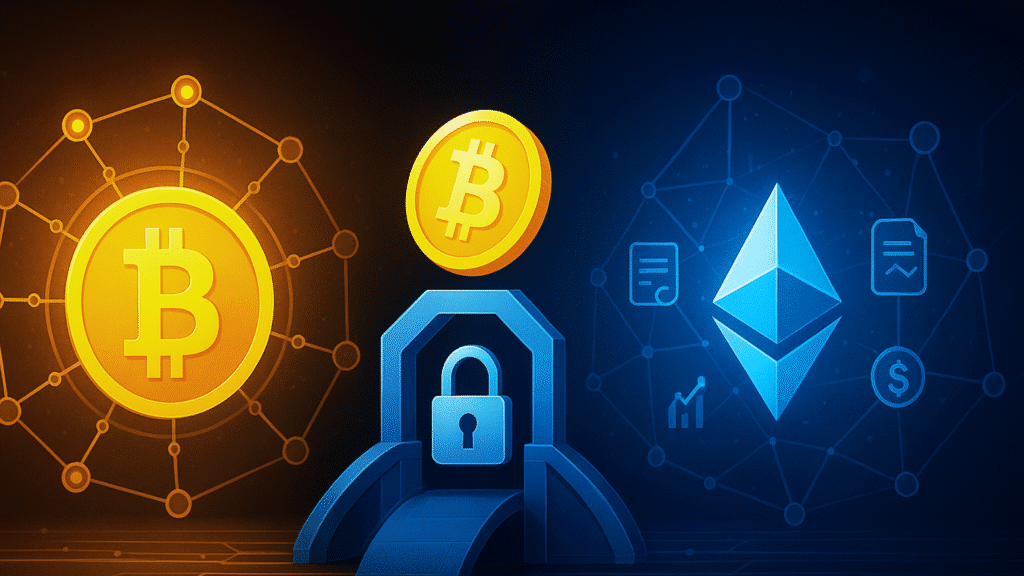
This means Bitcoin backing tBTC is held collectively, requiring a majority of signers to authorize transactions, preventing any single point of failure or control. The protocol emerged from the merger of Keep and NuCypher, and it forms part of the Threshold Network, which focuses on trust-minimized Bitcoin-DeFi integration and cryptographic services.
The core utility of tBTC lies in bridging Bitcoin to Ethereum’s expansive DeFi environment while maintaining decentralization, security, and transparency.
Why is Threshold Bitcoin necessary?
Threshold Bitcoin addresses a critical gap: Bitcoin itself lacks the programmable contract capability needed to participate in DeFi applications directly. Ethereum, by contrast, hosts most DeFi protocols but does not natively support Bitcoin.
tBTC solves this by tokenizing Bitcoin for use on Ethereum, allowing $BTC holders to engage in lending, borrowing, trading, and yield farming without selling their Bitcoin or relying on centralized custodians.
This system spreads out control, which lowers the risk of problems from failed custodians or censorship. Experts say this trustless approach matches Bitcoin’s original idea of being decentralized. As DeFi grows, there is more need for safe Bitcoin access, making tBTC an important part of the system.
How does Threshold Bitcoin (tBTC) work?
tBTC is minted and redeemed via interactions with the Threshold Network’s dashboard, utilizing a permissionless process. A Bitcoin holder deposits $BTC into a wallet secured by a distributed group of nodes that collectively hold the private keys.
These nodes are randomly chosen from those who have staked Threshold’s native T tokens. Once $BTC is deposited, the protocol mints an equivalent amount of tBTC tokens on Ethereum. Redeeming tBTC reverses the process by burning tBTC tokens to receive BTC back.
This decentralized custody model employs a threshold signature mechanism requiring at least 51 of 100 signers to approve Bitcoin movements, mitigating risks of unilateral key misuse. The bridging process is transparent and verifiable on-chain, providing users with proof of reserve and security guarantees.
What are the key benefits and risks of Threshold Bitcoin?
The primary advantages of Threshold Bitcoin include its full decentralization, ensuring no single entity holds custody or control over Bitcoin backing tBTC. Permissionless minting and redemption create an open system accessible to all, freeing users from third-party dependence.
This makes tBTC safer and clearer than wrapped Bitcoin controlled by a single company. It also works with DeFi platforms like AAVE and Compound, letting Bitcoin owners lend, borrow, or earn passive income while keeping full control of their coins.
But users should be careful. The system uses smart contracts, which might have bugs or get hacked. Also, if most of the people running it team up, money could be lost. Finally, tBTC inherits Bitcoin’s market volatility since it is backed 1:1.
Experts stress that regular security checks and the $500,000 bug bounty help keep the Threshold Network safe.
How does Threshold Bitcoin compare with other tokenized Bitcoin variants?
Threshold Bitcoin’s decentralized framework contrasts with centralized tokenized Bitcoin such as Wrapped Bitcoin (WBTC). While WBTC relies on centralized custodians to hold Bitcoin reserves and is permissioned with approved merchants managing minting and redemption, tBTC eschews centralized control entirely.
As a result, tBTC reduces counterparty risk and censorship concerns inherent to custodial tokens. Moreover, tBTC’s minting process is permissionless and quicker, typically completing within 1-3 hours, whereas WBTC minting can take up to 24 hours due to centralized approval layers.
Both tokens enable Bitcoin usage in Ethereum DeFi, but tBTC’s governance involves the Threshold DAO, empowering decentralized stakeholder input for upgrades and security, enhancing trustworthiness.
How is Threshold Bitcoin impacting the crypto and DeFi ecosystem?
By late 2025, Threshold Bitcoin has experienced record growth in adoption and transaction volumes, reflecting rising institutional and retail interest. Its decentralized tech matches the ethos of Bitcoin users seeking security and transparency within DeFi frameworks.
Incorporations with Ethereum-based decentralized exchanges (DEXs) such as Uniswap and Curve allow tBTC holders broader trading flexibility. The integration with decentralized lending platforms permits $BTC collateralization, fostering liquidity without compromising ownership.
As Bitcoin ETFs dominate traditional markets with $169.48 billion under management, tBTC is carving a parallel on-chain path for Bitcoin in DeFi that promises enhanced composability and access to decentralized financial products.
What does the future hold for Threshold Bitcoin?
Threshold Network continues refining tBTC with upgrades aimed at simplifying user experience, such as gasless minting and streamlined institutional access. With increasing interest in decentralized Bitcoin bridges and the expansion of DeFi, tBTC is well-positioned for upward adoption trajectory.

The people who hold T tokens help decide how the system works, which keeps it strong. But it still faces problems, like getting bigger without losing its decentralized nature and following the rules. Experts say Threshold Bitcoin lets you do more with Bitcoin than just save it. You can also use it in decentralized finance.
Conclusion
Threshold Bitcoin is reshaping how Bitcoin integrates with Ethereum DeFi by providing a secure, transparent, and fully decentralized bridge. This protocol empowers Bitcoin holders to unlock the asset’s full potential across lending, borrowing, trading, and yield farming while maintaining autonomy and reducing counterparty risks.
As the boundaries between blockchain ecosystems blur, Threshold Bitcoin stands at the forefront of a trust-minimized financial revolution, enabling Bitcoin to realize its utility beyond beyond just holding it. For crypto users and investors seeking decentralized Bitcoin exposure in DeFi, Threshold Bitcoin offers a robust, permissionless gateway aligned with the foundational principles of blockchain technology. It’s becoming more useful and popular every day.
Glossary
Threshold Bitcoin: Bitcoin you can use on Ethereum’s DeFi apps while still holding full control of your coins.
Threshold Cryptography: A smart way where several computers share control over Bitcoin so no one can misuse it on their own.
Minting: Turning your Bitcoin into tBTC tokens on Ethereum so you can use it in decentralized apps.
Redeeming: Changing your tBTC back into actual Bitcoin.
Threshold DAO: The community group that runs tBTC and lets users have a say in how it evolves.
Frequently Asked Questions About Threshold Bitcoin
How does tBTC work?
Users send their Bitcoin to network of nodes. And system mints same amount of tBTC on Ethereum for use in DeFi.
How is tBTC different from Wrapped Bitcoin?
tBTC is completely decentralized. Wrapped Bitcoin depends on centralized companies that hold your Bitcoin. So you have to trust them to keep it safe.
What are the main benefits of Threshold Bitcoin?
It’s very secure and fully transparent as everything happens on the blockchain. You stay in control of your Bitcoin.
How long does it take to mint tBTC?
Usually it takes up to 1 to 3 hours to mint tBTC. This is faster than many centralized options.
Which DeFi platforms support tBTC?
tBTC works with leading platforms. Like AAVE and Compound for lending and borrowing and Uniswap and Curve for trading.
Sources